People who consistently choose books over screens tend to think more clearly, feel more grounded, and make better decisions under pressure. Reading quietly builds focus, empathy, and mental resilience in ways that fast digital consumption rarely does.
We all live on screens now, and pretending otherwise feels dishonest. Phones, laptops, tablets, TVs, and notifications shape how we think, work, and relax.
I am not anti tech at all, and I say that as someone who grew up alongside it and still uses it daily.
But over time, I have noticed a quiet pattern among people who regularly choose books over screens, and the difference shows up in ways that are surprisingly practical.
This is not about nostalgia or being intellectually superior. It is about how certain habits train the brain and, over time, shape how we move through the world.
Here are nine ways book-first people consistently pull ahead, often without even realizing it.
1) They think more clearly under pressure
Have you ever tried to make a solid decision after scrolling for an hour straight? Your mind feels busy, but your thinking feels strangely fuzzy.
Books train a different mental muscle.
Reading requires you to stay with a single line of thought, follow it through twists, and hold context without constant interruption.
That practice shows up when pressure hits. People who read regularly tend to slow down instead of spinning out, and they can sort signal from noise more easily.
I have seen this in work environments where stress levels spike.
The heavy readers are often the ones asking the clearest questions instead of reacting emotionally.
Clear thinking under pressure is not a personality trait. It is a trained skill, and reading happens to be one of the best ways to build it.
2) They develop deeper empathy without forcing it
Reading places you inside someone else’s perspective for an extended period of time.
You are not just exposed to opinions, but to inner logic, emotional context, and lived experience.
This happens with fiction and nonfiction alike. A well-written book forces you to see how another mind processes the world.
Over time, this creates emotional range. Readers become better at understanding motivations, even when they disagree with outcomes.
I noticed this especially while traveling, where misunderstandings are easy, and assumptions are tempting.
The people who read widely tended to be more patient, more curious, and less judgmental in unfamiliar settings.
Empathy is often framed as a moral quality, but it is also a social advantage. It improves relationships, collaboration, and leadership in very tangible ways.
3) They are harder to manipulate
People who spend time with books tend to be less reactive to hype, fear-based messaging, and outrage cycles.
They do not immediately buy into the loudest or newest idea in the room.
Books teach you how arguments are constructed over time. You start recognizing patterns, logical gaps, and emotional manipulation more quickly.
This changes how you consume information everywhere else. Headlines become easier to question, and viral opinions lose some of their power.
I have mentioned this before, but once you train yourself to engage with long-form thinking, short-form persuasion becomes much less effective.
You start asking better questions instead of absorbing conclusions.
In a world built to constantly influence behavior, being harder to manipulate is a real form of leverage.
4) They delay gratification more naturally
Reading is not immediately rewarding in the way scrolling is. You do not get a hit of novelty every few seconds, and the payoff often comes slowly.
That process rewires expectations. Readers get comfortable investing time before seeing results, which builds patience almost accidentally.
This habit transfers into other areas of life. Long-term projects, slow progress, and delayed rewards feel more tolerable when your brain is trained for them.
Screens encourage instant feedback loops. Books teach trust in the process.
People who can wait tend to outperform people who need immediate validation, especially in careers and creative work.
5) They have a stronger internal compass
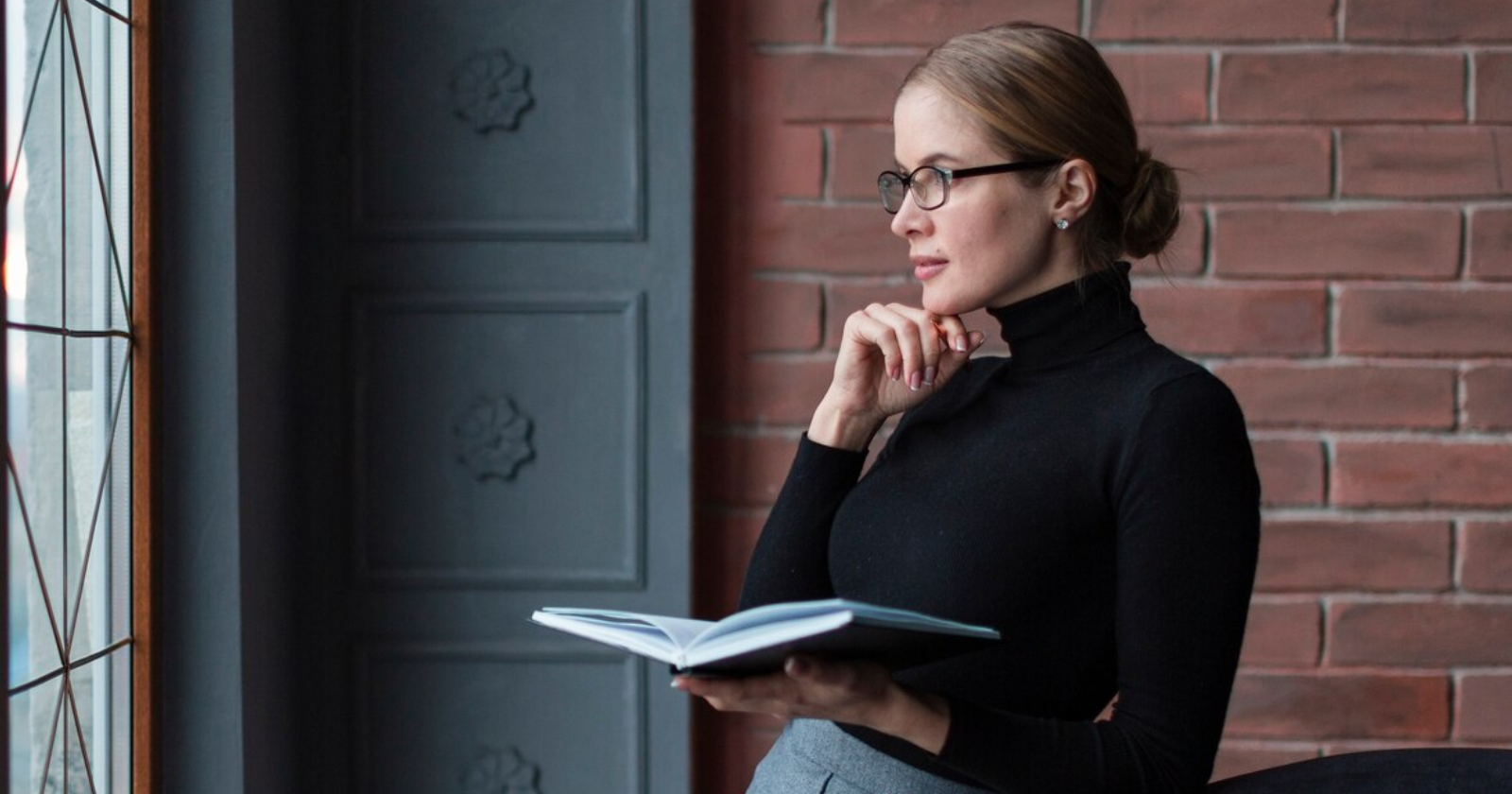
When most of your input comes from feeds, it is easy to lose your sense of direction.
Opinions shift fast, trends flip overnight, and certainty is often performative.
Books slow that down. They give you room to think without being told what to believe every few seconds.
Over time, readers develop clearer values and more stable priorities.
They know what matters to them because they have spent time reflecting instead of reacting.
I have noticed this among people who make unconventional choices, whether that means career pivots, lifestyle changes, or ethical commitments.
They are not immune to doubt, but they are less swayed by outside noise.
A strong internal compass makes decisions easier and regret less common.
6) They communicate with more precision
Good readers tend to express themselves more clearly, even if they are not naturally talkative.
They have been exposed to structured thinking and effective language for years.
This does not mean using fancy words. It means knowing how to explain ideas without rambling or oversimplifying.
Books model how to build arguments, tell stories, and connect points logically. That structure gets absorbed over time.
I have worked with people who were incredibly intelligent but struggled to communicate because their information diet was fragmented.
Reading gives your thoughts coherence.
Clear communication is one of the most underrated performance skills there is.
7) They experience less mental fragmentation
Constant screen use pulls attention in too many directions at once. Notifications interrupt thoughts, and multitasking becomes the default.
Reading restores continuity. You stay with a narrative or idea long enough for your mind to settle into it.
People who read regularly often report feeling less scattered. They transition between tasks more smoothly and feel less mentally exhausted by the end of the day.
This is not about productivity hacks or morning routines. It is about mental integrity.
A less fragmented mind makes better decisions, handles stress more effectively, and recovers faster from cognitive overload.
8) They maintain cognitive sharpness over time
Sustained reading keeps the brain actively engaged. It challenges memory, comprehension, and abstract thinking in ways passive consumption does not.
You can see this across age groups. People who read consistently tend to stay curious, adaptable, and mentally flexible longer.
Screens often encourage passive intake. Books demand participation and interpretation.
That ongoing engagement seems to protect cognitive function over time, not just in old age but throughout adulthood.
Mental sharpness compounds, just like physical fitness.
9) They feel more grounded in who they are
Books provide context. Historical, psychological, philosophical, and cultural context that reminds you life is bigger than the moment you are in.
This perspective reduces comparison anxiety. Readers are less shaken by other people’s highlight reels and sudden success stories.
They understand that most growth is slow and most lives are nonlinear. That understanding stabilizes self-image.
I have seen this groundedness show up as quiet confidence, not loud certainty. It is the confidence of someone who knows themselves reasonably well.
Feeling grounded is not flashy, but it makes life far more navigable.
The bottom line
Choosing books over screens is not about rejecting modern life. It is about protecting your attention and training your mind for depth in a shallow environment.
You do not need to quit technology or overhaul your lifestyle. Even a few pages a day can reshape how you think, decide, and respond over time.
If you already lean toward books, you are likely experiencing some of these benefits without naming them.
If not, this is an open invitation to start small and see what changes.
If You Were a Healing Herb, Which Would You Be?
Each herb holds a unique kind of magic — soothing, awakening, grounding, or clarifying.
This 9-question quiz reveals the healing plant that mirrors your energy right now and what it says about your natural rhythm.
✨ Instant results. Deeply insightful.