In the raw aftermath of loss, I discovered that true friendship isn't measured by the flood of sympathy cards or well-meaning advice, but by who has the courage to simply sit in the devastating silence with you, bearing witness to pain they cannot fix.

Add VegOut to your Google News feed. 
The morning after my mother's funeral, I sat in her empty kitchen holding a cold cup of coffee, surrounded by casserole dishes from people whose names I couldn't remember.
My phone buzzed constantly with messages beginning with "I'm so sorry" and ending with "Let me know if you need anything."
But what I needed wasn't something anyone could bring in a covered dish or type in a text.
What I needed was someone to sit with me while my world fell apart, without trying to put it back together.
Within seventy-two hours of losing her, I discovered something that changed how I view friendship forever.
The people who truly showed up weren't necessarily the ones I expected.
They weren't always the ones who sent the longest messages or brought the most food.
They were the ones who understood that grief isn't a problem to be solved but a reality to be witnessed.
The discomfort most people can't bear
Have you ever noticed how desperately we try to fill silence when someone is hurting?
We offer platitudes about time healing all wounds.
We share stories about our own losses.
We suggest distractions, activities, anything to avoid sitting in the raw presence of pain.
During those first three days after my mother died, I watched person after person struggle with this discomfort.
A colleague stopped by with flowers and immediately launched into advice about estate lawyers.
A neighbor brought soup and spent twenty minutes telling me about her own mother's death fifteen years ago.
Even my cousin, who I thought would understand, kept insisting I needed to "stay busy" and "look forward, not back."
But grief doesn't work on our timeline.
It doesn't care about our discomfort.
After years in my widow's support group, I've learned that grief demands space to simply exist, messy and inconvenient as it is.
Most people want to fast-forward through it, to skip to the part where everything is okay again.
They mean well, but their urgency to fix what cannot be fixed only adds to the isolation of loss.
The friends who became witnesses
Then there was my friend from book club who showed up on day two.
She didn't ring the doorbell or announce herself with false cheer.
She texted, "I'm on your porch with tea. You don't have to let me in."
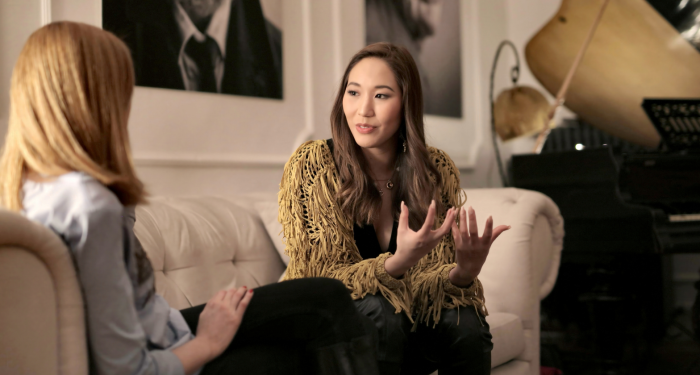
When I opened the door, she came in, set down the tea, and sat next to me on the couch.
For two hours, we barely spoke.
When I cried, she handed me tissues.
When I stared at nothing, she stared at nothing too.
She didn't check her phone or fidget or fill the space with words.
She simply witnessed my grief.
Another surprise was a woman from work I barely knew beyond polite elevator conversations.
She appeared on the third day with no agenda except presence.
She helped me sort through sympathy cards without commenting on who had or hadn't sent them.
When I suddenly broke down over finding my mother's grocery list in her handwriting, she didn't tell me it would be okay.
She just sat there on the kitchen floor with me until I could breathe again.
These people understood what Joan Didion meant when she wrote about the year of magical thinking, how grief makes you feel like you're going crazy.
They didn't try to convince me I was sane.
They just stayed with me in the temporary insanity.
Why silence speaks louder than words
During my fifteen years as a single mother, I learned the hard difference between friends who talk and friends who show up.
After my divorce, the dinner invitations stopped coming.
Couples who had been part of our life suddenly didn't know what to do with just me.
They sent messages saying they were "thinking of me," but thinking doesn't hold your hand through loneliness.
The friends who remained were the ones comfortable with incomplete stories and uneven numbers at dinner tables.
They were the same type of people who now sat with me in my mother's absence, understanding that sometimes the most profound support comes without words.
Think about the last time you were truly devastated.
Did you really want someone explaining the stages of grief or telling you about their own pain?
Or did you want someone to acknowledge that right now, in this moment, everything is not okay, and that's allowed?
There's a beautiful passage in one of my favorite novels where a character says that sitting with someone in their pain without trying to take it away is the highest form of love.
I used to think that was poetic exaggeration.
Now I know it's the truest thing I've ever read.
Learning to be uncomfortable
Six months before my mother died, a stranger changed my life.
I was crying in my car in a grocery store parking lot, overwhelmed by a convergence of struggles.
A woman knocked on my window, and when I rolled it down, she simply said, "I don't know what's wrong, but I'll sit here with you if you want."
She sat in her car next to mine for twenty minutes while I pulled myself together.
She never asked what was wrong.
She never offered solutions.
She just stayed.
That stranger taught me something I tried to practice when my mother was dying and I try to practice still: being willing to be uncomfortable in service of someone else's comfort.
When someone in my widow's group shares a particularly raw moment, I remember that woman in the parking lot. I try to be the friend who doesn't need the story to have a resolution, who doesn't need tears to stop on my timeline.
Final thoughts
My mother has been gone for three years now, and I still remember exactly who sat with me in those first seventy-two hours without trying to fix my unfixable pain.
Those friendships deepened in ways that hundreds of casseroles and sympathy cards never could have achieved.
They taught me that real friendship isn't about having the right words or the perfect solution.
It's about having the courage to witness someone's pain without running from it.
Now, when someone I know experiences loss, I don't send long messages about healing or time or silver linings.
I show up, if they'll let me, and I sit in the uncomfortable silence of grief.
Because I learned that grief doesn't need a solution.
It needs a witness.
And being that witness is one of the greatest gifts we can give each other.