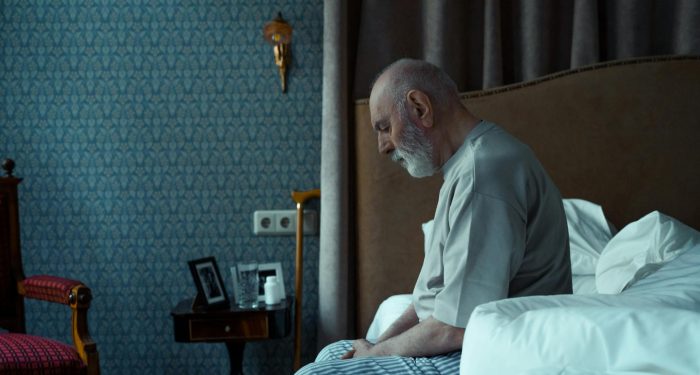
They taught us the rules to a game that ended before we could play, and now we're all pretending their outdated playbook isn't the reason we're losing at a completely different sport.

Add VegOut to your Google News feed. 
My dad recently asked me why I don't just "walk into offices with my resume" to find better work opportunities. He genuinely couldn't understand why this made me laugh.
This wasn't him being stubborn or out of touch. It was him offering the best advice he knew - advice that had worked for him in 1978 when he landed his first real job by doing exactly that. He walked into an office building, asked to speak to the manager, and left with a position that would eventually fund a mortgage, two kids' college educations, and a comfortable retirement.
The thing is, he's not wrong about his generation's experience. He's just wrong about mine.
The contract they signed doesn't exist anymore
Growing up in suburban Sacramento, I watched my parents follow a script that seemed carved in stone: work hard, stay loyal to your company, save steadily, and you'll be rewarded with security.
My mom worked at the same hospital for 32 years. My dad put in 35 at his company. They got pensions. They got healthcare that actually covered things. They bought a house for what I now pay in two years of rent.
They held up their end of the bargain perfectly. The problem? The other party - society, the economy, whatever you want to call it - rewrote the contract while they weren't looking.
I've mentioned this before, but when behavioral scientists study decision-making, they often talk about "anchoring bias" - our tendency to rely too heavily on the first piece of information we receive. For my parents' generation, their anchor was set in an era of abundant opportunity and institutional loyalty. That anchor is now dragging in empty water.
Why they can't see what we see
Here's what kills me: it's not that they don't want to understand. It's that understanding would unravel everything they've believed about how the world works.
Think about it. If my parents truly grasped that their kids need three roommates to afford rent despite having master's degrees, that we job-hop not because we're disloyal but because it's the only way to get raises, that we can't afford houses in the neighborhoods where we grew up - what would that mean for their entire worldview?
It would mean the system they devoted their lives to has failed. It would mean their hard work didn't create the generational wealth they assumed it would. It would mean they were the last generation to ride a wave that crashed right after they reached shore.
My grandmother, who raised four kids on a teacher's salary and still volunteers at the food bank every Saturday at 82, once told me she doesn't understand why young people complain so much. "We just worked," she said. And she's right - they just worked. But "just working" used to be enough.
The inheritance nobody talks about
We inherited more than student debt and climate anxiety. We inherited the expectation that we should achieve what our parents did, using tools that no longer exist, in a game whose rules have fundamentally changed.
You know what's wild? I make more money now as a freelance writer than my dad did at my age. But he owned a house, had two kids, and was building a pension. I have a decent apartment, a cat, and a retirement account that might let me stop working by 75 if I'm lucky.
The numbers are bigger, but the purchasing power is a joke. It's like being handed monopoly money and being told to buy real property with it.
They wouldn't survive our economy either
This is the part that really gets me. Sometimes I want to sit my parents down and walk them through what their lives would look like if they were starting out today with their same qualifications.
My dad's bachelor's degree that got him a management position? Today that might get him an unpaid internship. My mom's path from receptionist to department coordinator through company loyalty? Those promotional ladders were sold for scrap metal years ago.
They tell me about buying their first house at 25 with 5% down and a handshake. I want to tell them about couples I know making combined six figures who lost bidding wars on fifteen houses before giving up. But what's the point? It would be like explaining color to someone who's only known grayscale.
The cruel mathematics of modern life
Recently, my dad suggested I should save more for retirement. "Put away 10% like we did," he said. I didn't have the heart to tell him that 10% of my income, after student loans, rent that costs 40% of my salary, and health insurance with a deductible I'll never meet, amounts to approximately enough to buy a nice coffee maker when I'm 65.
The math our parents lived by doesn't work anymore. It's not that we're bad at math - it's that the equation changed while nobody was looking.
When I started out as a music blogger in the early 2000s, reviewing underground bands in Los Angeles, I thought I was taking a risky path. Turns out, it was no riskier than friends who went the traditional route. We're all freelancing now, whether we call it that or not.
What understanding would cost them
The cruelest part isn't the misunderstanding. It's what understanding would require.
To truly see our reality, they'd have to accept that meritocracy is mostly mythology now. That their success wasn't just about hard work - it was about timing. That the "lazy millennials" narrative is easier to swallow than acknowledging we're working harder for less.
Most painfully, they'd have to admit that the future they built for their children is one they themselves couldn't navigate.
Can you imagine working your whole life, doing everything "right," only to realize the ladder you climbed got pulled up behind you? That your kids aren't struggling because they're doing something wrong, but because the game board got flipped while you were celebrating your win?
Wrapping up
I don't blame my parents for not understanding. How could they? Their operating system was designed for a different machine entirely.
But I do wish we could have honest conversations about this canyon between our experiences without it feeling like an indictment of their choices or ours. They built their lives on promises that were real when they made them. We're building ours on... well, we're not sure yet. We're making it up as we go, because the old blueprints lead to empty lots.
The saddest part? They keep trying to hand us maps to a world that no longer exists, not realizing we're navigating by entirely different stars. And we keep pretending those maps might still work, because telling them the truth - that their compass points nowhere now - feels too cruel.
So we nod when they give advice. We smile when they wonder why we don't have houses yet. And we carry the weight of being the first generation to do worse than our parents, while they carry the weight of not understanding why their children seem so lost.
Both weights are heavy. Neither is our fault.
What’s Your Plant-Powered Archetype?
Ever wonder what your everyday habits say about your deeper purpose—and how they ripple out to impact the planet?
This 90-second quiz reveals the plant-powered role you’re here to play, and the tiny shift that makes it even more powerful.
12 fun questions. Instant results. Surprisingly accurate.