Despite her perfect test results year after year, a 70-year-old widow discovers that what's slowly killing her—and millions like her—isn't something any doctor has ever thought to check.

Add VegOut to your Google News feed. 
Last week, I sat in that familiar paper gown, feet dangling from the examination table like a child's, while my doctor reviewed my test results with obvious satisfaction.
"Everything looks wonderful," she beamed, flipping through pages of numbers that apparently told her I was thriving.
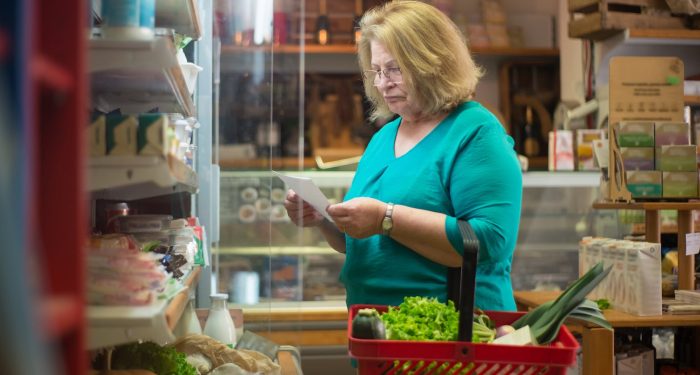
I nodded and smiled, the good patient, while thinking about how I'd eaten cereal for dinner three nights in a row because cooking for one felt pointless.
She never asked about that; never asks if anyone would notice if I didn't show up for next year's appointment.
The title of this piece belongs to countless others who sit in those same sterile rooms, getting gold stars for our blood work while dying slowly from something that can't be measured in milligrams per deciliter.
After thirty-two years of teaching teenagers to find meaning between the lines of literature, I've learned to read what's not being said and what's not being said in our doctor's offices might be killing us.
The epidemic nobody measures
When my husband was diagnosed with Parkinson's seven years before he died, we became experts in measurement.
Dopamine levels, tremor severity, and gait speed.
The medical world gave us graphs and charts and precise dosages, as if quantifying his decline could somehow control it.
But nobody measured how each lost word created distance between us, how I slowly transformed from wife to caregiver, how loneliness can exist even when you're never alone.
Have you ever noticed how we've medicalized everything about aging except the parts that actually hurt? We have sophisticated scans for our bones and extensive panels for our blood, but no diagnostic tool for the weight of an empty house or the ache of irrelevance.
Last month, I read a study showing loneliness increases death risk by forty-five percent.
That's worse than obesity, worse than air pollution, and worse than excessive drinking.
Yet when was the last time your doctor prescribed two friends and a meaningful conversation?
The infrastructure of connection that existed naturally in my father's generation now requires exhausting intention.
He was a mailman who knew everyone's name, their stories, their struggles.
Community was simply how you lived.
Now, I volunteer at three different places, attend two support groups, and maintain a careful schedule of coffee dates and phone calls, all to manufacture what once grew organically.
It's like trying to recreate a forest by planting seedlings in pots.
The slow fade to invisible
Two years ago, after my husband died, everyone was remarkably kind for about three weeks then their lives moved forward while mine froze in place.
The grief support group helped, but they meet once a week.
That leaves one hundred sixty-seven other hours to fill with something besides silence and CNN.
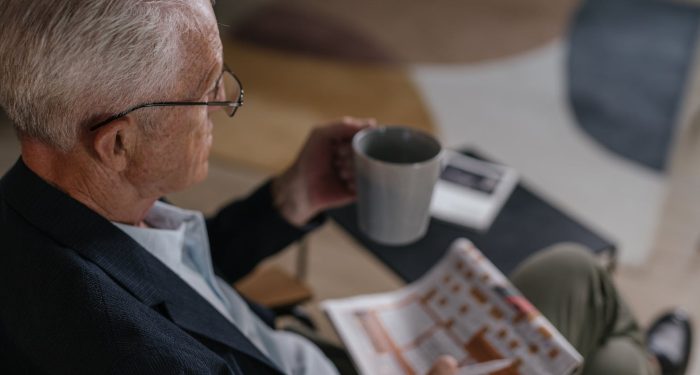
I've developed routines that sound healthy when I list them: Morning journaling at five-thirty because sleeping past dawn feels impossible, garden work before the heat, reading in my sunroom, and evening walks through the neighborhood.
But routines can become cages, protecting us from both pain and possibility.
Sometimes I take the long route past the park, past the coffee shop, past lives being actively lived, just to remember what that looks like.
My four grandchildren live scattered across three states.
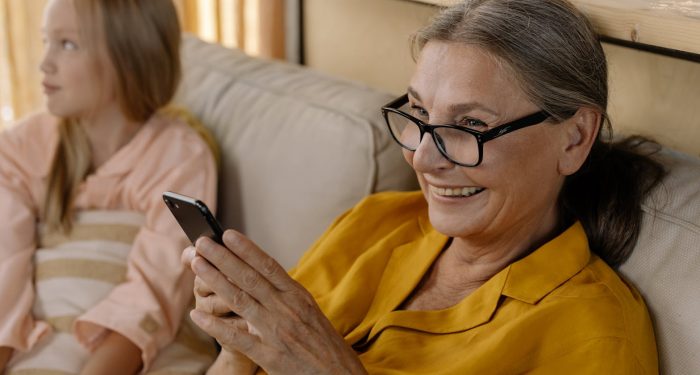
We FaceTime regularly, a skill I mastered at sixty-seven because the alternative was losing them entirely, but you can't smell a baby's head through a screen or feel the weight of a small body leaning against you during story time.
Technology connects us just enough to highlight how disconnected we really are.
Now, I eat standing over the sink more often than I care to admit, because setting a table for one feels like admitting defeat.
My widow's support group understands this.
We've turned our grief into a supper club, five women who found each other in sorrow and stayed for the friendship.
Those Thursday nights are about voices filling empty kitchens, about remembering we still exist.
When wisdom has no witness
The cruelest irony of aging is that you finally understand what matters just when nobody wants to hear it.
I've learned about resilience through cancer scares and knee replacements, letting go through watching my brilliant husband disappear into Parkinson's, and starting over by taking up Italian at sixty-six and piano at sixty-seven.
However, wisdom without witness feels hollow, stories need listeners, and even trees in a forest connect underground, sharing nutrients through their roots.
Humans in suburbs live inches apart and miles away.
Do you know what it's like to have your daughter call faithfully every Sunday while knowing she's overwhelmed with her own family? To watch your son struggle with his own ghosts from when you leaned on him too hard after his father left?
They love me, I know this, but love doesn't always translate to presence (and presence is what we need to stay tethered to this world).
I wrote once about finding purpose in later life, how volunteering at the women's shelter teaching job skills gives my days meaning.
This remains true as purpose matters, but being needed isn't the same as being seen.
Contributing isn't the same as belonging.
You can be useful and invisible simultaneously, productive and dying inside.
The cure that isn't covered
My doctor recently mentioned a new senior center with "wonderful programs," already moving on to check my reflexes before I could respond.
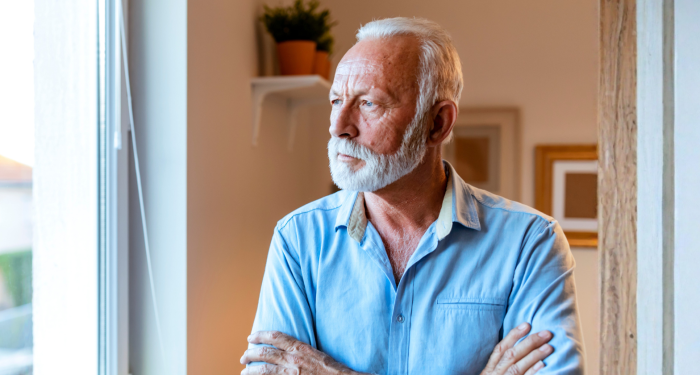
I wanted to tell her I need someone to notice if I don't show up, conversations deeper than weather and medications, and to matter to someone's daily routine, not just their volunteer schedule.
The medical establishment has pills for everything—statins for cholesterol, beta-blockers for blood pressure, metformin for blood sugar—but there's no prescription for connection, no therapeutic dose of belonging, and no insurance code for treating invisibility.
We've created a healthcare system so focused on extending life that we've forgotten to ensure that life remains worth living.
Sometimes, I think about my mother's final years with Alzheimer's, how she forgot my name but remembered songs from nineteen forty-two.
The staff at her facility checked her vitals daily, managed her medications precisely, documented every detail of her physical decline.
But who measured the moments when music brought her back to herself? Who quantified the value of someone holding her hand even when she couldn't say their name?
Final thoughts
Next year, I'll keep my annual appointment.
I'll let them check everything that can be measured, documented, and treated.
A family member will drive me, probably grumbling about traffic, and I'll get another clean bill of health.
The doctor won't ask if I've laughed with a friend recently or when someone last hugged me; she won't measure my isolation level or notice that perfect numbers can coexist with profound loneliness.
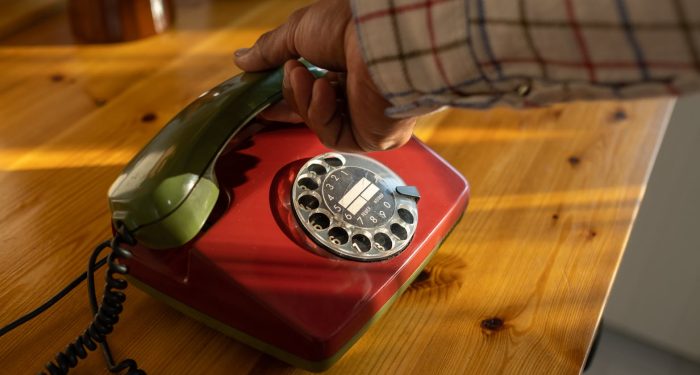
The thing most likely to kill me lives in the empty chair across from my dinner table, in the phone that doesn't ring, and in the terrible freedom of having no one waiting for you to come home.
We're dying from disconnection, one quiet day at a time, while our cholesterol levels remain admirably low.
If you're reading this and recognizing yourself, know that you're not alone in feeling alone.
That's both the tragedy and the hope of our situation.
Somewhere nearby, someone else is eating cereal for dinner, walking neighborhoods for the illusion of purpose, maintaining perfect health while dying of invisibility.
Maybe the first step is admitting to each other that excellent test results mean nothing if nobody knows we exist.