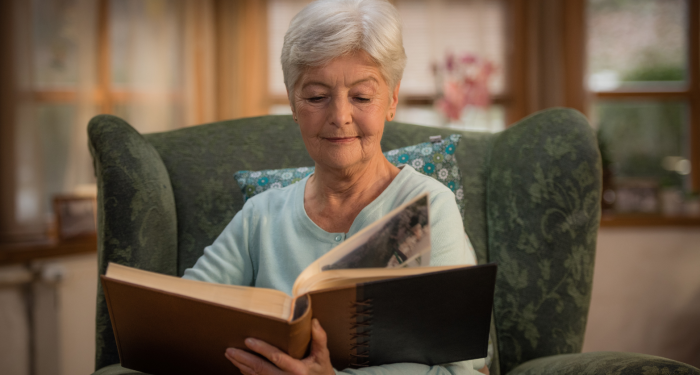
At 72, she still climbs ladders to clean gutters, navigates foreign cities solo, and fixes her own technology glitches—not because she has to, but because each small victory against the world's low expectations proves that true strength only deepens with age.

Add VegOut to your Google News feed. 
Last week at the pharmacy, I watched a woman about my age struggle with the new self-checkout system.
The young clerk rushed over immediately, assuming she needed help. But this woman, probably 75, politely waved him away. "I've got this," she said, squinting at the screen through her bifocals. "Just need a minute." And she did have it.
It took her longer than it would have taken the clerk, sure, but she figured it out, paid for her prescriptions, and walked out with the quiet satisfaction of someone who'd just won a small battle against the assumption of helplessness.
I recognized that satisfaction. It's the same feeling I get every time I accomplish something that the world assumes I'm too old to handle alone.
At 72, after decades of teaching, widowhood, and navigating life's curveballs, I've discovered that true strength isn't measured in physical prowess or youth—it's measured in the quiet determination to keep doing things yourself, even when everyone expects you to hand over the reins.
1) Managing technology without becoming a digital damsel in distress
Remember when we actually had to program VCRs? That was nothing compared to smartphones. But here's the thing—I refuse to be that person who calls their adult children every time an app updates. Yes, my arthritic fingers sometimes hit the wrong tiny button.
Yes, I've accidentally FaceTimed strangers. But I've also taught myself to navigate online banking, master video calls with grandchildren three states away, and even troubleshoot my Wi-Fi router.
Just yesterday, my printer decided to stop talking to my computer. The old me might have waited for my monthly visit from my son. Instead, I spent an hour with YouTube tutorials and user forums, and guess what? Fixed it myself. The victory wasn't just about printing—it was about refusing to let technology intimidate me into helplessness.
2) Keeping your home from falling apart around you
My knees might be titanium now, but I still climb that ladder to clean the gutters every fall. I've adapted, of course—I use a grabber tool, take breaks, work smarter not harder.
When the toilet started running continuously last month, I didn't immediately call a plumber. I lifted that heavy tank lid, fiddled with the chain and flapper (thank you, YouTube University), and saved myself $150.
The young couple next door hired someone to hang their pictures last week. Meanwhile, I'm over here with my stud finder and level, mounting shelves like I have for the past 40 years. Sure, it takes me longer now. I need to rest my arms more frequently.
But there's something deeply satisfying about maintaining your own space, about knowing every quirk of your home because you're the one who fixes them.
3) Getting yourself where you need to go, when you need to go there
"Maybe it's time to think about giving up driving at night," my daughter suggested gently after I mentioned the glare from oncoming headlights. I understood her concern, but I also understood what that would mean—no evening book clubs, no late dinners with friends, no spontaneous trips to the 24-hour grocery when insomnia strikes.
So instead of surrendering my keys, I adapted. I got anti-glare glasses, I avoid highways when it's raining at night, I know which routes have better lighting. But I still drive myself to my 7 PM water aerobics class all winter long.
Independence isn't about being reckless—it's about honestly assessing your abilities and working within them, not preemptively giving up because you've hit a certain birthday.
4) Staying captain of your own financial ship
When my husband died, everyone assumed I'd need help managing finances. "It's so complicated," they said, as if my brain had died along with him. But you know what? I learned. I educated myself about investments, figured out insurance claims, even negotiated a better rate on my homeowner's policy.
Do I make mistakes? Absolutely. But they're my mistakes to make, and I learn from each one. I still do my own taxes, research major purchases, and make financial decisions without running them past committee. At a time when scammers specifically target seniors, assuming we're confused about money, maintaining financial independence is both practical and powerful.
5) Hauling, lifting, and refusing to be defeated by gravity
Those 40-pound bags of garden soil aren't getting any lighter, and neither am I.
But every spring, I still load them into my car, drag them to my garden beds, and spread that mulch myself. I've learned tricks—using a small wagon, buying smaller bags when available, taking rest breaks without shame. But I haven't learned to automatically ask for help.
Groceries are the same story. I make two trips from the car now instead of trying to carry everything at once. I use those wheeled shopping bags. I shop more frequently for smaller loads.
These aren't signs of weakness—they're strategies for maintaining independence. Every bag I carry myself is a small victory against the expectation that I should be too frail to manage.
6) Exploring the world on your own terms
At 70, I took myself to Italy. Alone. My children created a family group chat specifically to fret about this trip. But I navigated Roman metros, hauled my suitcase up narrow hotel stairs, and found my way through Venice's maze of streets with nothing but determination and Google Maps.
Was it harder than traveling at 40? Of course. I chose hotels near train stations, packed lighter, built in rest days. But I also proved to myself and everyone else that adventure doesn't have an expiration date. The world is still there to explore, and I don't need a chaperone to see it.
7) Proving that old dogs love new tricks
I started learning watercolor painting during the pandemic.
My hands shake slightly now, which actually creates interesting effects I've learned to incorporate. I joined an online Italian conversation group. I'm teaching myself to identify birds by their songs. Each new skill takes longer to master than it would have decades ago, but the accomplishment feels proportionally sweeter.
When peers say they're "too old to learn new things," I think about my piano lessons, started at 67. My fingers will never fly across the keys like a prodigy's, but they don't need to. They just need to keep learning, keep trying, keep proving that growth doesn't stop at 60, 70, or beyond.
8) Advocating for yourself in sickness and health
I've sat in too many waiting rooms, answered too many medical questionnaires, navigated too many health scares to become a passive participant in my own care. When a doctor recently dismissed my concerns about medication side effects as "normal aging," I pushed back, did my research, and ultimately found a better solution.
I keep my own medical records organized, understand my prescriptions, and arrive at appointments with written questions. Yes, I sometimes bring my daughter to important appointments now—for support and a second set of ears. But I'm still the captain of my own health journey, not a passenger.
9) Weathering emotional storms without losing your anchor
Grief doesn't get easier with age; you just get better at carrying it. When widowhood hit me like a freight train, I could have collapsed into my children's lives, demanded they fill the void. Instead, I learned to sit with the unbearable until it became bearable. I joined support groups, started journaling, rebuilt my identity one small piece at a time.
Processing loneliness, fear, and loss alone doesn't mean you're isolated—it means you're strong enough to face your demons without making them someone else's responsibility. It's perhaps the hardest thing on this list, but also the most essential for maintaining your sense of self.
Final thoughts
If you're over 60 and still doing these things alone, you're not stubborn or foolish—you're formidable. You're proving that capability doesn't have an expiration date, that independence isn't surrendered just because the calendar says you're a senior.
Every task you complete alone, every problem you solve yourself, every challenge you face head-on is a quiet rebellion against a world eager to render you helpless. Keep going. The day may come when you need more help, but today isn't that day.
Today, you're still strong enough to handle life on your own terms, and that makes you stronger than most people half your age who've never learned the fierce joy of self-sufficiency.