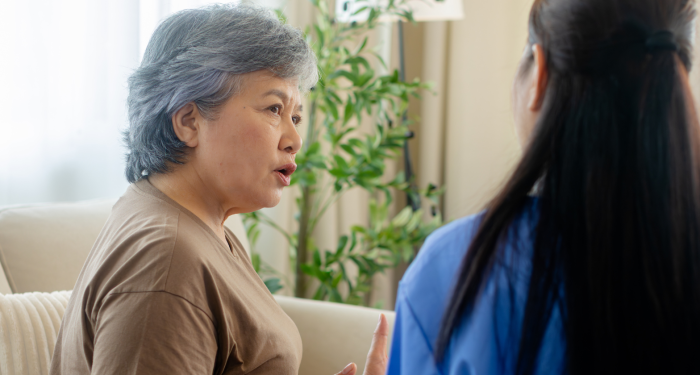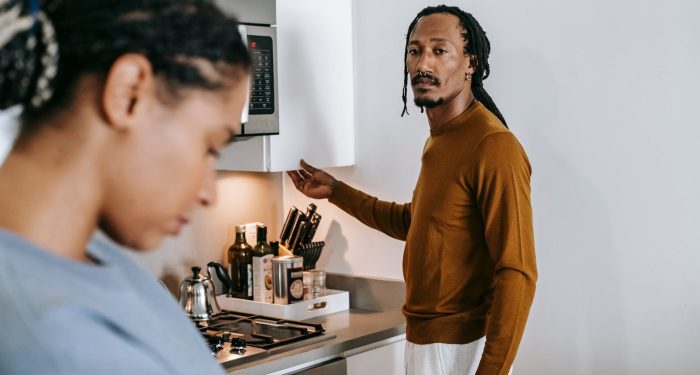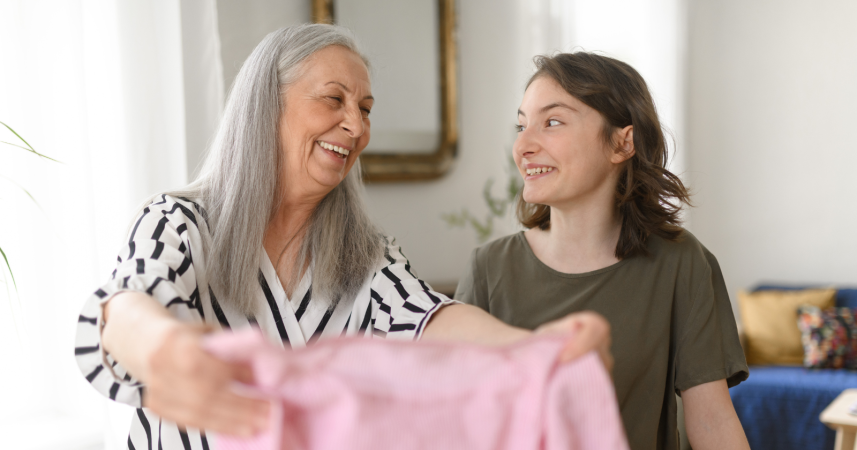
When she finally broke her silence, the careful politeness in her voice told me something far more devastating than anger ever could: I had become optional in my daughter's life.

Add VegOut to your Google News feed. 
"Mom, you just don't get it. Your generation had it easy. You could afford houses, you had job security, you didn't have to worry about the planet dying."
Those were the last words my daughter spoke to me before eight months of silence. Eight months that started with my careless response: "Maybe, but at least we weren't so soft."
The word hung in the air between us like a slap. I watched her face change, watched something close behind her eyes, and then she was gone. Not just from my kitchen that afternoon, but from my life. She didn't answer my calls. My texts went unread. Our Sunday evening phone calls, a tradition we'd kept for fifteen years, simply stopped.
I spent those months replaying that moment, wondering how a single word could undo forty-two years of relationship. How could I have been so thoughtless? After watching her navigate postpartum depression with such courage, after seeing her rebuild her life following her divorce, how could I reduce her entire generation to that one dismissive word?
The weight of a single word
Have you ever said something you immediately wished you could take back? Something that revealed a judgment you didn't even know you were carrying? That word "soft" came from somewhere deep and unexamined in me, a place where I'd apparently been storing resentments I didn't know existed.
During those silent months, I thought about my grandmother a lot. She survived the Depression, raised six children on almost nothing, and still found reasons to laugh every single day. I'd grown up believing that hardship was what made you strong, that struggle was the price of character. But somewhere along the way, I'd turned that belief into a weapon against my own child.
The truth is, I was jealous. There, I said it. Jealous of the therapy sessions my daughter could afford, jealous of the boundaries she knew how to set, jealous of the emotional vocabulary she possessed that I'd had to learn in my sixties. What I called "soft" was actually just her generation's refusal to suffer in silence the way we did.
Learning the difference between strong and hard
Virginia Woolf once wrote, "The eyes of others our prisons; their thoughts our cages." During those eight months, I felt imprisoned by my own outdated thinking, caged by generational assumptions I'd never questioned.
I started really looking at what I'd called strength in my own life. Was it strength when I stayed in uncomfortable situations because I didn't know I had options? Was it strength when I pushed through exhaustion and ignored my own needs? Or was that just survival dressed up as virtue?
My daughter's generation didn't invent sensitivity; they invented the language for it. They didn't become weak; they became honest about what weakness actually was. When I watched her struggle through postpartum depression, she didn't pretend everything was fine the way I might have.
She asked for help. She went to therapy. She took medication. She talked about it openly. If that's soft, then maybe soft is just another word for wise.
The phone call that changed everything
When she finally called after eight months, I was folding laundry on a Thursday afternoon. My hands shook so badly I dropped the phone twice before managing to answer.
"Hi Mom," she said, and her voice was calm. Too calm.
We talked for two hours. She wasn't angry anymore, she told me, and somehow that was worse than rage. Anger would have meant there was still fire between us, still passion, still care sharp enough to cut. Instead, she spoke to me with the kind of careful politeness you use with a stranger on a bus. She'd done the work, she said.
Processed the grief. Accepted who I was and what I could and couldn't give her.
Do you know what it feels like to become optional in your child's life? To realize you've moved from essential to peripheral? She was offering me a relationship, but on new terms. Terms that acknowledged I might never fully understand her world, might never stop carrying my generation's baggage, might never be the mother she needed me to be.
Finding a way forward
In one of my previous posts, I wrote about the importance of admitting when we're wrong, especially to our children. But this was different. This wasn't about being wrong; it was about being limited by my own experience, trapped in my own generation's story about what strength looks like.
I told her about my grandmother, about the Depression, about the joy she found despite everything. Then I told her what I'd never said before: that my grandmother's joy often looked like denial, that her strength sometimes meant she couldn't admit when she needed help, that she died never having told anyone about the dreams she'd given up.
"Your generation isn't soft," I finally said. "You're just brave enough to feel things we were taught to ignore."
The Sunday phone calls resumed eventually, though they're different now. We talk about therapy (hers and mine). We discuss boundaries like they're weather patterns, natural and necessary.
She teaches me words like "triggered" and "processing," and I try not to roll my eyes. I'm learning that what I called soft might actually be the hardest thing of all: the courage to be vulnerable, to admit when you're not okay, to ask for what you need.
What I wish I'd known
Sometimes I think about all the things I criticized in my daughter that were actually strengths in disguise. Her refusal to just "push through" when she's overwhelmed. Her insistence on talking about feelings instead of burying them. Her ability to walk away from relationships that don't serve her, even when that relationship was with me.
Isn't it strange how we can repeat our parents' mistakes even when we swear we won't? I watched my daughter repeat some of my relationship patterns before she learned her own lessons, and I judged her for it. But here I was, repeating my own mother's pattern of dismissing anything that looked different from how we did things, calling it weak when it was just unfamiliar.
The eight months of silence taught me something I couldn't have learned any other way. Sometimes the strongest thing you can do is admit that your way isn't the only way, that your generation's survival strategies might be another generation's trauma, that what got you through might be exactly what someone else needs to leave behind.
Final thoughts
We're okay now, my daughter and I, though okay looks different than before. There's a tenderness in our relationship that wasn't there before, but also a distance. We love each other across a gap that might never fully close, and maybe that's what it means to love adult children: accepting that they see the world through windows we'll never quite look through ourselves.
That word "soft" still hangs between us sometimes, a ghost of my carelessness and her hurt. But we're learning to live with ghosts, to acknowledge them without letting them run the house. Every Sunday evening when my phone rings, I'm grateful for the second chance, for a daughter brave enough to feel her feelings fully and then decide I was worth coming back to, even if she had to come back different.
What’s Your Plant-Powered Archetype?
Ever wonder what your everyday habits say about your deeper purpose—and how they ripple out to impact the planet?
This 90-second quiz reveals the plant-powered role you’re here to play, and the tiny shift that makes it even more powerful.
12 fun questions. Instant results. Surprisingly accurate.