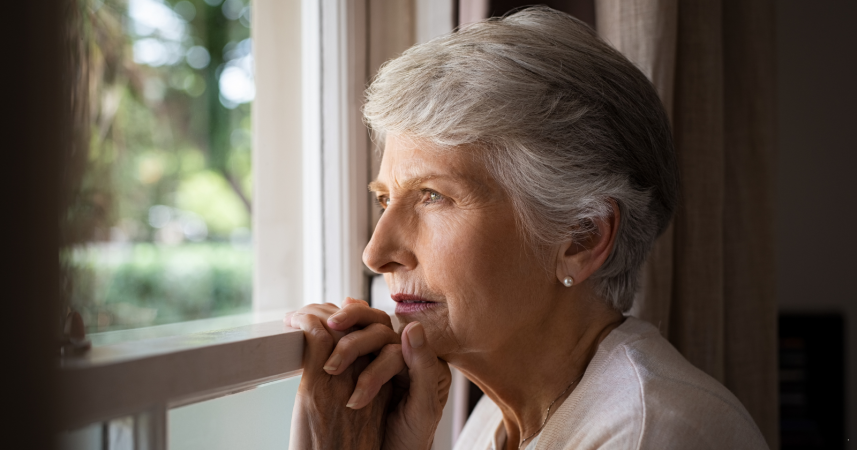
After decades of being everyone's unshakeable support system, I discovered that the price of never showing weakness was that no one—not even my own daughter—had ever seen the real me behind the carefully maintained facade.

Add VegOut to your Google News feed. 
Last week, I sat at my kitchen table with a blank piece of paper, trying to list the people who truly know me. Not the surface version who always has tissues in her purse and remembers everyone's birthdays, but the messy, complicated woman underneath. After an hour, the paper was still blank, and I was crying into my morning coffee.
The realization hit me like a physical blow: I'd spent decades perfecting the role of everyone's reliable friend, supportive colleague, and steady presence, but somewhere along the way, I forgot to actually let anyone see who I really was. I became so good at being what others needed that I lost track of what I needed myself.
The performance started early and never stopped
Looking back, I can trace this pattern to my twenties. I was the friend who dropped everything when someone called in crisis. The colleague who stayed late to help with projects that weren't mine. The neighbor who watched kids at a moment's notice. These weren't bad things in themselves. The problem was that I was performing kindness rather than embodying it. There's a difference between showing up authentically and showing up as who you think you should be.
During my divorce, when couples stopped inviting me to dinners and gatherings, I told myself I understood. I smiled and said it was fine, that I knew it was awkward. But inside, I was devastated. Instead of sharing that hurt with anyone, I just worked harder to be the "easy" divorced friend who never made anyone uncomfortable with her feelings.
The pattern continued through every relationship. When my second husband was diagnosed with Parkinson's, I immediately shifted into caregiver mode. For seven years, I was the picture of strength and capability. Friends would marvel at how well I was handling everything. "You're amazing," they'd say, and I'd smile and deflect. What they didn't know was that I cried in my car after every doctor's appointment, that some nights I stood in the shower and screamed silently into the water.
Why we choose performance over presence
Have you ever noticed how much easier it is to be needed than to be known? When you're the reliable one, the strong one, the one who has it all together, people feel safe around you. They trust you with their problems. They lean on you. And that feels like intimacy, but it's actually a one-way street dressed up as connection.
I think many of us, especially women of my generation, were taught that our value came from what we could do for others. We learned to anticipate needs before they were spoken, to smooth over conflicts, to be the emotional shock absorbers in every relationship. We became so skilled at reading the room that we forgot to speak up about what was happening inside us.
The irony is that by trying so hard to be valuable to others, we made ourselves unknowable. Every time I chose to be strong instead of vulnerable, helpful instead of honest, I added another layer between myself and genuine connection. I thought I was building relationships, but I was actually building walls.
The moment everything shifted
It wasn't until therapy in my fifties that I started to understand this pattern. My therapist asked me a simple question that changed everything: "What would happen if you stopped being useful?" The terror that question provoked told me everything I needed to know about how I'd been living.
She helped me see that my people-pleasing wasn't actually about caring for others. It was about controlling how they saw me. By always being the helper, I never had to risk being the one who needed help. By always being strong, I never had to face the possibility that someone might reject the real, flawed, sometimes weak version of me.
The work of setting boundaries in my fifties felt like learning to walk again. Every time I said no to something I didn't want to do, every time I admitted I was struggling, every time I asked for support instead of offering it, I felt like I was breaking some fundamental rule of existence. But slowly, something interesting happened. Some relationships fell away, yes, but others deepened in ways I hadn't expected.
Learning presence through loss
When my daughter struggled with postpartum depression, every instinct in me wanted to fix it, to be her rock, to hold everything together. But I'd learned by then that sometimes the most loving thing you can do is admit you don't have all the answers.
Instead of performing strength, I sat with her in her pain. I said, "I don't know how to fix this, but I'm here." It was the first time I'd ever been that honest about my own helplessness, and oddly, it brought us closer than all my years of trying to be the perfect mother ever had.
After losing my husband two years ago, I faced a choice. I could continue being the widow who was handling everything beautifully, or I could finally let people see me fall apart. I chose the latter. I called a friend and said, "I'm not okay, and I need you to come over." She did, and for the first time in our twenty-year friendship, she saw me completely undone. Later, she told me it was the moment she finally felt like we were truly friends rather than just acquaintances who cared about each other.
Starting over at seventy
Now, at seventy, I'm learning how to be present instead of perfect. It's harder than you might think to unlearn patterns that have shaped your entire adult life. Sometimes I still catch myself slipping into performance mode, offering help I don't want to give or pretending things don't bother me when they do.
But I'm also discovering something beautiful. The friends who are still here, the ones who've stuck around as I've gotten messier and more honest, they're starting to know the real me. We have conversations now that go beyond surface pleasantries. They call me on my stuff. They see when I'm struggling even when I don't say anything. It's terrifying and wonderful at the same time.
Final thoughts
If you recognize yourself in my story, if you're the person everyone depends on but no one really knows, I want you to know it's not too late to change. Start small. The next time someone asks how you are, tell them the truth. The next time you need help, ask for it. The next time you want to perform strength, choose vulnerability instead.
Yes, some people will be uncomfortable with the real you. But the ones who matter will move closer. And more importantly, you'll finally get to experience what it feels like to be loved not for what you do, but for who you are. That's worth more than being everyone's rock could ever be.