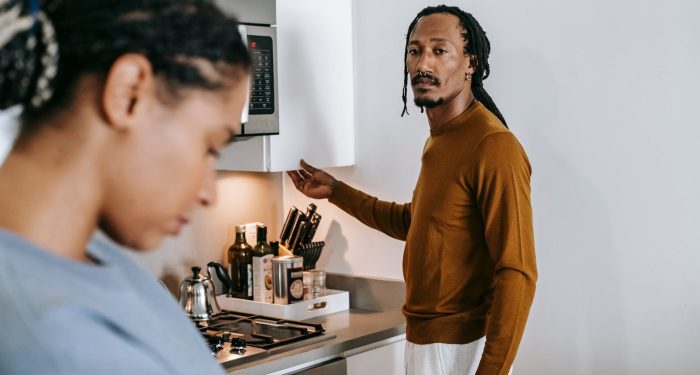
After decades of instilling every lesson about hard work, self-sufficiency, and proper values into my children, I watched them systematically dismantle each principle in their thirties—and now I'm left wondering if the real failure was my inability to see that their rebellion might actually be their greatest success.

Add VegOut to your Google News feed. 
I keep a box of old photographs in my closet, and sometimes when I can't sleep, I pull them out and look at who we used to be. There's one from a Saturday morning, both kids covered in flour from making pancakes, grinning like they'd discovered gold.
Another shows them at their high school graduations, standing tall in those ridiculous caps. I taught them everything I knew about being good people, about working hard and showing up and taking care of what matters.
But somewhere between those photos and now, the script got rewritten, and I'm not sure any of us knows our lines anymore.
The values that seemed so clear back then
When you're raising children alone, which I did for most of their childhood, you hold tight to certain truths like life rafts. Work hard. Save your money. Keep your word. Show up even when you don't feel like it.
I taught both my children to cook real meals, balance checkbooks, and clean a bathroom properly because I believed self-sufficiency was the greatest gift I could give them. These weren't just skills; they were values wrapped in everyday lessons.
I remember standing at the stove teaching them to make soup from scratch, explaining that knowing how to feed yourself well was a form of self-respect. We'd fold laundry together while I talked about taking care of what you own so it lasts. Every chore was a chance to build character, every responsibility a stepping stone to independence.
But what happens when your children grow up and decide that your carefully constructed value system is outdated? When they look at your life rafts and see anchors instead?
When your children choose differently
My daughter spent her early thirties in relationships that made my stomach tight with worry. I watched her repeat some of my own mistakes, choosing partners who dimmed her light, and I had to sit on my hands to keep from shaking her shoulders and saying, "Can't you see what I see?"
But she had to learn her own lessons, in her own time, in her own way. The values I'd tried to instill about self-worth and boundaries seemed to evaporate in the face of what she called love.
My son, meanwhile, threw himself into a career that consumed him, working eighty-hour weeks for a company that barely knew his name. All those conversations about balance, about not letting work define you, seemed to have fallen on deaf ears. He married someone I had reservations about, someone whose values seemed opposite to everything we'd built as a family.
I bit my tongue until it bled, smiled at holiday dinners, and watched.
The mistakes we make in the name of good parenting
Here's something they don't tell you in those parenting books: sometimes the very things you do to protect and prepare your children become the things they need to undo to find themselves. After their father left, I made my eldest son "the man of the house" when he was just twelve years old. I leaned on him in ways that weren't fair, asking him to be older than his years, to carry weight that wasn't his to bear.
Years later, he told me how that pressure shaped him, how he still struggles to just be instead of always doing, always fixing, always carrying everyone else's load. I had to apologize for that, had to own that my survival mode made me less present than I wanted to be, less aware of what I was asking of him.
Virginia Woolf once wrote, "Growing up is losing some illusions, in order to acquire others." Maybe that's what my children are doing, shedding the illusions I gave them to find their own truths.
The humbling truth about being wrong
That daughter-in-law I had reservations about? She's become one of the best things that ever happened to my son. She softened his edges, taught him to laugh at himself, showed him that success isn't measured in hours worked or dollars earned.
She brought music back into his life, something he'd loved as a child but abandoned in his relentless pursuit of achievement. Watching their marriage proved me wrong in the best possible way.
My daughter, after those difficult relationships, found her way to someone who sees her clearly and loves her fully. But she had to walk through that valley herself. My values couldn't protect her from heartbreak any more than they protected me from mine. She had to earn her wisdom the same way I earned mine: through living, failing, and choosing to try again.
What it means to let go of the story you wrote
There's a particular grief in watching your children reject the roadmap you drew for them. You spend decades believing you're building something lasting, something that will outlive you, only to watch them take it apart brick by brick. But maybe that's exactly what they're supposed to do.
I think about my own mother, how she valued security above all else after growing up poor, how she couldn't understand my need to leave our small town, to divorce a stable but unhappy marriage, to start over at forty with two kids and a teaching degree. I undid her values too, rebuilt them into something that fit my life better.
As I wrote in a post about second chances last year, sometimes the bravest thing we can do is admit that the story we're living isn't the only one worth telling. My children are writing their own stories now, using some of my words but mostly creating their own language.
Final thoughts
I still don't know if I failed or if they did, or if maybe that's the wrong question entirely. Perhaps the real question is whether we can love each other across the divide of different values, whether we can respect choices we don't understand, whether we can see that undoing isn't the same as destroying.
My children took apart the life I built for them, but they used the pieces to create something new, something theirs. And maybe, just maybe, that's exactly what they were supposed to do all along.
What’s Your Plant-Powered Archetype?
Ever wonder what your everyday habits say about your deeper purpose—and how they ripple out to impact the planet?
This 90-second quiz reveals the plant-powered role you’re here to play, and the tiny shift that makes it even more powerful.
12 fun questions. Instant results. Surprisingly accurate.