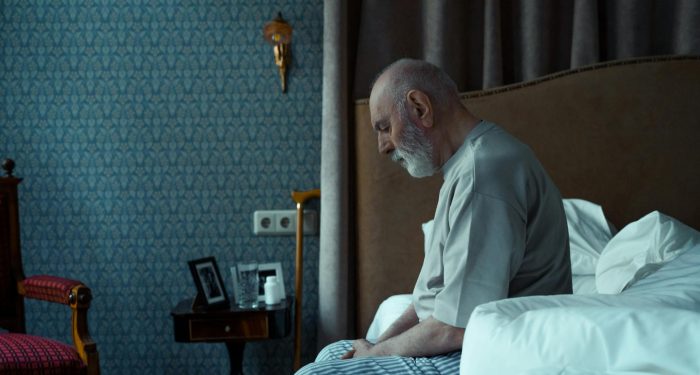
While everyone else was grinding 18-hour days, this millionaire was in bed by 10 PM — and his evening shutdown ritual wasn't despite his success, it was the $2 million lesson that built his empire.

Add VegOut to your Google News feed. 
Last Tuesday at 7 PM sharp, I watched a millionaire close his laptop mid-sentence during a conference call.
"Sorry folks, we'll pick this up tomorrow," he said, then turned to me. "Non-negotiable. After seven, I'm off the grid."
I'd been following this entrepreneur around for a week, expecting to document 18-hour workdays and endless hustle. What I found instead completely rewired my understanding of success.
The guy ran three companies, had just closed a major acquisition, and somehow still managed to be in bed by 10 PM every single night. No emails after dinner. No "quick calls" at 9 PM. Nothing.
At first, I thought this was some quirky millionaire privilege. You know, the luxury of being able to disconnect because you've already made it. But the more I observed, the more I realized this wasn't a reward for his success - it was the foundation of it.
The evening routine that built an empire
Every evening at 7 PM, this man's transformation was almost ritualistic. Phone went into a drawer. Laptop closed. He'd change into comfortable clothes and spend the next three hours doing absolutely nothing related to work.
Monday, he cooked an elaborate meal from scratch. Tuesday was reading fiction - not business books, fiction. Wednesday, he worked on a model airplane kit. Thursday was a long walk with his dog, no podcasts, no audiobooks. Friday, date night with his wife where work talk was banned.
"You're watching my secret weapon," he told me on day three. "Most people think success comes from outworking everyone. But a tired brain makes terrible decisions. An exhausted person builds fragile systems."
He compared it to charging your phone. Would you run your iPhone at 2% battery all day, every day? Of course not. It would die when you need it most. Yet that's exactly what most entrepreneurs do with their brains.
The data backs him up. Studies from Stanford show that productivity nose-dives after 50 hours per week. Your brilliant 11 PM ideas? They're usually not that brilliant when reviewed with a rested mind.
Why boundaries create freedom, not limitations
Here's what really struck me: his strict evening boundaries didn't limit his success - they amplified it.
Because he knew he only had until 7 PM, every morning started with crystal clarity. No time for busy work. No endless email chains. Every task had to earn its spot in those working hours.
I've mentioned this before, but the psychology of constraints is powerful. When you have unlimited time, work expands to fill it. When you have boundaries, you become ruthless about what actually matters.
During my shadowing week, I watched him decline three "urgent" evening meetings. Each time, he offered a morning slot instead. Each time, the "urgent" issue either resolved itself or proved it could wait.
"If everything is urgent, nothing is," he said. "Real emergencies are rare. Most things people call urgent are just poorly planned priorities dressed up in panic."
His team had adapted too. They knew the rules. They planned better. They made decisions without him. The boundaries he set didn't make him less available - they made his organization more capable.
The compound effect of daily restoration
What happens when you actually rest every single evening?
First, your mornings become weapons. This guy woke up at 5:30 AM without an alarm, naturally. His first three hours of work accomplished more than most people's entire days. Fresh brain, zero decision fatigue, maximum creativity.
Second, your relationships improve. His wife told me their marriage had never been stronger. "He's actually present," she said. "Not physically there but mentally elsewhere, checking his phone every five minutes."
Third, and this surprised me most, your work quality skyrockets. The model airplanes, the fiction reading, the cooking - these weren't just hobbies. They were cross-training for his brain. The patience from model-building showed up in negotiations. The creativity from cooking appeared in problem-solving. The empathy from fiction reading improved his leadership.
I thought about my own life, where I'd check emails while watching shows with my partner, always half-present, never fully anywhere. Where Sunday anxiety started creeping in around 3 PM because I knew my inbox was filling up.
The hard truth about sustainable success
Here's what nobody tells you about burnout: it's not dramatic. It's gradual.
You don't suddenly collapse. You slowly dim. Your ideas get a bit less creative. Your patience wears a bit thinner. Your decision-making becomes a bit cloudier. You don't notice because it happens over months, even years.
This millionaire learned this the hard way. Ten years ago, he was the typical hustle-culture entrepreneur. Working weekends, pulling all-nighters, wearing exhaustion like a badge of honor. Then he made a costly mistake on a major contract - a mistake he would have caught with a clear mind. It nearly bankrupted him.
"That mistake was my tuition," he said. "I paid $2 million to learn that a tired brain is a liability, not an asset."
The research on this is overwhelming. Chronic stress literally shrinks your prefrontal cortex - the part of your brain responsible for complex decision-making. Meanwhile, it enlarges your amygdala, making you more reactive and less strategic.
You know what's ironic? The people who think they can't afford to rest are usually the ones who can't afford not to.
How to protect your own recharge time
You don't need to be a millionaire to implement this philosophy. You need boundaries and the courage to enforce them.
Start small. Pick one evening a week that's completely work-free. No emails, no "quick tasks," no mental work planning. See what happens to your energy the next day.
Create a shutdown ritual. This millionaire had one: he'd review tomorrow's priorities, close all tabs, and say out loud "work is done." Sounds silly? Maybe. But it signals to your brain that it's safe to switch off.
Make your rest active. Passive scrolling isn't restoration. Cooking, reading, walking, creating - these activities actually recharge your mental batteries. My grandmother, who raised four kids on a teacher's salary, understood this intuitively. Every evening, she'd work on her quilts. "It's how I solve problems," she'd say. "My hands are busy, so my mind can wander."
Communicate your boundaries clearly. Tell your team, your clients, your family. Most people will respect limits when they're clearly stated. The ones who don't? They're telling you something important about whether they belong in your life.
Wrapping up
That week changed how I see success. I went in expecting to document superhuman work ethic. Instead, I learned that sustainable success isn't about working more hours than everyone else. It's about making your hours count and having the wisdom to stop when they won't.
The millionaire's parting words to me were simple: "You can sprint for a while, maybe even a long while. But empires aren't built on sprints. They're built on systems that can run for decades."
Now, every evening at 7 PM, I close my laptop. Sometimes I grab my camera and head to Venice Beach for some sunset shots. Sometimes I cook an elaborate vegan meal while my partner makes her pepperoni pizza. Sometimes I just read.
What I don't do anymore is pretend that being constantly available makes me more valuable. It doesn't. It makes me tired. And tired people don't build anything worth keeping.
The real question isn't whether you can afford to rest. It's whether you can afford not to.
If You Were a Healing Herb, Which Would You Be?
Each herb holds a unique kind of magic — soothing, awakening, grounding, or clarifying.
This 9-question quiz reveals the healing plant that mirrors your energy right now and what it says about your natural rhythm.
✨ Instant results. Deeply insightful.

Jordan Cooper
Jordan Cooper is a pop-culture writer and vegan-snack reviewer with roots in music blogging. Known for approachable, insightful prose, Jordan connects modern trends—from K-pop choreography to kombucha fermentation—with thoughtful food commentary. In his downtime, he enjoys photography, experimenting with fermentation recipes, and discovering new indie music playlists.
More Articles by Jordan