The author discovered that wealth isn't just about money in your bank account — it's programmed into your nervous system, revealing itself in the way you read menus right-to-left, price first, food second, and the hot shame you feel when someone suggests "just splitting the check evenly."

Add VegOut to your Google News feed. 
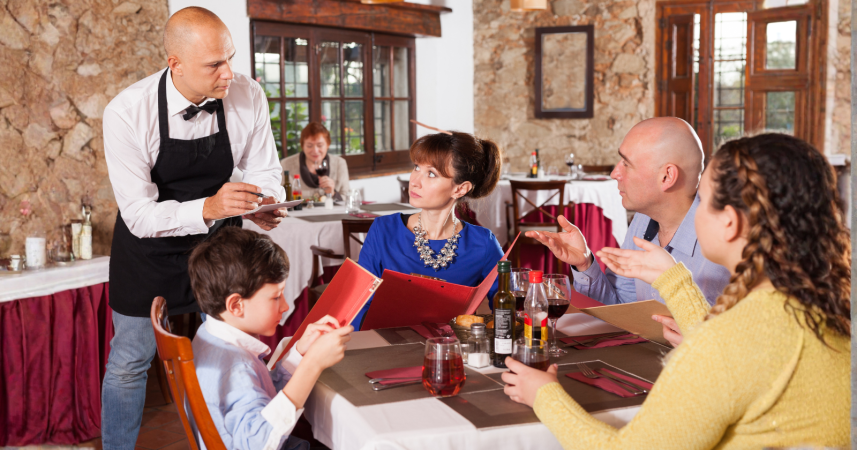
That moment is burned into my memory. I was maybe twelve, sitting in a booth at Denny's, watching my mother's eyes dart between the menu and the four of us kids.
Her finger traced invisible calculations in the air while my dad sat quietly, already knowing he'd order whatever was cheapest.
"You can share a milkshake with your brother," she'd say, not as a suggestion but as a predetermined outcome of her mental math.
Growing up lower middle class taught me lessons about money that no finance book ever could. But more importantly, it shaped how I understand the psychology of scarcity, abundance, and the invisible lines that divide social classes.
The mathematics of eating out
Restaurant menus tell two stories. There's the one about food, and there's the one about who belongs.
My mother could stretch a dollar like nobody's business. At home, she'd make meals that could feed all six of us for days. But restaurants? That was different territory.
The markup on drinks alone would make her wince. Water for everyone became our family tradition - not because we weren't thirsty for something else, but because $2.99 for a Coke times four kids was a utility bill payment.
I've mentioned this before, but behavioral economics shows us that people make different decisions under scarcity than abundance.
What I didn't understand then was that we were living a masterclass in prospect theory - where the pain of loss (spending too much) outweighed the pleasure of gain (enjoying a meal out).
The thing is, it wasn't really about the money. Not entirely. It was about the mental load of constantly calculating, constantly worried that one wrong order would tip us from "treating ourselves" to "being irresponsible."
The invisible uniform of class
You know what's fascinating? Years later, working in Los Angeles, I'd watch wealthy colleagues casually order $18 cocktails without glancing at the price.
They'd add appetizers "for the table" without checking if everyone was okay splitting the bill. They wore their economic comfort like an invisible uniform.
But my uniform was different. Even when I started earning decent money, I'd still hear my mother's voice doing calculations. I'd still drink water. I'd still check prices before suggesting a restaurant to friends.
Class isn't just about money in your bank account. It's programmed into your nervous system. It's the anxiety that rises when someone suggests "just splitting the check evenly" when you ordered a salad and they had steak. It's the way you read a menu right-to-left, price first, food second.
Have you ever noticed how some people never look at prices? That's not carelessness. That's the privilege of never having to.
Teaching moments in scarcity
My grandmother, who raised four kids on a teacher's salary, had this saying: "There's no shame in being careful with money, only in being careless with it."
Every Saturday, she volunteers at the local food bank. Not because she has to anymore, but because she remembers what it felt like to need to. She taught me that remembering where you come from isn't about dwelling in the past - it's about maintaining perspective.
The lower middle class experience is full of these unintentional lessons. You learn creativity from limitation. You learn gratitude from scarcity. You learn that happiness and wealth aren't as correlated as advertising wants you to believe.
But you also learn shame. The hot feeling when classmates talk about their vacations while you spent summer at home. The embarrassment when you can't join activities because of "hidden" costs. The way you learn to say "I'm not hungry" when you're really saying "I can't afford it."
Breaking the patterns
Here's what psychology tells us: The scripts we learn in childhood about money become our default programming as adults. The amygdala, our brain's alarm system, gets triggered by the same financial anxieties our parents felt, even when our circumstances change.
But awareness is the first step to rewriting those scripts.
I started noticing my patterns. The way I'd feel guilty ordering anything but the cheapest entrée. The way I'd overcompensate by insisting on paying for everyone when I could afford it. The way I still calculated tips to the penny instead of just rounding up.
Do you carry these patterns too? That quick math you do before agreeing to plans? The way you check your bank balance after every purchase, no matter how small?
These behaviors aren't character flaws. They're adaptations. They kept our families afloat. But sometimes, what protected us in the past limits us in the present.
The gift in the struggle
Strange as it sounds, I'm grateful for those Denny's dinners and my mother's menu mathematics. They taught me to see the world through a lens that many never develop.
When I travel now, I notice how different cultures handle class and consumption. In some countries, there's no shame in asking prices or negotiating. In others, it's considered rude. But everywhere, there are people doing that same mental math my mother did, just in different currencies.
Those early experiences made me more empathetic. When friends stress about money, I get it. When someone declines plans, I don't push. When I see parents doing menu math with their kids, I remember that love sometimes looks like limitation.
Wrapping up
The restaurant moments that marked my childhood weren't really about food or even money. They were about the weight of responsibility my parents carried, trying to give us normalcy while managing scarcity.
Today, when I catch myself studying a menu like a math problem, I pause. Sometimes I order the water out of habit. Sometimes I get the overpriced coffee because I can. Both choices are okay.
Class consciousness doesn't disappear with a bigger paycheck. It evolves. The goal isn't to forget where we came from or to be ashamed of it. It's to understand how those experiences shaped us and decide which patterns still serve us.
Those mental calculations my mother did? They were love in action. And maybe that's the most valuable thing I learned at those restaurant tables - that sometimes love means doing the hard math, making the tough choices, and finding joy in sharing a milkshake with your brother.
Because in the end, it was never really about what we ordered. It was about being together, even if the bill would be a conversation on the drive home.