A home can have great bones and still look less expensive than it is because of a few small styling choices. The good news is most of these mistakes are easy to fix without renovating. Here are eight decor habits that quietly drag a space down.
Let’s be honest. Most of us don’t need a mansion. We just want our home to look like we have our life together.
Because here’s the annoying truth: you can have a solid apartment or house with good bones, decent furniture, and a clean space, and it can still feel kind of cheap.
Not because you didn’t spend enough money, but because a few subtle decor mistakes quietly ruin the whole vibe.
I learned this back when I worked in luxury hospitality. Fancy restaurants and hotels don’t just sell food and service. They sell atmosphere. Lighting, scent, textures, and even how the room makes you feel.
And once you notice how intentional those spaces are, you can’t unsee what most homes are missing.
So if your place feels “off” even though you’ve got good stuff, these are the eight mistakes that instantly downgrade it, plus simple fixes that bring it back up.
1) You rely on overhead lighting
Nothing makes a home feel sterile like relying on one big overhead light. You know the vibe. Bright, cold, and slightly depressing, like you’re about to fill out paperwork.
Most high-end spaces don’t do this. They layer light instead of blasting it.
Think of a great restaurant. They don’t spotlight you while you eat. They use soft pools of light that make everything look warmer, richer, and more flattering.
Aim for at least three light sources in each main room. A floor lamp, a table lamp, and something ambient. Choose warm bulbs (around 2700K) unless it’s a work space. Bonus points if you use dimmers or smart bulbs.
This is one of the cheapest upgrades that makes the biggest difference.
2) Your curtains are too short or hung too low
Bad curtains are like wearing pants that don’t fit. Even if the material is nice, the wrong length makes everything look awkward.
The most common mistake is hanging curtains right above the window frame and stopping them halfway down the wall. It makes the ceiling look lower and the whole room feel smaller.
Another mistake is choosing flimsy curtains that don’t drape well. They look temporary, like something you grabbed just to “have curtains.”
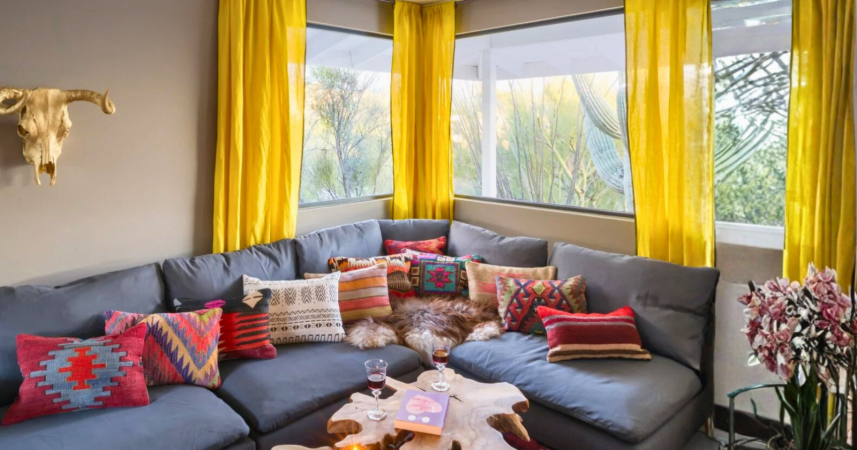
Hang the curtain rod closer to the ceiling and extend it wider than the window. Let the fabric hit the floor or lightly kiss it. Choose fabric with some weight, like linen blends or cotton.
This one detail can make a room feel instantly taller and more polished.
3) Your rug is too small
If you want to spot a room that looks cheaper than it should, look at the rug.
Most people go too small because rugs are expensive and sizing feels confusing. But a tiny rug makes the whole space look disconnected, like your furniture is floating around it.
In expensive homes, the rug anchors the room. It pulls everything together.
For a living room, the front legs of the sofa and chairs should sit on the rug at minimum. Ideally, all legs do. For a dining room, the rug should extend far enough so the chairs stay on it even when pulled out.
If you can only upgrade one decor item, make it the rug. Big rugs make rooms feel expensive. Small rugs make them feel unfinished.
4) Your walls are bare or your art is undersized
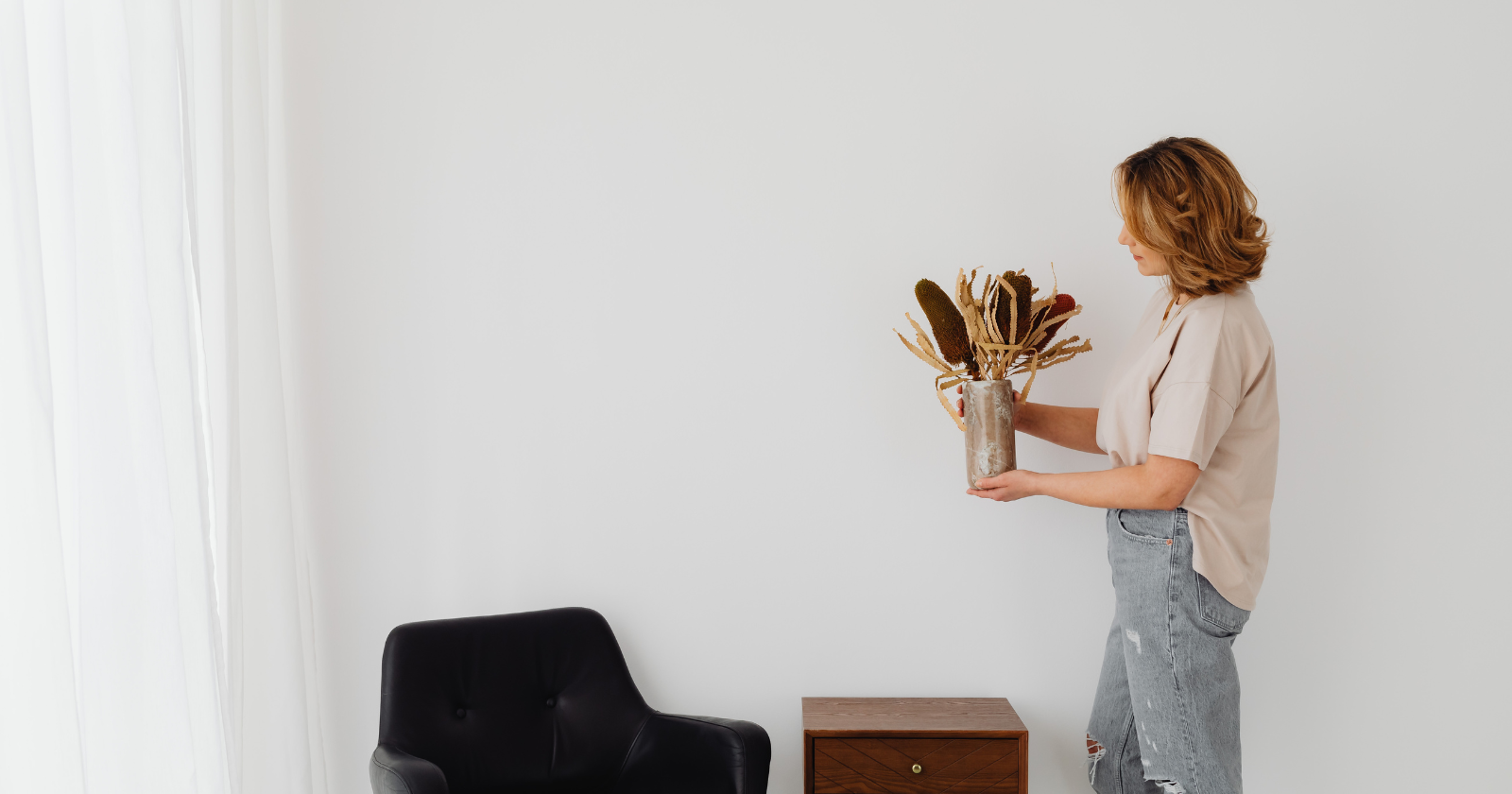
Bare walls make a home feel temporary, like you just moved in and haven’t decided if you’re staying.
But the opposite problem is also common: tiny artwork floating in the middle of a big wall. Or generic quote prints that feel like filler.
It’s not about buying expensive art. It’s about scale, placement, and intention.
Go bigger, or group smaller pieces into a gallery wall so they look like a statement. A good rule is that art above a sofa should be about two-thirds the width of the sofa.
Also, hang art at eye level. Most people hang it too high because they’re trying to “fill space.” That usually makes it look more awkward.
If you want a fast win, upgrade your frames. Cheap prints can look great with decent framing.
5) Your finishes are clashing
This one creeps in slowly. You buy a gold mirror because it looked good online. Then you add black hardware. Then a chrome lamp. Then a silver table. And suddenly your home looks like a random collection of impulses.
High-end homes aren’t perfectly matched, but they are consistent. The finishes feel like they belong together.
Choose a dominant metal finish and stick to it, at least within each room. You can add a second accent finish, but keep it intentional.
Also repeat materials. If you have black accents, repeat black in a few places. If you have warm wood tones, echo them throughout the space.
Repetition is what makes a room feel designed rather than accidental.
6) Your clutter is visible
Even if you have expensive furniture, clutter will make everything look cheap.
When counters are covered in random stuff, cables are exposed, and papers are stacked everywhere, the room feels chaotic. And chaos reads as low-end, even if the items themselves weren’t cheap.
Luxury hotels and restaurants are masters at this. They keep surfaces clean and make storage look seamless.
Use trays, baskets, and closed storage to hide the everyday mess. Give your clutter a “home.” Keys go in a bowl. Paper goes in a drawer. Chargers go in a box.
And please, hide your cords. It’s not glamorous, but cord management instantly makes your space feel cleaner, stress free and more modern.
7) Your furniture is pushed against the walls
A lot of people arrange furniture like they’re afraid of space. Sofa against the wall, chairs along the edges, and an empty awkward center.
It’s common, especially in smaller homes, because people think it makes the room feel bigger. But it usually does the opposite. It makes everything feel like a waiting room.
In higher-end spaces, furniture is pulled in to create zones and conversation areas.
Try pulling your sofa forward by even 4 to 8 inches. Add a console table behind it if needed. Create a defined seating area with a rug and a coffee table.
Your room should feel like it was arranged for living, not just storing furniture.
8) Lastly, your space has no texture
This is the one people miss, and it’s the reason some homes feel flat even when they’re clean and stylish.
When everything is smooth, shiny, and one-note, the space lacks depth. Texture is what makes a room feel layered and expensive.
I think about this the same way I think about food. The best dishes have contrast. Crunchy. Creamy. Fresh. Rich. A room needs that too.
Add texture through fabrics and materials. A chunky knit throw. Linen pillows. A wool rug. A woven basket. A ceramic vase. A matte lamp. Even wood and stone elements help.
You don’t need more decor. You need better contrast.
The bottom line
A home doesn’t look expensive because it’s filled with expensive things.
It looks expensive when it feels intentional.
Warm layered lighting. Curtains hung correctly. A rug that actually fits. Art that has presence. Finishes that make sense together. Clear surfaces. Furniture arranged with purpose. Texture that adds depth.
If your home feels “cheap” despite having good stuff, it’s probably not a budget problem. It’s a detail problem.
And that’s good news, because details are fixable.