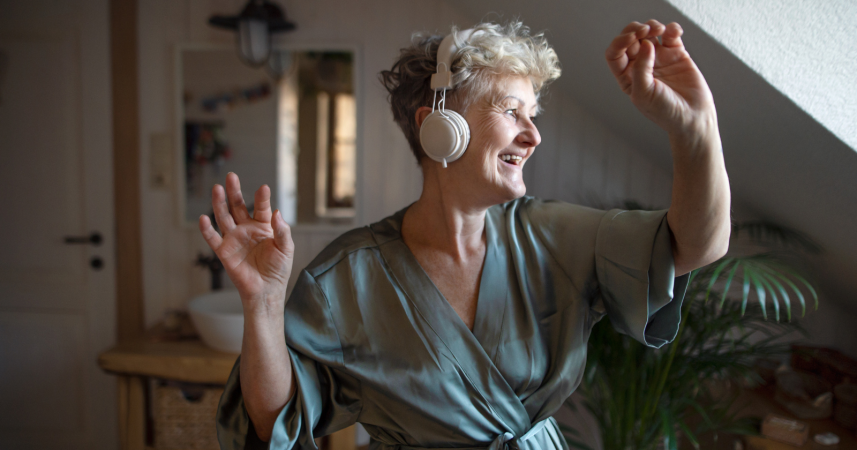
While their peers struggle with brain fog and forgetfulness, these retirees are solving complex problems and learning new skills with the mental clarity of someone half their age—and it all starts with what they do before 9 AM.

Add VegOut to your Google News feed. 
Last month, a Stanford study revealed that retirees who maintain specific morning routines score higher on cognitive tests than working adults in their forties.
That's not a typo. We're talking about 70-year-olds outperforming people decades younger on memory, problem-solving, and mental agility assessments.
When I first retired at 64, my knees shot from too many years standing in front of a classroom, I thought my best days were behind me. The first few months were rough. I'd wake up wondering what the point was anymore.
But then something shifted. I started noticing patterns among the vibrant retirees I met at the library, the ones who seemed to radiate energy and purpose. They all had something in common: Intentional morning routines that set the tone for their entire day.
1) They wake up at a consistent time without an alarm
Have you noticed how some older adults seem to bounce out of bed while others struggle to find motivation? The difference often lies in circadian rhythm regulation. Successful retirees don't fight their natural wake time; they honor it.
I've been waking at 5:30 AM for the past two years now, no alarm needed. My body just knows. This consistency does more than regulate sleep. Research shows it enhances memory consolidation and reduces cognitive decline by up to 23%.
The key isn't necessarily waking early, though many do. It's the consistency that matters. Your brain thrives on predictable patterns, and when you give it that stability first thing in the morning, everything else falls into place more easily.
2) They spend the first hour in deliberate quiet
Before the world intrudes with its demands and noise, sharp retirees protect their morning silence like a treasure. I spend my first hour with just my tea and journal, no phone, no news, no television.
This isn't about being antisocial. It's about giving your brain the space it needs to transition from sleep to wakefulness without jarring stimulation.
During this quiet time, many of us practice what researchers call "cognitive housekeeping." We let our minds wander, process dreams, and naturally organize thoughts for the day ahead.
This unstructured mental time has been linked to improved creativity and problem-solving abilities throughout the day.
3) They hydrate before they caffeinate
Your brain is about 75% water, and after seven or eight hours without any fluid intake, it's parched. Yet most of us reach for coffee first thing. The sharpest retirees I know start with a full glass of water, sometimes with lemon, sometimes plain, but always before anything else.
This simple act jumpstarts metabolism, helps flush out toxins, and most importantly, rehydrates the brain for optimal function.
One friend swears her morning brain fog disappeared completely when she started drinking 16 ounces of water before her coffee.
The science backs her up: Even mild dehydration can impair cognitive performance, particularly in tasks requiring attention and motor coordination.
4) They move their bodies gently
You don't need to run marathons or lift heavy weights. The most mentally agile retirees incorporate gentle movement into their mornings. Some do tai chi in their living rooms, others take a slow walk around the garden, and many practice simple stretches.
What matters is getting blood flowing to the brain. Even ten minutes of gentle movement increases BDNF (brain-derived neurotrophic factor), often called "Miracle Gro for the brain."
It helps create new neural pathways and protects existing ones. I started with just five minutes of stretching and now can't imagine starting my day without it.
5) They practice meditation or mindfulness
I discovered meditation through a library audiobook, skeptical at first about all the hype.
But the evidence is overwhelming: Regular meditation literally changes your brain structure, increasing gray matter in areas associated with learning, memory, and emotional regulation.
You don't need to sit in lotus position or chant. Many successful retirees practice mindfulness while drinking their morning tea, focusing on the warmth of the cup, the steam rising, the flavor unfolding.
Others use apps for guided meditation. The point is training your attention muscle, which tends to weaken with age unless actively maintained.
6) They engage in learning before noon
Whether it's doing the crossword, learning Spanish on an app, or reading about quantum physics, sharp retirees challenge their brains when cognitive energy peaks in the morning. They don't save the hard stuff for later when fatigue sets in.
I've noticed this pattern repeatedly: The retirees who seem most vibrant treat morning learning as non-negotiable. One woman at my library reads scientific journals every morning at 7 AM. She's 78 and can discuss current research better than many professionals I know.
The morning brain is primed for absorbing new information, and using this time for learning compounds over months and years into significant cognitive reserves.
7) They connect meaningfully with someone
Isolation is poison for the aging brain, yet many retirees go days without meaningful interaction. The sharpest ones make morning connection a priority. This might mean calling a grandchild, having breakfast with a spouse, or joining a morning walking group.
What distinguishes this from casual interaction is intentionality. They're not just exchanging pleasantries; they're engaging in conversations that require active listening and thoughtful response. S
ocial engagement exercises multiple cognitive functions simultaneously: Memory, language processing, emotional regulation, and executive function.
Final thoughts
These seven morning practices aren't magic bullets, but together they create a powerful framework for cognitive vitality. The retirees who seem to defy aging aren't necessarily genetically blessed.
They've simply discovered that how you start your day determines not just how you feel, but how clearly you think, how well you remember, and how creatively you problem-solve.
The beauty is that none of these practices require special equipment, expensive memberships, or extraordinary discipline.
They're accessible to anyone willing to approach mornings with intention rather than default. Tomorrow morning, try just one. Your future self will thank you.