Most of what flight attendants notice is completely within your control.

Add VegOut to your Google News feed. 
You know that moment when you step onto a plane and the flight attendant hits you with the smile and the “hello?”
It feels casual, but trust me, it’s not just vibes.
In luxury hospitality, you learn a funny truth fast: The first few seconds tell you almost everything you need to know about a guest because you’re trying to predict what they need, what might go wrong, and how to keep the whole experience smooth for everyone.
Flight attendants are basically hospitality pros in a metal tube with tight timelines, safety rules, and 200 little variables walking down the aisle.
Yes, within the first 30 seconds, they notice stuff and most of it is fixable with tiny tweaks that make your trip calmer, healthier, and honestly more pleasant for everyone around you.
Here are seven things they’re clocking almost immediately:
1) How you enter the plane
You can tell a lot from the first five steps down the aisle.
Are you moving with purpose, or are you drifting like you just woke up inside a video game tutorial?
Flight attendants notice if you’re aware of your space.
The aisle is narrow, people are behind you, and overhead bins are basically a competitive sport.
If you stop dead to read your boarding pass like it’s a poem, they notice.
They also notice your energy: Are you tense? Rushed? Calm? Annoyed before anything even happened?
That vibe matters because it often predicts the kind of interaction you’re about to have.
In hospitality, we’d call this “reading the room.”
On a plane, the room is a rolling bottleneck.
If you want to be that passenger everyone quietly appreciates, do this: Boarding pass ready, keep moving until you’re at your row, and if you need to pause, step into a gap or let people pass.
It’s about not turning your entrance into a traffic incident.
2) Whether you’re prepared or about to be high maintenance
There’s a specific look people get when they’re not ready.
It’s the “wait, where’s my seat” face mixed with the “I definitely packed my headphones” lie.
Flight attendants notice the passengers who are organized because those passengers tend to stay regulated.
They’ve got what they need, they settle quickly, and they don’t need five little favors in the first ten minutes.
On the flip side, the unprepared passenger usually becomes the stressed passenger.
Stress spreads on planes; one person digging through a bag for a charger turns into three people standing up, the aisle gets blocked, and suddenly everyone’s blood pressure goes up two points.
A simple travel rule I stole from restaurant work: Mise en place.
Chefs set everything up before the rush so they’re not scrambling mid-service. Do the same.
Before you board, put your essentials in one easy-to-reach pouch: Water, gum, headphones, sanitizer, a snack that won’t stink up the cabin, and whatever helps you sleep.
Bonus: If you’re trying to eat better while traveling, this is the moment.
A protein-forward snack and a bottle of water saves you from the airport cinnamon roll spiral later.
Unless you want the cinnamon roll; just choose it, don’t get ambushed by it.
3) How you treat the crew in the first sentence
Your first line is basically your trailer.
Flight attendants notice whether you say hi, make eye contact, and speak like a normal human… or whether you walk in like you’re checking into a hotel you already hate.
Here’s the thing: You don’t need to perform politeness.
A quick “hey, how’s it going?” does more than you think.
It signals you’re cooperative, emotionally stable, and not about to start a conflict over the size of a Diet Coke.
In every hospitality job I’ve ever had, the best service often went to the people who made the staff feel like people because it creates a smoother loop.
You’re kind, they’re more willing to help, the whole thing stays friendly.
Also, if you’re traveling for business or you’re just trying to be more confident socially, practice this.
It’s low stakes—two seconds—and you’ll be surprised how much calmer you feel when you start interactions on a human note.
4) Your “state” (tired, anxious, angry, or intoxicated)
Flight attendants are basically stress detectives.
They scan your face, your speech, your balance, and your overall vibe to answer one question: Are you okay to fly without becoming a situation?
They notice the person who’s panicking but trying to hide it, angry at the universe and looking for a target, and intoxication quickly because it shows up in small tells: Loudness, clumsy movements, overly intense friendliness, or sudden impatience.
It’s safety.
They’re trained for it, and they’ve seen every version of “I’m fine” that turns into “we need assistance in row 18.”
If you’re anxious, a quiet, simple line helps: “Hey, I get a little nervous flying, just wanted to let you know.”
That’s it, you’d be shocked how often kindness shows up when you’re honest in a calm way.
If you’re tired and cranky, same move: Hydrate, eat something with actual substance, and don’t stack alcohol on top of dehydration and sleep debt.
That combo turns adults into toddlers fast.
5) Whether you’re going to respect the shared space
Planes are the ultimate group project, and nobody wants to be the person who doesn’t pull their weight.
Flight attendants notice the little stuff immediately:
- Do you shove your bag into the first open bin even if your seat is 20 rows back?
- Do you smack people with your backpack as you turn?
- Do you put your phone on speaker like we all agreed to hear your entire life?
They also notice hygiene, in a “please don’t make this cabin smell like regret” way.
Strong perfume, unwashed gym clothes, shoes off with questionable consequences, a meal that’s aggressively fragrant… it all lands.
Let’s talk about the biggest rookie move: Bringing a snack that becomes everyone’s snack because the smell travels.
If you want to be considerate, go for low-odor, high-satiety stuff.
Think nuts (if allowed and you’re mindful of allergies), a simple sandwich, fruit that isn’t messy, protein bars, crackers, even a salad if it’s sealed well.
Save the tuna situation for the ground!
6) How you handle your seat and your stuff
The seat area is tiny.
Flight attendants notice right away if you’re the type who will keep it contained or slowly expand like a gas.
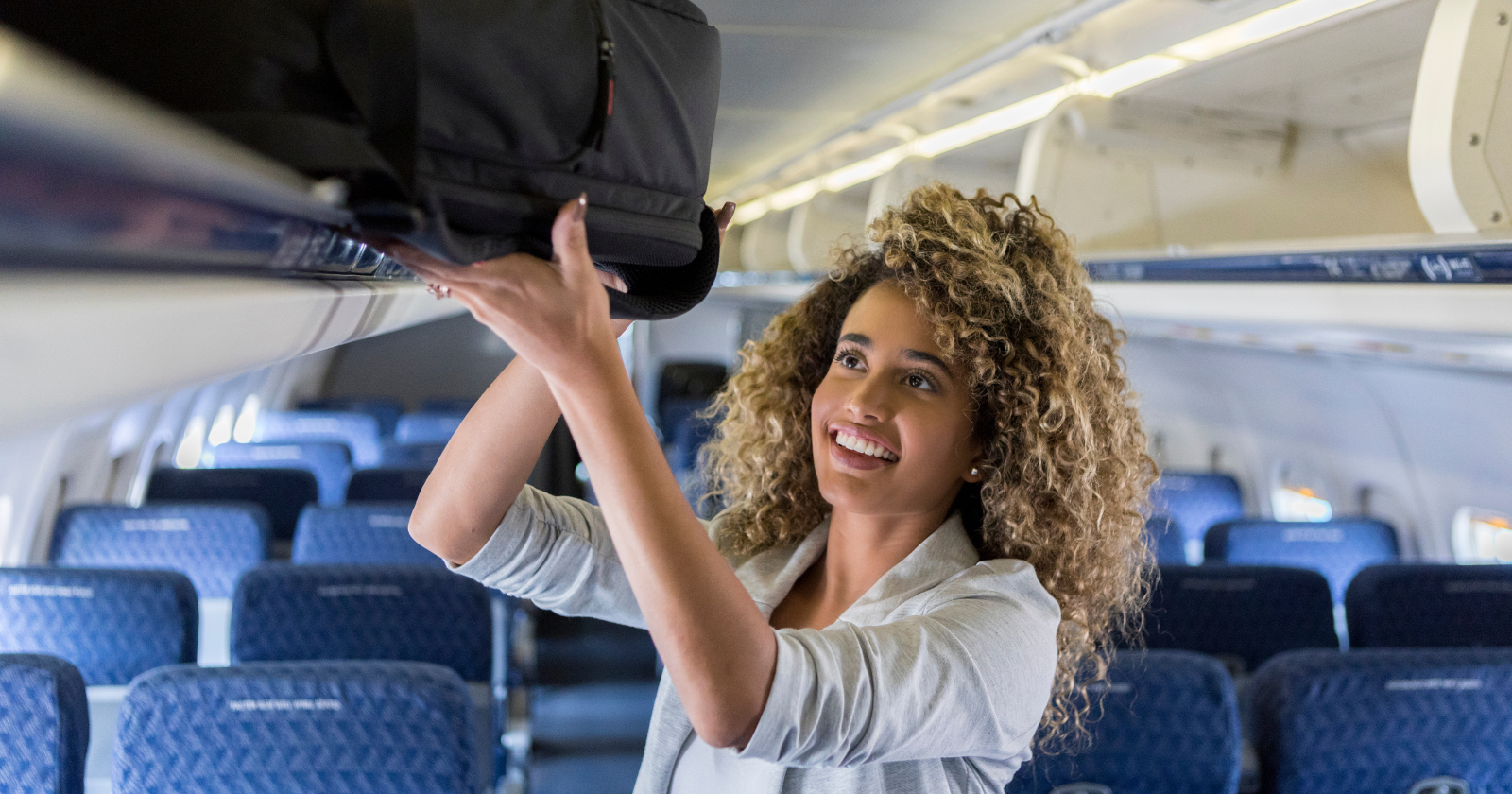
They’re watching for the passenger who instantly blocks the aisle while rearranging their entire backpack like they’re unpacking a studio apartment.
They notice the person who needs three overhead bin attempts and a dramatic sigh, and the person who’s already elbowing into someone else’s space before takeoff.
A lot of this comes down to one habit: Do the setup fast, then sit down.
Put your larger bag up, slide your smaller item under the seat, buckle in, then organize once you’re not blocking the flow.
It’s the same logic as a busy restaurant aisle.
The more you keep pathways clear, the smoother everything runs.
Also, if you care about your body, your mood, and your diet while traveling: This is a great moment to set yourself up for success.
Keep your water accessible and keep your healthier snack accessible; if you’re trying to sleep, get your eye mask and neck pillow ready now.
Tiny preparation, big payoff.
7) How you respond to small instructions
Finally, this is the one that tells them almost everything: How you react to the first small ask.
“Can you step forward?”
“Can you place your bag under the seat?”
“Can you keep the aisle clear?”
Your response reveals your default setting under minor pressure.
Some people treat these requests like a personal attack, while others just go, “yep,” and adjust.
Flight attendants notice the difference instantly because it predicts the whole flight.
The cooperative passenger tends to stay cooperative.
Meanwhile, the combative passenger tends to escalate over something later, like reclining, tray tables, or the tragic reality that airplane coffee is not a spiritual experience.
If you want a simple life upgrade, on planes and off: Practice being easy to work with.
There’s a line from the book The Checklist Manifesto that stuck with me: Simple systems prevent chaos.
Airlines run on checklists and routines because they have to.
When you cooperate with the system instead of fighting it, you reduce friction for yourself.
The bottom line
Flight attendants are reading signals, predicting needs, and are trying to keep the cabin safe and functional while also making the experience not suck.
The cool part? Most of what they notice is completely within your control.
Do that, and you’ll make your own travel day smoother, healthier, and way less stressful.
Which is kind of the whole point, right?
What’s Your Plant-Powered Archetype?
Ever wonder what your everyday habits say about your deeper purpose—and how they ripple out to impact the planet?
This 90-second quiz reveals the plant-powered role you’re here to play, and the tiny shift that makes it even more powerful.
12 fun questions. Instant results. Surprisingly accurate.