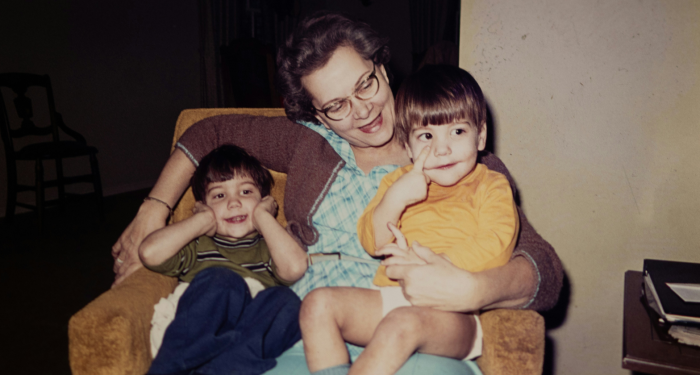
Our parents were not villains; most of them were doing what everyone else around them was doing.

Add VegOut to your Google News feed. 
You know how every generation thinks the one before it was wild?
When I talk to friends about how our parents raised us, we usually end up laughing, then pausing, then saying something like, "Wait, that was actually kind of crazy."
Most of our parents were just doing the best they could with the information they had.
No podcasts, no TikTok therapists, no Instagram nutritionists; just vibes, TV commercials, and whatever their own parents did.
Looking back, a lot of what was considered normal then would start arguments on social media today.
Instead of just judging it, I want to look at it through a self-development lens: What did they do that would be controversial now?
More importantly, what can we learn from it about how we live, eat, and show up for ourselves today?
1) Letting kids roam until the streetlights came on
If you grew up in the 80s or 90s, you probably heard some version of this: "Be home when the streetlights come on."
I remember riding my bike with my friends for hours.
We would vanish into random streets, empty lots, corner stores, and playgrounds.
If something went wrong, you figured it out or found a payphone.
Today, if a parent let their 8 year old just disappear like that, strangers would be filming it for TikTok and arguing about it in the comments.
Was it risky? Sure.
Did it build independence and problem-solving? Also yes.
From a self-development perspective, there is something powerful here: A lot of adults now are so used to safety, comfort, and control that any uncertainty feels unbearable. One late email reply, one awkward conversation, and the anxiety kicks in.
When you grow up having to navigate the world a bit more on your own, you accidentally practice courage, decision making, and reading people.
So what is the takeaway for us? You do not need to throw your phone in a river and disappear for eight hours, but you can deliberately create a bit of "streetlight time" in your life.
Travel alone, take a walk without headphones or GPS, or try a new street food stall instead of checking reviews for 40 minutes.
Give yourself space to be a little lost and trust that you can handle it.
2) Treating processed food like a love language
Boomer parents grew up during a very specific food era.
If your parents handed you a microwaved meal or took you to a fast food drive-thru as a treat, that was love in action.
They were not reading ingredient labels or debating seed oils on Reddit.
In a lot of homes, convenience food was survival.
People were working long hours, juggling kids, and doing what they could to get everyone fed.
Today, if you posted a picture of a kid’s dinner that was just instant noodles, soda, and a neon dessert, the comment section would explode.
Now we know more about ultra processed foods, blood sugar, and long-term health.
We talk about whole ingredients, fiber, healthy fats, gut health.
Here is where it gets tricky: Many of us internalized convenience food as comfort.
We still crave the boxed mac and cheese, the drive-thru burger, the frozen pizza. Not just for the taste, but for the feeling.
As adults, we can upgrade that without shaming ourselves.
Because of this, you are just adding awareness to the love story between food and comfort that started when you were a kid.
3) Forcing you to finish everything on your plate
I was absolutely a member of the Clean Plate Club.
From our parents' perspective, this made sense.
Many of them were raised by people who had lived through war, economic crises, or real food scarcity.
Wasting food was almost a moral crime.
But here is the problem: When you are taught to ignore your hunger and fullness signals as a kid, that does not magically turn off when you become an adult.
If you struggle with overeating or always cleaning your plate, it might be a script you were given at age 6.
You can rewrite it:
- Start leaving one or two bites on your plate on purpose.
- Ask yourself mid-meal, "If this plate disappeared right now, would I be actually upset or already satisfied?"
- When you are full, stop, even if there is still food left.
You do not fix world hunger by forcing yourself to be uncomfortably full.
4) Using physical punishment as a parenting tool

A lot of boomer parents were hit as kids, then told it "made them stronger" or "taught them respect".
Some of them repeated the cycle without thinking there was another option.
Today, if someone casually told a parenting influencer that they hit their kid with a belt, it would turn into an online war.
There is more awareness now about how physical punishment can impact mental health, trust, and nervous systems.
If you grew up in a house where physical punishment happened, your body did not just forget:
- Your nervous system still expects danger when someone raises their voice.
- Conflict feels unsafe, even when the other person is calm.
- You shut down or people please to avoid anything that looks like that old pattern.
This is self-development work at the deepest level.
Therapy, somatic work, breathwork, and mindfulness can all help your body learn that not every disagreement equals threat.
If you ever decide to have kids, you get to choose a different path: Discipline without fear and boundaries without violence.
5) Commenting on weight and bodies like it was small talk
Some of us heard these comments at almost every family gathering.
Sometimes it was said with love, sometimes with judgment, and sometimes with pure cluelessness.
The point is, body talk was casual.
Diet culture was everywhere: Low fat everything, slimming teas, and "summer bodies."
If a parent today made constant comments about their kid's weight on social media, they would be dragged for it.
We now have language around fat shaming, body neutrality, eating disorders, and mental health.
If you have a complicated relationship with your body or with food, it might have started at that dinner table.
Here is the work now:
- Separate your worth from your size.
- Separate morality from what you eat.
- Notice when you talk to yourself the way adults used to talk to you.
When you catch it, pause: Would you say that to a friend? To a child you loved?
You can still care about nutrition and fitness without bullying your body along the way.
That shift alone can change how you eat, how you move, and how you see yourself in the mirror.
6) Leaving kids home alone for hours
Latchkey kids were a whole demographic.
Parents worked, kids had house keys, and that was that.
You came home from school, made yourself a snack, watched TV, maybe did your homework, maybe did not.
Some kids were running the microwave before they could properly read the instructions.
Today, if a young kid was alone for hours every day, strangers might call someone about it.
There is more fear, more awareness of risks, and more pressure on parents to supervise every second.
On the flip side, a lot of us learned how to take care of ourselves early.
As adults, this can be a superpower or a problem.
Superpower: you are independent, resourceful, and able to handle yourself.
Problem: you struggle to ask for help and assume you always have to do everything alone.
If you are the "I will figure it out myself" type, ask yourself where that started: Was it healthy independence or emotional necessity?
Independence is powerful, but hyper independence is exhausting.
7) Ignoring feelings and saying "toughen up"
There is the way many parents handled emotions:
- Crying was often met with "Stop being dramatic!"
- Fear was brushed off with "You are fine."
- Sadness was met with "Other people have it worse."
Therapy was for "crazy people," while mental health was not a dinner table topic.
It is no wonder so many adults now are emotionally constipated.
They can run a marathon, manage a team, meal prep for the week, but ask them "How are you really?" and they glitch.
If you were taught to swallow your feelings, of course it feels uncomfortable to name them now.
Here is the interesting part: A lot of personal growth, better relationships, and even better eating habits start with emotional awareness.
How many times have you opened the fridge when you were not physically hungry, just stressed or sad or bored?
Sometimes "emotional eating" is not the problem.
It is an understandable attempt to soothe feelings that were never allowed to exist out loud.
Once you see the real need, you can choose a response instead of running on autopilot.
The bottom line
Our parents were not villains; most of them were doing what everyone else around them was doing.
The point is to notice the patterns, especially the ones around food, emotions, and safety, and decide what you want to keep.
You can enjoy nostalgic comfort food and still care about your health, you can be independent and still ask for support, and you can be strong without shutting down your feelings.
If anything in this list hit a nerve, that is not a bad sign.
It usually means there is an old script in there that is ready to be rewritten.
And the cool part? You get to be the generation that eats a little better, parents a little differently, feels a little more, and passes on something a bit healthier than what you got!
What’s Your Plant-Powered Archetype?
Ever wonder what your everyday habits say about your deeper purpose—and how they ripple out to impact the planet?
This 90-second quiz reveals the plant-powered role you’re here to play, and the tiny shift that makes it even more powerful.
12 fun questions. Instant results. Surprisingly accurate.