From marathon documentary sessions to endless genealogy searches, discover how the retirement hobbies you've been dreaming about for decades might be secretly transforming you into a hermit—one seemingly productive day at a time.

Add VegOut to your Google News feed. 
When I first retired, I thought I'd finally have time for all those solitary pursuits I'd been putting off for decades.
The stack of unread books, the watercolors gathering dust in the closet, the family genealogy project I'd been meaning to tackle. What I didn't realize was how easily these seemingly enriching activities could become walls between me and the world.
After watching countless friends drift into unintentional isolation during their retirement years, I've noticed a pattern. The hobbies that seem most appealing when we first step away from work are often the ones that quietly pull us away from human connection.
They feel productive and fulfilling at first, but slowly, imperceptibly, they narrow our world rather than expand it.
1) Online genealogy research
There's something deeply satisfying about tracing your family tree, especially when you finally have the time to really dig into those census records and ship manifests.
But have you noticed how easy it is to spend entire days hunched over your computer, lost in the lives of people who lived centuries ago while the living, breathing world passes you by?
I watched a friend become so absorbed in documenting her family's history that she started declining lunch invitations because she was "so close to a breakthrough" with her great-great-grandfather's military records.
Six months later, she'd assembled an impressive family archive but realized she hadn't had a real conversation with anyone outside her immediate family in weeks. The irony wasn't lost on either of us: she knew more about relatives who'd been dead for a hundred years than about what was happening in her neighbors' lives.
2) Binge-watching documentaries
"I'm learning so much," we tell ourselves as we queue up another three-part series on ancient Rome or deep-sea creatures. And we are learning. But when educational content becomes our primary companion from morning coffee through evening wine, we're substituting passive consumption for active engagement.
The sneaky thing about documentary watching is that it feels virtuous. We're not watching mindless TV; we're expanding our knowledge! But knowledge without anyone to share it with becomes a kind of intellectual hoarding.
When my neighbor mentioned she'd watched fourteen hours of documentaries over the weekend, I asked her what she'd learned. She launched into a detailed explanation of Viking trade routes, but when I asked if she'd discussed it with anyone, she paused. "Well, I'm telling you now," she said, but I could see the recognition dawning in her eyes.
3) Solo photography walks
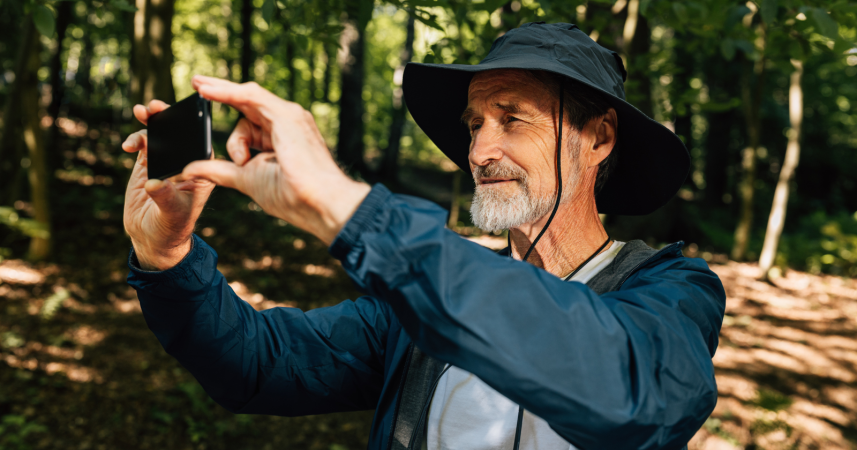
Is there anything more peaceful than an early morning walk with just you and your camera? The world becomes a series of potential frames, light and shadow, composition and color. It's meditative, creative, and gets you out of the house. What could be wrong with that?
Yet I've noticed how photographers often talk about preferring to shoot alone because other people "break their concentration" or "don't understand the need to wait for the right light." Photography can become a barrier we put between ourselves and direct experience. We're observers, not participants. We document life rather than live it.
One woman in my widow's support group realized she'd spent an entire month taking photos of people enjoying the farmers market but had never actually stopped to chat with any of the vendors or fellow shoppers.
4) Reading all day
Virginia Woolf wrote about the necessity of a room of one's own, and after decades of squeezing reading into lunch breaks and bedtime, the luxury of unlimited reading time feels like heaven. Books have always been my refuge, and in those difficult months after losing my husband, they were sometimes my only companions.
But there's a difference between reading as enrichment and reading as escape. When we consistently choose the company of fictional characters over real people, we're not just enjoying literature; we're avoiding life.
I remember defending my reading habit to a concerned friend, listing all the incredible books I'd finished that month. "That's wonderful," she said gently, "but when did you last have coffee with someone?" The question stung because I couldn't remember.
5) Jigsaw puzzles and solitary games
Have you ever lost an entire afternoon to a thousand-piece puzzle? There's something deeply satisfying about finding exactly the right piece, watching the image slowly emerge from chaos. Crosswords, sudoku, and online solitaire offer the same sense of accomplishment without requiring us to leave our comfort zone or coordinate with another human being.
These activities feel productive because we're "exercising our brains," keeping our minds sharp. But cognitive exercise without social interaction is like going to a gym where you only work out one muscle group.
The brain needs conversation, unexpected responses, and the complex dance of human interaction to stay truly healthy. When puzzle-solving becomes our primary daily achievement, we're settling for a very small victory.
6) Collecting and organizing
Whether it's stamps, coins, vintage postcards, or first editions, collecting gives us purpose and structure. There's always another piece to find, another way to organize, another online auction to monitor. The hunt is exciting, and the organization is soothing.
But collections can become fortresses. They give us something to talk about, but only with other collectors. They provide goals, but solitary ones.
I knew someone who spent years building an impressive collection of Depression-era glass, traveling to estate sales and antique shops alone, cataloging each piece meticulously. When she finally decided to downsize, she realized she had rooms full of beautiful objects but very few memories of sharing them with others.
7) Home improvement projects
After retirement, the house finally gets the attention it deserves. That bathroom renovation, the garden redesign, the garage organization system you've been planning for years. These projects feel productive and necessary, and they genuinely improve your living space.
Yet when every weekend revolves around another trip to the hardware store, another YouTube tutorial on tile installation, another solitary afternoon of painting or planting, your home becomes less a place to welcome others and more a never-ending project that keeps you too busy for social plans.
"I can't this Saturday, I'm refinishing the deck" becomes a refrain that eventually stops inviting follow-up invitations.
Final thoughts
The cruelest part about these hobbies is that they don't feel isolating at first. They feel like growth, like finally having time for yourself, like the reward you've earned after decades of obligations. And they're not inherently harmful; each can enrich your life when balanced with genuine human connection.
The key is recognizing when a hobby has shifted from enhancement to replacement, when it's become a comfortable excuse to avoid the sometimes messy, often unpredictable work of maintaining relationships. Real connection requires vulnerability, compromise, and showing up even when you'd rather be home with your book or your puzzle.
Sometimes the bravest thing we can do in retirement is put down the camera, close the laptop, and pick up the phone instead.
What’s Your Plant-Powered Archetype?
Ever wonder what your everyday habits say about your deeper purpose—and how they ripple out to impact the planet?
This 90-second quiz reveals the plant-powered role you’re here to play, and the tiny shift that makes it even more powerful.
12 fun questions. Instant results. Surprisingly accurate.