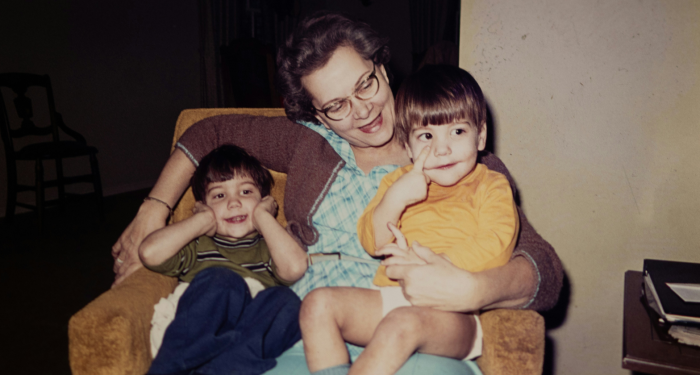
Some flavors never leave you. From sweet treats tucked into lunchboxes to after school snacks shared with friends, these classic bites from the 60s still spark instant nostalgia. Here are twelve childhood snacks boomers remember craving, and still wish they could find today.

Add VegOut to your Google News feed. 
There’s a specific kind of craving that doesn’t come from hunger.
It comes from memory.
You know what I mean. A random smell, an old commercial on YouTube, or a casual chat with someone’s parents about “how snacks used to taste better.”
And suddenly you’re not a functioning adult anymore. You’re eight years old again, sitting on the floor, eating something aggressively sugary, and thinking it’s the best thing ever made.
That’s the power of childhood snacks.
They weren’t just food. They were tiny little time machines.
For boomers, the 1960s were peak snack innovation. Companies were throwing sugar, food coloring, and futuristic marketing into everything because the vibe was simple: the future is now.
Then the future arrived with ingredient bans, nutrition labels, and corporate reformulations. A lot of those snacks vanished.
And if you ask boomers about them today, they don’t just remember them.
They miss them.
Here are 12 of the biggest ones.
1) Fizzies
Fizzies were basically soda in tablet form.
You dropped one into a glass of water, watched it bubble like a science experiment, and suddenly you had instant pop.
Was it the best soda ever? No.
But it felt like you were creating something, which was half the fun.
They disappeared after formula changes and ingredient issues, and while you can sometimes find modern versions, boomers swear the original had a different magic.
2) Space Food Sticks
The 60s were obsessed with astronauts, and Space Food Sticks were a snack that promised you could eat like one.
They were chewy, dense, and sort of like an early energy bar, except way more candy-adjacent.
Were they gourmet? Absolutely not.
But they made kids feel like they were part of the space race, which was the coolest thing imaginable at the time.
3) Quisp cereal (the original version)
Quisp still pops up sometimes, but it’s not the Quisp boomers remember.
Back then, it was crunchy little saucers, ridiculous space mascots, and a sugar hit that made breakfast feel like dessert.
Cereal companies in the 60s weren’t trying to be subtle. They were trying to win childhood.
And Quisp did exactly that.
Modern versions are fine, but nostalgia is picky. If the texture is off, the spell breaks.
4) Marathon bar
If you’ve ever heard a boomer say, “Candy bars used to be bigger,” this is probably what they’re thinking of.
The Marathon bar was famously long. Like, comically long.
It was braided caramel covered in chocolate, and it felt like you were holding a candy weapon.
It disappeared from most U.S. shelves long ago, and while similar versions exist elsewhere, the original still has myth status.
5) Banana Flips
Banana Flips were banana-flavored sponge cakes with a cream filling.
They were soft, sweet, and a little sticky in that classic snack-cake way.
It was the kind of treat that felt like it could count as breakfast, dessert, and emotional support all at once.
They’ve been discontinued for ages, and boomers still talk about them like they were a childhood staple they never got closure from.
6) Swanson “TV” dinners (the snack-style ones)
TV dinners weren’t just a meal. They were an event.
You’d eat them while watching shows on a big clunky television, and the whole thing felt like the peak of modern living.
Swanson had snack-style versions that let kids feel like they were eating a full meal in miniature.
Frozen meals still exist, obviously.
But those original trays, flavors, and that very specific 60s vibe are gone.
Nothing tastes quite like food that feels futuristic.
7) Jell-O 1-2-3
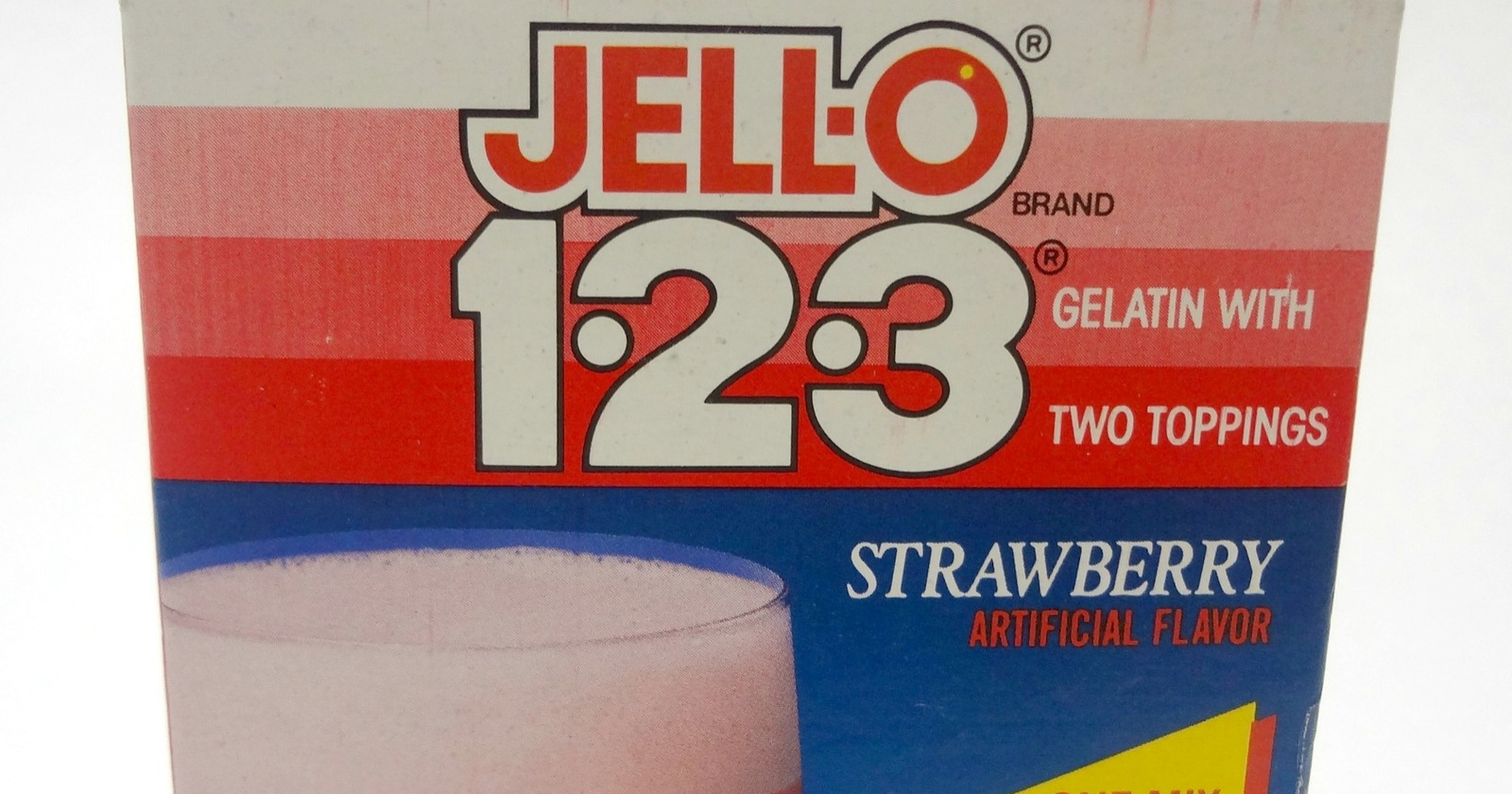
Jell-O 1-2-3 was pure dessert wizardry.
You mixed it up, poured it in, and it separated into three layers all by itself.
A creamy top, a mousse-like middle, and a gelatin bottom.
Kids loved it because it felt like dessert was doing tricks for them.
It was discontinued, and boomers still mention it like it was an iconic childhood invention, because honestly, it kind of was.
8) Fruit Stripe gum
Fruit Stripe gum tasted amazing for about ten seconds.
Then it became a sad little piece of flavorless rubber.
But those ten seconds were glorious.
It also came with those zebra-striped wrappers and little tattoo stickers, which made it feel like a prize every time.
It eventually got discontinued, which basically confirmed what everyone already knew.
Some snacks exist only for a specific era.
9) Space-age snack cakes
The 60s loved “space-age” branding. Everything was space-age.
Even snack cakes.
Several brands released futuristic-themed treats that leaned hard into the whole jet-pack, moon-landing energy.
Boomers remember them because they weren’t just snacks.
They were part of the culture.
Today, brands sell us health and convenience.
Back then, they sold us excitement.
10) Candy cigarettes
Yeah, this one is awkward now.
But candy cigarettes were everywhere in the 60s.
Kids would “smoke” them like movie stars, and some even puffed out powdered sugar.
It sounds wild today, but back then smoking was everywhere, and the culture treated it like normal adult behavior.
Most versions disappeared or got heavily rebranded.
Boomers still remember them because they were one of those weird little childhood items that now feels like it came from another planet.
11) Danish Go-Rounds
Danish Go-Rounds were small round pastries in flavors like cinnamon, apple, and cream cheese.
They felt slightly more grown-up than candy, but still totally kid-friendly.
Think of them as the middle ground between a cookie and a real bakery pastry.
They’re long discontinued, and that’s a shame, because they’d probably crush it today with coffee culture and all the “retro treat” hype.
12) Yoo-Hoo chocolate bars
Yoo-Hoo used to go beyond the drink.
In the 60s, there were Yoo-Hoo chocolate bars that were marketed as a snack and a treat in one.
They were meant for kids who wanted chocolate but also wanted something that felt substantial.
And then they faded out quietly, the way a lot of snacks do.
No dramatic farewell. No final commercial.
Just gone.
Why these snacks still matter
Here’s the funny part.
Most of these snacks weren’t objectively amazing.
Some were too sweet. Some were dry. Some were basically chemistry experiments in edible form.
But that’s not why people miss them.
Boomers crave them because they’re tied to a certain chapter of life.
When you’re a kid, everything feels bigger. Flavors hit harder. A cheap snack can feel like the best thing ever because your standards are pure emotion.
You’re not thinking about ingredients or macros.
You’re just thinking: This makes me happy.
And that’s what boomers are really craving when they miss these snacks.
Not just the taste, but the feeling.
The careless afternoons, the simpler routines, the tiny rituals of opening a wrapper, watching something fizz, or peeling a sticker off gum packaging.
If you’ve ever tried to recreate a childhood meal and felt weirdly emotional about it, you get it.
Food isn’t just fuel.
Sometimes it’s memory you can chew.
And honestly, that might be the most human craving of all.