The busiest people you know might also be the loneliest, and they won't find out until the calendar goes blank

Add VegOut to your Google News feed. 
My grandmother retired from teaching over a decade ago. She still volunteers at a food bank every Saturday. Not because anyone asks her to. Not because it's on a schedule someone else made. She just shows up, ties on an apron, and sorts cans next to the same handful of people she's known for years.
I asked her once if she ever got lonely after leaving the classroom. She looked at me like I'd asked if water was wet. "Lonely? I finally had time for the people I actually like."
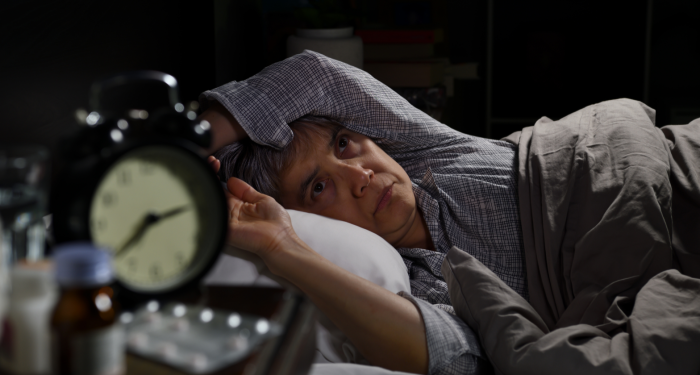
That line stuck with me. Because for a lot of people, retirement tells a very different story. The alarm stops going off, the commute disappears, and suddenly the days stretch out with a kind of silence that feels unfamiliar. Not peaceful. Just... empty.
And here's the thing psychology keeps confirming: that emptiness didn't show up the day you cleared out your desk. It was there all along.
The schedule was a mask
When you work full-time, your day is structured around other people. Meetings, lunch breaks, hallway conversations, group chats. You're surrounded by humans for eight, ten, sometimes twelve hours a day. It feels social. It feels connected.
But most of those interactions are what researchers call "proximity relationships." They exist because you happen to be in the same place at the same time, not because you chose each other.
Evolutionary psychologist Robin Dunbar, known for his research on social networks, has shown that our friendships exist in concentric layers of closeness. We have roughly five intimate contacts, fifteen close friends, fifty good friends, and around 150 general connections. The quality of each layer depends on the time and emotional energy we invest in it.
Here's the problem. When your calendar is packed with work obligations, it's easy to mistake the outer rings for the inner ones. You feel surrounded. Supported, even. But when the structure disappears, what you're often left with are the five people who really matter and the startling realization that you haven't invested much in them at all.
Identity did the heavy lifting
There's a psychological concept that doesn't get enough attention in retirement planning: work identity. For decades, your job answered the question "Who are you?" without you having to think about it. You were the manager, the nurse, the consultant, the teacher.
That identity came with built-in purpose, routine, and social currency. You had something to talk about at parties. You had a reason to get dressed in the morning. You had a role.
When that role disappears, a lot of people describe the feeling as grief. And researchers back this up. A study published in Psychological Science found that retirement's effect on a person's sense of purpose depends heavily on how attached they were to their professional identity. For those who loved their work, the loss hits harder than expected, not because the job was irreplaceable, but because nothing else was allowed to grow in its shadow.
I think about this sometimes as a freelance writer. My work and my identity are tangled up in ways I don't always notice. When the writing is going well, I feel like myself. When it's not, I feel untethered. And I'm only in my forties. Imagine carrying that dynamic for thirty or forty years and then pulling the plug overnight.
Busyness is not belonging
One of the sneakiest tricks loneliness plays is disguising itself as a full calendar.
You can attend meetings, respond to a hundred emails, go to a work dinner, and still feel fundamentally alone. The interactions check the "social" box on paper but don't touch the deeper need for real connection, the kind where someone actually knows what's going on in your life.
I've mentioned this before but there's a meaningful difference between being alone and being lonely. The National Institute on Aging draws a clear line between the two: social isolation is an objective lack of contact, while loneliness is the subjective feeling of being disconnected. You can have one without the other. And for a lot of working professionals, they had neither the isolation nor the recognition of their loneliness, because the job kept both hidden.
Retirement doesn't introduce loneliness. It removes the noise that was drowning it out.
The friendships that survive the transition
Here's a useful thought experiment. Take everyone you interacted with in the last week of your working life. Now remove every person you were required to see, scheduled to meet, or obligated to engage with professionally.
Who's left?
For some people, the answer is rich and reassuring. For others, it's terrifying.
A longitudinal study using data from the English Longitudinal Study of Ageing found that retirement itself didn't necessarily increase loneliness. What mattered was the state of a person's social connections going in. People who had invested in relationships outside of work transitioned smoothly. Those who hadn't found themselves standing in a very quiet room.
This tracks with something I've observed in my own life, even as someone who works from home. The relationships I maintain deliberately, the ones that take actual effort, are the ones that give me the most back. The people I bump into at coffee shops are nice. But they're not the ones I'd call at 2 a.m.
The retirement paradox
Here's what makes this so tricky. The years leading up to retirement are often the busiest of a person's career. You're senior. You're needed. You're in meetings all day. There's no time to nurture friendships outside the office, because the office is consuming everything.
And then one day, it all stops. You're handed a cake, maybe a watch, and sent home to a life you haven't had time to build.
Research on loneliness in retirees confirms this pattern. A study examining emotional loneliness after retirement found that feelings of isolation rose sharply in the first year after leaving work, particularly for people whose social networks had been concentrated in the workplace. The loneliness peaked and, for many, lingered.
The paradox is that the people most at risk are often the ones who looked the least lonely from the outside. They were the busiest. The most connected. The most "in demand." But demand isn't the same as intimacy. And a packed schedule is not the same as a full life.
What actually helps
I'm not writing this to depress anyone who's approaching retirement. Honestly, the opposite.
Because the research also shows that people who recognize the gap early can close it. The fix isn't complicated. It's just intentional.
It starts with auditing your relationships honestly. Not the LinkedIn connections or the holiday card list, but the people who know what you're actually going through. The ones who've seen you tired, frustrated, uncertain, and still showed up. If that list is short, that's not a failure. That's a starting point.
My grandmother didn't stumble into her post-retirement life by accident. She'd been building it for years, one Saturday morning at a time. She had her food bank crew, her garden club, her neighbors she actually talked to. When the classroom went away, the rest of her world was already full.
She chose her people. And she chose them long before she had to.
The real question
If you're still working, here's the question worth sitting with: If your job disappeared tomorrow, who would you call? Not to network. Not to vent about your boss. Just to talk.
If the answer comes easily, you're in good shape.
If it doesn't, that's not something to panic about. But it is something to pay attention to. Because the loneliness that shows up in retirement doesn't arrive with a moving truck. It's been living in the spare room for years.
The only difference is that now, finally, the house is quiet enough to hear it.
If You Were a Healing Herb, Which Would You Be?
Each herb holds a unique kind of magic — soothing, awakening, grounding, or clarifying.
This 9-question quiz reveals the healing plant that mirrors your energy right now and what it says about your natural rhythm.
✨ Instant results. Deeply insightful.

Jordan Cooper
Jordan Cooper is a pop-culture writer and vegan-snack reviewer with roots in music blogging. Known for approachable, insightful prose, Jordan connects modern trends—from K-pop choreography to kombucha fermentation—with thoughtful food commentary. In his downtime, he enjoys photography, experimenting with fermentation recipes, and discovering new indie music playlists.
More Articles by Jordan