The psychology behind your airplane seat of choice says far more about you than you'd think

Add VegOut to your Google News feed. 
I remember my first long-haul flight to Bangkok. I was crammed into a middle seat between two strangers, one of whom kept falling asleep on my shoulder. By the time we landed, I'd made a silent vow: window seat or nothing.
Years later, I've kept that promise. And apparently, I'm not alone in being particular about where I sit.
According to behavioral psychologists, your airplane seat preference reveals more about you than just whether you like legroom or a view. It's a small decision that reflects deeper patterns in how you move through the world.
Here are 9 personality traits psychology links to window seat lovers.
1) You value your personal space
Have you ever noticed how window seat passengers tend to create their own little cocoon?
Dr. Becky Spelman, chief psychologist at London's Private Therapy Clinic, found that window seat fans like to "nest" and prefer to exist in their own bubble. They lean against the wall, arrange their belongings just so, and settle in for the duration.
This isn't antisocial behavior. It's boundary-setting.
In a world where personal space is increasingly hard to find, the window seat offers something rare: a corner of the world that's entirely yours for a few hours. You control the shade. You have a wall to lean on. Nobody's climbing over you to get to the bathroom.
For some of us, that small slice of autonomy means everything.
2) You're more introverted than most
Choosing the window seat sends a pretty clear signal: you're not looking for small talk.
The window becomes both a focal point and a polite barrier. Recent behavioral studies indicate that passengers who prefer window seats tend to be more introverted and would prefer not to be disturbed during the flight.
I've mentioned this before, but back in my music blogging days, I'd spend entire flights writing reviews with my earbuds in, occasionally glancing out the window when I needed inspiration. People probably thought I was unfriendly. Really, I was just protecting my energy for the work that mattered.
This isn't rudeness. It's self-awareness.
You know that small talk drains you, especially in confined spaces. You recognize that preserving your energy matters more than adhering to arbitrary social expectations. And honestly, that's a skill more people could use.
3) You appreciate beauty in unexpected places
"Beauty is the experience that gives us a sense of joy and a sense of peace simultaneously." That's psychologist Rollo May, and he was onto something.
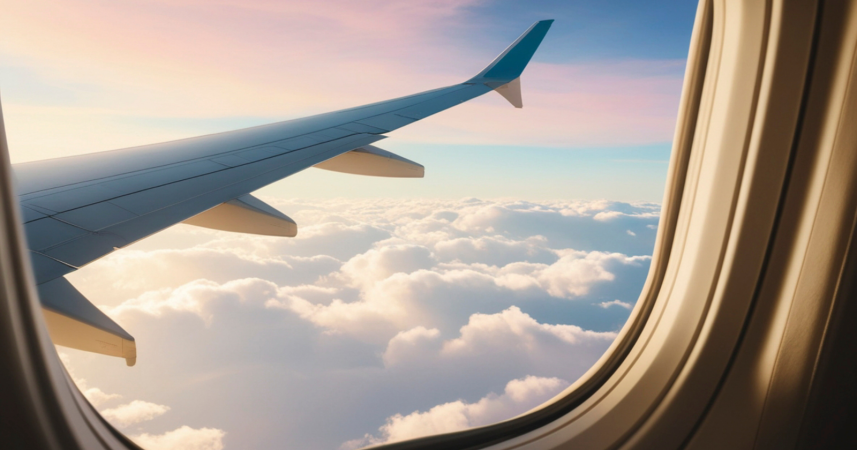
Window seat lovers don't just want transportation. They want the experience. The cloud formations that look like mountains. The patchwork of farmland from 35,000 feet. The way cities light up at night like circuit boards.
According to Psychology Today, openness to experience is the best predictor of aesthetic appreciation. Individuals with this trait tend to be more intellectually curious, which drives a greater taste for aesthetic experiences.
As someone who's always got a camera in hand, I get this completely. Photography taught me to look for beauty everywhere, even in a scratched airplane window at cruising altitude. That sunset over the Pacific? Worth any amount of middle-seat discomfort.
4) You like being in control
Let's be honest: the window seat gives you power.
You control the shade. You decide if it's bright or dark. You're not at the mercy of someone else's preferences.
Dr. Spelman notes that passengers who favor the window seat like to be in control and tend to have an "every man for themselves" attitude. Now, I don't love the "selfish" label some researchers throw around. But there's something to the control aspect.
You like having agency in situations where so much feels unpredictable. Flying is one of those rare experiences where we're completely at the mercy of pilots, weather, and airline schedules. The window seat represents one of the few things you can actually influence.
That doesn't make you a control freak. It means you recognize what you can impact and you act on it.
5) You're comfortable with patience
Think about what choosing the window seat actually means: you're the last one out when the plane lands.
If the aisle passenger wants to stretch, you wait. If you need to use the bathroom, you're climbing over people. When the plane finally reaches the gate, you're watching everyone else grab their bags while you sit.
And you're fine with that.
Research on delayed gratification shows that people who can resist immediate rewards for better long-term outcomes tend to be more successful across multiple life measures. Window seat lovers seem to understand intuitively that good things take time. That rushing creates stress without actually making things happen faster.
I used to be that person sprinting through airports, stressed about every minute. Then I realized the plane doesn't leave faster because I'm anxious. Now I'm the guy calmly waiting while everyone else scrambles. And honestly? It's so much better this way.
6) You're a dreamer
There's something inherently romantic about watching the world unfold below you.
You see the boundaries between cities blur. You watch coastlines curve into the distance. You realize just how big and varied this planet really is.
According to psychologist and author Brian Little, Ph.D., window seat lovers tend to be open to new experiences. The fact that you'd rather watch actual mountains go by than a movie about mountains says something about how you engage with life.
People drawn to the window are often the same ones planning their next adventure before they've even landed. They're curious about places they've never been. They collect mental snapshots of landscapes and coastlines. They wonder what it would be like to explore those forests below.
That sense of wonder doesn't switch off when the plane touches down.
7) You're self-reliant
"In any given moment, we have two options: to step forward into growth or to step back into safety." That's Abraham Maslow, and it captures something essential about window seat people.
Choosing the window means accepting trade-offs. Less freedom to move around. The minor inconvenience of climbing over people when you need the bathroom. Less interaction with flight attendants.
Yet window seat folks willingly choose this spot because it allows a certain level of independence. They take comfort in their own company. They're okay with handling small obstacles themselves.
My partner, who's not vegan and would never turn down a pepperoni pizza, always picks the aisle. More access, more movement. I've always picked the window. Different priorities, different approaches to navigating discomfort. Neither is wrong.
8) You value the journey, not just the destination
For aisle people, a flight is transportation. Get there efficiently. Minimize hassle.
For window people, a flight is an experience.
Research shows that passengers who opt for window seats tend to place a higher emotional value on the entire travel experience. They're not just getting from point A to point B. They're soaking in the journey.
There's something to this that extends beyond airplanes. It's the difference between rushing through a meal and actually tasting your food. Between checking destinations off a list and truly experiencing a place.
Some of my best travel memories aren't the famous landmarks. They're the quiet moments: watching the sun rise over the Himalayas from a tiny window seat, seeing the green patchwork of Vietnam's rice paddies spread out below, the first glimpse of the California coastline after weeks abroad.
9) You're comfortable with solitude
Choosing the window seat is, in many ways, choosing solitude.
You're signaling that you don't need constant interaction or entertainment from others. You're perfectly fine sitting quietly, looking out at nothing and everything all at once.
If this resonates with you, it's because you've learned that being alone doesn't equal being lonely. You actually enjoy your own company.
Not everyone understands this. Some people fill every moment with noise and distraction because silence feels uncomfortable. Window seat people have made peace with their own thoughts. They've discovered that some of the best moments in life come when you're not trying to fill the space with anything at all.
The bottom line
Your airplane seat preference is a small thing. But small things often reveal larger truths.
If you're consistently drawn to the window, it probably says something about how you approach life: valuing experience over convenience, beauty over efficiency, solitude over constant connection.
None of this makes window people better than aisle people, of course. We're all just navigating the same cramped cabin in our own way.
But the next time you're booking a flight and instinctively click that window seat, maybe give yourself a little credit. You're not just choosing a view. You're choosing to engage with the world on your own terms.
And honestly, that's pretty rare these days.
If You Were a Healing Herb, Which Would You Be?
Each herb holds a unique kind of magic — soothing, awakening, grounding, or clarifying.
This 9-question quiz reveals the healing plant that mirrors your energy right now and what it says about your natural rhythm.
✨ Instant results. Deeply insightful.

Jordan Cooper
Jordan Cooper is a pop-culture writer and vegan-snack reviewer with roots in music blogging. Known for approachable, insightful prose, Jordan connects modern trends—from K-pop choreography to kombucha fermentation—with thoughtful food commentary. In his downtime, he enjoys photography, experimenting with fermentation recipes, and discovering new indie music playlists.
More Articles by Jordan