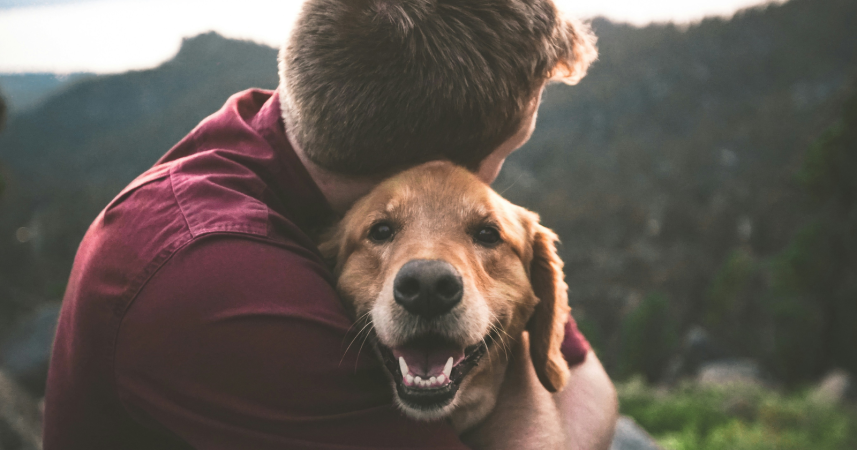
People who have full conversations with their pets aren't just quirky—they're displaying empathy, creativity, emotional intelligence, and seven other psychological traits that reveal how they connect with the world

Add VegOut to your Google News feed. 
My partner caught me mid-conversation with our neighbor's cat last week. I was crouched on the sidewalk, explaining why I couldn't invite him inside because we don't technically have permission to befriend him yet. She just shook her head and kept walking.
Here's the thing though. I wasn't embarrassed. And research suggests I probably shouldn't be.
Turns out, those of us who hold full conversations with animals aren't just quirky. We're displaying a specific set of psychological traits that reveal something fascinating about how our brains work and how we connect with the world around us.
1) You have exceptional empathy that crosses species barriers
When you pause to explain your rough day to your dog or ask your cat if they slept well, you're doing something most people don't. You're extending emotional recognition beyond human interactions.
Research shows that individuals who communicate with pets as if they're human demonstrate empathic capabilities that go far beyond typical pet owner behavior. They're reading subtle emotional cues that others miss entirely.
This isn't about projection. It's about genuine attunement to another being's emotional state, even when that being can't speak your language.
I've noticed this with my partner over the years. She'll pick up on her favorite coffee shop cat's mood before anyone else notices something's off. That same sensitivity shows up in how she reads people too.
The ability to empathize across species barriers suggests a broader capacity for emotional understanding. These people often excel at recognizing and responding to unspoken feelings in their human relationships as well.
2) You naturally use verbal processing to manage stress
Ever wonder why explaining your problems to your pet feels weirdly therapeutic?
Studies published in the Journal of Psychosomatic Medicine reveal that talking to pets creates a unique form of stress relief. The act of verbalizing difficulties to a calm, non-judgmental listener helps clarify thoughts and reduce emotional pressure.
Unlike human conversations where you might filter yourself or worry about burdening someone, pets offer pure listening without the complications of advice, judgment, or social dynamics.
What's happening here is a feedback loop. Your pet's steady presence encourages continued sharing, which further reduces stress. You're essentially creating your own informal therapy session.
People who regularly talk to their pets often develop superior stress management skills that extend beyond animal interactions. They've learned that articulating problems out loud is a powerful tool for emotional regulation.
3) You maintain patience without expecting immediate feedback
Think about what it takes to hold a conversation with someone who will never respond with words.
You ask questions. You pause. You continue anyway. That requires a specific type of patience that's becoming increasingly rare in our instant-gratification world.
This tolerance for non-verbal communication reveals something deeper about your temperament. You're comfortable with slower interactions, with ambiguity, with connection that doesn't follow typical conversational rules.
Research on personality traits shows that people who display this kind of patience tend to be more approachable and steady overall. They can handle challenges without frustration and give others the time and space they need.
In my photography work, I've found that this same patience translates directly. The ability to wait for the right moment, to observe without forcing, to be present without needing immediate results.
4) You demonstrate creativity through imaginative thinking
When you create entire personalities for your pets or interpret their various sounds as specific commentary, you're exercising genuine creative thinking.
This isn't frivolous. Research on creativity emphasizes its role as a central source of meaning in our lives. The playful, uninhibited communication style people adopt with pets allows for creative expression free from social constraints.
Maybe you've assigned your cat a British accent. Maybe your dog has opinions on politics. Maybe you've built entire backstories explaining their behaviors.
These individuals often bring this creative approach to other life areas as well. They find novel solutions to problems and approach challenges with imaginative flexibility that others might miss.
The cognitive flexibility required to sustain these imaginative interactions is the same skill set used in innovation and problem-solving across contexts.
5) You possess high emotional intelligence
Talking to pets requires reading subtle cues. The way they tilt their head, the energy in their tail wag, how they respond to your tone of voice.
This demonstrates exceptional emotional intelligence, particularly in understanding non-verbal communication. You're sensitive to moods and capable of adapting your energy to connect with others, even across species.
Research has found a strong correlation between pet attachment and emotional intelligence. Individuals who form deep bonds with their pets through human-like communication tend to have higher levels of empathy, self-awareness, and emotional regulation.
These are the core components that make someone emotionally intelligent. And they show up in all your relationships, not just with animals.
I've seen this with friends who talk to their pets. They're usually the ones who notice when someone's having an off day before anyone says anything.
6) You have strong nurturing instincts
When you reassure your dog before leaving the house or praise your cat for simply existing, you're expressing care in a way that feels natural and genuine.
People who talk to their pets like humans don't see them as just animals. They see them as emotional companions deserving of love, attention, and conversation.
Research from the University of Chicago found that individuals who personify their pets tend to express higher levels of care in other aspects of life too. From supporting friends to helping strangers, this nurturing tendency extends across contexts.
There's even neuroscience backing this up. MRI studies show that looking into a dog's eyes activates the same part of the brain responsible for bonding between parents and children.
Your brain is literally treating these interactions with similar importance to human caregiving relationships.
7) You practice authentic self-expression without fear of judgment
Here's what I appreciate most about talking to pets. You don't filter yourself.
You can express thoughts and feelings you wouldn't share with other people. You can be completely honest about your day, your fears, your excitement, your boredom. There's no performance, no social calculation, no worry about saying the wrong thing.
This reflects a comfort with authenticity that many people struggle to access even in their closest human relationships.
The ability to drop your guard completely, even if it's just with your cat, maintains a connection to your authentic self. It keeps those honest, unfiltered parts of you active and accessible.
Research suggests this kind of self-expression is psychologically beneficial. It reduces tension, provides emotional relief, and strengthens your overall emotional health.
8) You value connection for its own sake
People who talk to their pets understand something fundamental about human nature. Connection matters, even when it's one-sided.
It's not about filling silence or getting something back. It's about recognizing the presence of another being and choosing to engage with that presence in a meaningful way.
Studies show that the more we crave and value companionship, the more we anthropomorphize non-human beings. This isn't a weakness or a delusion. It's a reflection of how deeply you value bonds and relationships.
For those of us who grew up with technology and instant communication, the ability to find meaning in these quieter, slower connections is increasingly rare.
There's something grounding about a relationship that exists entirely in the present moment, without screens or notifications or performance metrics.
The bottom line
Next time someone catches you mid-conversation with your pet, you can skip the embarrassment.
You're not being weird. You're displaying empathy, creativity, patience, emotional intelligence, nurturing capability, authenticity, and a genuine appreciation for connection.
These traits don't just improve your relationship with animals. They show up in how you navigate the world, how you treat people, how you solve problems, and how you process your own emotional life.
So yeah, I'll keep explaining my day to cats who may or may not care. Turns out it says something worthwhile about who I am.
What’s Your Plant-Powered Archetype?
Ever wonder what your everyday habits say about your deeper purpose—and how they ripple out to impact the planet?
This 90-second quiz reveals the plant-powered role you’re here to play, and the tiny shift that makes it even more powerful.
12 fun questions. Instant results. Surprisingly accurate.