The secret to staying young isn't about skincare or exercise routines—it's about how you show up in your relationships, stay curious about people, and keep evolving instead of calcifying into who you used to be
I've been watching my neighbor down the hall lately. She's in her early seventies, walks her dog twice a day, and honestly has more energy than most people I know in their thirties.
Then there's another neighbor who's about the same age but seems decades older. Different health situations? Sure.
But the real difference shows up in how they relate to people.
The folks who stay genuinely youthful into their later years share some specific relationship habits. Not the superficial "staying young" stuff, but real patterns that keep them engaged, growing, and honestly just more fun to be around.
Here's what I've noticed.
1) They stay genuinely curious about other people's lives
You know what's exhausting? Being around someone who's already decided they know everything worth knowing.
The youthful older people I've encountered ask questions like they actually care about the answers. They want to know about your photography project, your weird podcast obsession, why you chose that particular coffee drink.
There's this woman at my local coffee shop who must be pushing seventy. She remembers tiny details from conversations months ago. Not in a creepy way, but in a "you matter to me" way. She'll ask about the specific thing you mentioned you were worried about, not just a generic "how are things?"
This isn't about being nosy. It's about maintaining genuine interest in the world through the people in it.
When you stop being curious about others, you stop growing. And when you stop growing, you start getting old in the ways that actually matter.
2) They've mastered the art of letting things go
I spent years carrying around resentment about a friendship that went sideways. The weight of that grudge was aging me from the inside.
People who stay youthful don't waste energy on decade-old arguments or nursing wounds that should've healed years ago. They're not pushovers, they just understand that holding onto anger is like drinking poison and expecting the other person to get sick.
Research in behavioral science backs this up. Chronic resentment triggers stress responses that literally age your body faster. Your cortisol stays elevated, your sleep suffers, your relationships suffer.
The youthful older folks have figured out that forgiveness isn't about the other person. It's about not letting your past dictate your present.
3) They're not afraid to be vulnerable
There's this misconception that wisdom means having all the answers and never showing weakness.
But the most vibrant older people I know? They'll tell you when they're scared, confused, or completely lost. They'll admit they don't understand TikTok or that they're anxious about a health issue or that they miss their kids.
Vulnerability keeps relationships real. It invites connection instead of creating distance.
I've noticed this at family gatherings at my parents' house. The relatives who try to maintain some perfect facade end up isolated in the corner. The ones who laugh about their mistakes and admit their struggles end up surrounded by people.
Being open about your humanity doesn't make you weak. It makes you relatable.
4) They keep making new friends
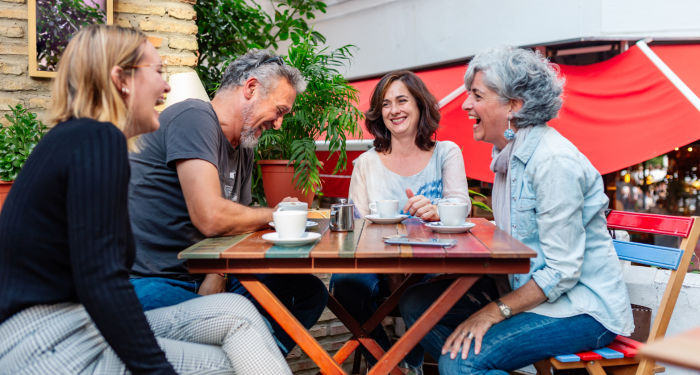
Here's something that surprised me: the most youthful older people don't just maintain their longtime friendships. They actively make new ones.
They strike up conversations at the farmers market. They join groups based on current interests, not just nostalgia. They befriend people decades younger without being weird about it.
New friendships bring new perspectives, new energy, new reasons to get out of your apartment. They prevent you from calcifying into your own little bubble of "the way things used to be."
Sure, old friends are valuable. They know your history. But new friends keep you present.
Are you still open to new connections, or have you decided your friend roster is full?
5) They prioritize quality time over checking boxes
I live in Venice Beach where I see older couples all the time. The youthful ones aren't necessarily the ones doing the most activities. They're the ones actually present during the activities they do choose.
They put their phones away during dinner. They plan meaningful experiences instead of just filling calendar squares. They'd rather have one deep conversation than five surface-level catch-ups.
This matters because relationships don't thrive on frequency alone. They thrive on attention.
When you're fully present with someone, even for twenty minutes, it builds more connection than hours of distracted half-presence.
6) They maintain physical affection and touch
Touch is one of those things we take for granted until we don't have enough of it.
The youthful older people hug freely, hold hands with their partners, pat their friends on the shoulder. They haven't let cultural awkwardness or fear of rejection make them physically isolated.
Studies show that regular physical touch reduces stress, improves immune function, and even helps with pain management. But beyond the science, it just feels good to connect physically with the people you care about.
My partner's mom still grabs my hand when we're walking somewhere. She's in her mid-sixties and it's a small thing that keeps us connected across the generational gap.
7) They listen way more than they lecture
Remember that phase in my twenties when I thought I knew everything about everything? Exhausting for everyone involved.
The older people who stay youthful have figured out that their experience doesn't make them the authority on other people's lives. They offer perspective when asked but don't force it.
They ask questions instead of making pronouncements. They're curious about how younger generations approach problems differently instead of insisting "this is how we did it."
I've mentioned this before but listening is so much more powerful than talking. When you truly listen, you learn. When you learn, you grow. When you grow, you don't get old.
8) They adapt to changes in relationships
Relationships evolve. Kids grow up and move away. Dynamics shift. People change careers, cities, entire life philosophies.
The youthful older folks roll with these changes instead of demanding relationships stay frozen in amber from 1987.
When my partner and I established our kitchen rules around my veganism, we were basically negotiating change in real time. Relationships that last require this kind of flexibility.
If you're still trying to relate to your adult children like they're teenagers, or expecting your spouse to be exactly who they were thirty years ago, you're going to age yourself through frustration.
People who stay young in spirit understand that change in relationships isn't betrayal. It's evolution.
9) They maintain their own identity and interests
The saddest thing I see in some older couples is when one person has completely dissolved into the relationship. No separate hobbies, no individual friendships, no personal interests.
The youthful ones have their own thing going on. Maybe it's photography, or reading behavioral science research, or brewing kombucha on weekends. Whatever it is, they've maintained parts of themselves that aren't defined by their relationships.
This actually makes their relationships stronger. You bring more to the table when you're a whole person, not half of an overly enmeshed unit.
Who are you when you're not in relation to someone else? If you struggle to answer that, it's worth thinking about.
10) They express gratitude and appreciation regularly
Nothing ages a relationship faster than taking it for granted.
The youthful older people notice the small things and say something about them. They thank their partner for making coffee. They text their kids just to say they're proud. They tell their friends why they value them.
This isn't about being fake or overly sentimental. It's about recognizing that the people in your life are choosing to be there, and that choice deserves acknowledgment.
I learned this the hard way when I almost lost some friendships by being too wrapped up in my own stuff to appreciate what people were bringing to my life. Coming back from that required a lot of genuine gratitude.
When you regularly express appreciation, you create a positive feedback loop. People feel valued, they show up more fully, you appreciate them more. Everyone wins.
Conclusion
Youth isn't really about your skin or your joints or how many miles you can run.
It's about staying open, curious, and connected. It's about choosing relationships that challenge and inspire you rather than just comfort you.
The people who stay genuinely youthful into their sixties, seventies, and beyond have figured out that relationships aren't just nice to have. They're literally what keeps you alive in the ways that matter.
So maybe take a look at your own relationship habits. Are you cultivating connection or just going through the motions? Are you growing with people or growing apart?
The answer to that question might tell you more about how you're aging than any mirror ever could.
If You Were a Healing Herb, Which Would You Be?
Each herb holds a unique kind of magic — soothing, awakening, grounding, or clarifying.
This 9-question quiz reveals the healing plant that mirrors your energy right now and what it says about your natural rhythm.
✨ Instant results. Deeply insightful.