The loneliest people in most friend groups are often the ones everyone would describe as the glue

Add VegOut to your Google News feed. 
I spent most of my thirties being everyone's favorite person at the party and no one's phone call at 2 a.m.
If you'd asked anyone in my circle back then, they would have told you I was warm, easy to talk to, funny, generous with my time. And they'd have been right. I was all of those things. I was also profoundly unknown. Not because people didn't try. Because I'd built an entire personality around making sure they never had to.
I could walk into any room and make someone feel seen within five minutes. I knew how to ask the right questions, how to listen in a way that made people feel like they were the only person in the room, how to deflect back to them the moment a conversation drifted anywhere near me.
It looked like warmth. It was armor.
The gap nobody talks about
There's a specific kind of loneliness reserved for people who are universally liked but deeply unknown. And it's one of the most confusing forms of isolation there is, because from the outside, it looks like you have everything.
You have invitations. You have people who light up when you walk in. You have a reputation for being kind, thoughtful, approachable. What you don't have is a single person on this earth who could accurately describe what you're actually going through at any given moment. Not because they don't care. Because you never let them close enough to find out.
The gap between being liked and being known is enormous. And most people never notice it, because the liked side is so loud and so convincing that it drowns out the silence on the other.
I didn't notice it for years. I was too busy being useful.
Where the pattern starts
Nobody wakes up one day and decides to become strategically unknowable. It's learned. And it's almost always learned early.
Maybe you grew up in a home where other people's emotions took up all the oxygen. Where being the easy child, the low-maintenance one, the kid who didn't need anything, was the safest role available. Maybe you learned that having needs made you a burden. That showing the messy parts of yourself made people leave, or withdraw, or get angry.
So you got good at the opposite. You became the person who gave without being asked and asked for nothing in return. The listener. The steady one. The friend who always showed up but never fell apart.
For me, it was subtler than any single event. I grew up in Sacramento in a household that was loving but busy. Three siblings, parents who worked hard, a general atmosphere of "figure it out." Nobody told me not to have feelings. It was more that there never seemed to be room for mine. So I learned to process everything internally and present only the finished product: the thoughtful kid, the easy friend, the guy who's doing fine.
By the time I moved to LA in my twenties, that pattern was so embedded I didn't even recognize it as a pattern. It was just who I was. Or who I thought I was.
The performance of warmth
Here's the thing that makes this particular wound so hard to spot: it produces genuinely good behavior. People who learned early to attend to others' emotions become exceptional at it. They're attentive. They're empathetic. They ask follow-up questions that most people forget to ask. They remember details about your life that you barely remember sharing.
None of that is fake. The warmth is real. The care is real. What's missing isn't sincerity. It's reciprocity.
I've mentioned this before but there's a concept in psychology called "tend and befriend," the instinct to manage threat by strengthening social bonds. Most of the research focuses on how this plays out in crisis situations, but I think it also describes a quieter, more chronic pattern. Some people learn to make themselves indispensable to others as a way of securing connection without ever having to risk the thing that actually creates it: being seen.
You become the person everyone turns to. Which means you never have to be the person who turns to anyone else. And that feels safe. Until it doesn't.
What it costs
The cost of being liked but not known accrues slowly. You don't feel it in your twenties because the social scaffolding is thick. You're surrounded by people. There's always a gathering, a group chat, a scene to belong to.
During my music blogging years, I was embedded in the LA indie scene and I knew everyone. Gigs, after-parties, long nights in dive bars talking about bands nobody else had heard of. I felt connected. But if you'd asked any of those people what I was struggling with, what I was afraid of, what I actually wanted from my life, they'd have stared at you blankly. Not because they were shallow. Because I never gave them the information.
By your mid-thirties, the scaffolding starts to thin. People couple up. Move away. Build lives that don't naturally orbit yours anymore. And if your friendships were built on proximity and pleasantness rather than depth and disclosure, they dissolve without anyone quite noticing. Including you.
You wake up at forty-something and realize that you have a phone full of contacts and no one to call. Not because people don't like you. Because you arranged it that way, years ago, without even knowing you were doing it.
The paradox of the full room
I think about this a lot when I'm doing photography around Venice Beach. I watch people interact. Couples, friend groups, strangers striking up conversations at the boardwalk. And every now and then, I notice someone who's clearly at the center of a group, clearly the one people gravitate toward, and also clearly somewhere else entirely. Present but not accounted for. Performing belonging without actually experiencing it.
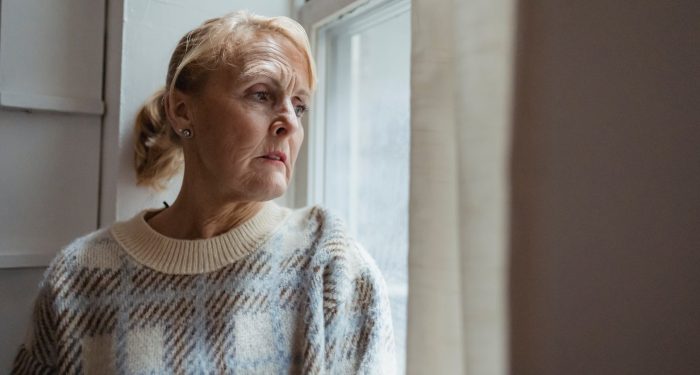
It's a specific look. A warmth in the face paired with a distance in the eyes. A readiness to give attention that's almost too quick, too practiced. The person who asks how you're doing before you've even finished saying hello, because the alternative, you asking them first, is something they're not prepared for.
That used to be me. Some days it still is.
The paradox is that the very trait that makes these people so magnetic in a room is the same trait that keeps them isolated. Being warm is the disguise. Being warm without ever being vulnerable is the cage.
What being known actually requires
The bridge between liked and known is vulnerability. Which is, of course, the exact thing that people with this pattern have spent their entire lives avoiding.
Vulnerability doesn't mean trauma-dumping on someone you just met. It doesn't mean turning every coffee catch-up into a therapy session. It means something much smaller and, honestly, much harder. It means letting someone see you without the performance. Answering "how are you?" with something other than "good, you?" It means admitting that you don't have it together. That you're tired. That something is weighing on you and you don't know how to fix it.
My partner was the first person I started doing this with, and it was terrifying. We'd been together for a while before I realized that even in our relationship, I was still editing. Still presenting the low-maintenance version. Still making sure my needs never became a problem to solve.
The night I finally told them something I'd been carrying alone for months, nothing dramatic, just a fear about my career, a worry about money, something that felt pathetically small but had been eating me alive, they looked at me and said: "I've been waiting for you to let me in."
That sentence wrecked me. Because it meant the distance wasn't just my experience. It was theirs too.
The slow work of closing the gap
I wish I could say there was a turning point. A single conversation that fixed everything. But closing the gap between liked and known is more like physical therapy than surgery. It's repetitive, uncomfortable, and the progress is so gradual you sometimes wonder if it's happening at all.
For me, it started with Marcus. He's one of the few people I've allowed past the warmth into something realer. And it took years. Small disclosures that felt enormous at the time. Admitting I was struggling with something. Not immediately following it with a joke or a deflection. Sitting in the silence after saying something honest and resisting the urge to fill it with reassurance that I was fine.
I started noticing the same thing in other parts of my life too. At the farmers market, where I'd been chatting with the same vendors for years without ever moving past pleasantries. On my balcony in Venice Beach, tending to my herb garden in the evening, realizing that the reason I preferred solitary activities wasn't just introversion. It was control. In solitude, there's no risk of being seen. And for a long time, that felt like the safest place to be.
The work isn't dramatic. It's just showing up, over and over, with slightly less armor than the time before. And trusting that the people worth keeping will still be there when they see what's underneath.
Who you find on the other side
I'm forty-four years old and I'm still learning this. I still default to giving over receiving, to asking over sharing, to warmth over honesty. But the gap is narrower than it was. And the friendships I've built in the last few years feel qualitatively different from anything I had before.
They're messier. Less polished. Less comfortable, in some ways. But they're real. And "real" turns out to feel completely different from "nice."
The people who grow old without close friends aren't broken. They're often the most emotionally intelligent people in the room. They learned, out of necessity, how to read others, how to provide comfort, how to make connection feel effortless. What they never learned, because nobody taught them, is that receiving is just as important as giving. That being known is not a risk to be managed. It's the whole point.
The bottom line
If you recognized yourself anywhere in this, I want to say something clearly: the warmth is not a lie. It's yours. It's real. It's one of the best things about you.
But it's not the whole you. And the people who actually love you, the ones who are worth growing old alongside, don't want the curated version. They want the version that's scared, and confused, and doesn't have it figured out.
Let them see that person. Not all at once. Not recklessly. But steadily. Honestly. One slightly braver conversation at a time.
Because being liked is a nice life. But being known is a full one.
What’s Your Plant-Powered Archetype?
Ever wonder what your everyday habits say about your deeper purpose—and how they ripple out to impact the planet?
This 90-second quiz reveals the plant-powered role you’re here to play, and the tiny shift that makes it even more powerful.
12 fun questions. Instant results. Surprisingly accurate.