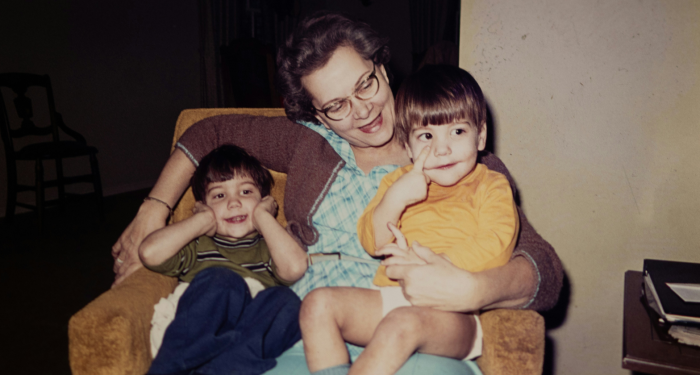
The ten traits my generation shares weren't chosen — they were built by a time when toughness was the price of admission, and while every one of them helped us survive, every one of them also cost us something we're only now learning to name

Add VegOut to your Google News feed. 
I want to be clear about something before I start this list: I'm not writing it from a pedestal. I'm writing it from a kitchen table where I've spent the last 70 years learning that every strength my generation developed came with a cost, and every cost came with a lesson we didn't always learn gracefully.
These aren't traits I'm proud of in a simple way. They're traits I recognize — in myself, in my sisters, in the women at my supper club, in the men who sat silently through things that should have made them scream — and they were built by a time, not chosen by the people who lived through it.
Not better. Just different. And disappearing faster than most people realize.
1. The ability to eat what's in front of you — literally and metaphorically
My mother put dinner on the table and that was dinner. No alternatives, no negotiations, no accommodation for a child who'd decided she didn't like green beans. You ate what was there because what was there was what the budget allowed, and preferences were a luxury that four daughters on a mailman's salary couldn't afford.
This extended well beyond food. You took the teacher you were assigned. You wore the hand-me-down that fit close enough. You lived in the room you shared and you made it work.
What this built was an ability to accept imperfect circumstances without requiring them to be resolved before you could function — a skill I leaned on every day of single motherhood and every year of a teaching career that rarely gave me exactly what I wanted.
2. A tolerance for boredom that borders on supernatural
We had no devices, limited television, and parents who considered our entertainment to be our own responsibility.
Summer stretched out like an empty field, and you either figured out what to do with it or you stared at the ceiling until your imagination kicked in. I built entire worlds in the backyard with my sisters using sticks and whatever the creek offered.
That tolerance for unstructured time — for sitting in nothing and waiting for something to emerge — is a muscle most younger people were never asked to develop, and it's the same muscle that allows you to sit with uncertainty, with grief, with the long stretches of life where nothing is happening and no one is entertaining you.
3. The reflex to fix before you call
When something broke in our house, my father fixed it. Not because he was handy — he was a mailman, not a carpenter — but because calling someone cost money and money was spoken about the way you'd speak about something slightly sacred. You tried first. You failed, tried again, consulted a neighbor, tried a third time.
Calling a professional was an admission that you'd exhausted every other option. I still fix things myself before I ask for help, and while my therapist would tell you this extends into emotional territory where it causes real problems, in the practical world it's made me a woman who can unclog a drain, patch a wall, change a tire, and troubleshoot most household crises without waiting for permission or assistance.
4. The capacity to work while exhausted without treating it as remarkable
When I was raising two children alone and working two jobs while finishing my teaching degree, I slept about four hours a night for the better part of two years. I'm not saying this with pride — I'm saying it with the flat recognition of someone who did what the situation required because the situation didn't care whether I was tired.
My generation learned early that exhaustion wasn't a reason to stop. It was a state you worked inside. My mother sewed through migraines. My father walked his route through blizzards. The expectation wasn't that you'd feel good while doing hard things. The expectation was that you'd do them anyway.
5. A relationship with money that is equal parts terror and discipline
We grew up watching our parents count. Count the grocery money, count the change, count the days until payday. My mother could stretch a chicken into three meals and a soup, and she did it without calling it resourceful — she called it Tuesday.
That proximity to financial thinness created a generation that budgets instinctively, saves compulsively, and carries a low-grade financial anxiety that never fully resolves, even when there's enough. I still check my bank account more often than necessary.
I still feel a small spike of fear when an unexpected bill arrives. The discipline is real and useful. The terror is real and exhausting. They're the same thing.
6. The ability to maintain a relationship through seasons of active dislike
My parents didn't always like each other. There were stretches — weeks, sometimes longer — where the house held a chill that had nothing to do with the thermostat. They didn't discuss it. They didn't separate. They ate dinner together, went to church together, raised their children in the same house, and waited for the season to pass.
I'm not romanticizing this — some of those marriages should have ended, including my first one. But what my generation absorbed was the understanding that relationships involve long stretches of difficulty, and difficulty alone isn't a reason to leave. Sometimes it's a reason to stay and do the harder work of figuring out what went wrong.
My second marriage survived its roughest year because we went to counseling instead of to lawyers, and we went to counseling because both of us came from people who believed you could be angry and committed at the same time.
7. A deep suspicion of public emotion
This one cuts both ways, and I know it. We were taught that feelings were private — that you didn't cry at work, didn't air your grievances in public, didn't burden strangers with your inner life. The upside is a kind of composure that serves you well in crisis.
When my husband was dying, I held myself together in the hospital and fell apart alone at home, and that composure allowed me to be present for him rather than needing him to comfort me during his own final days.
The downside is that decades of private suffering can curdle into isolation, and the same woman who held it together beautifully in the hospital spent six months afterward barely leaving her house because she'd never learned to grieve out loud.
8. The habit of showing up regardless
Sick days were for hospitalization. Everything else was a reason to take an aspirin and go. I taught classes with fevers, with migraines, with a heart so heavy after my mother's Alzheimer's diagnosis that I wasn't sure I could make it to third period. But I made it.
Because showing up was the non-negotiable expectation my generation absorbed before we were old enough to question it. It made us reliable. It made us present. It also made us terrible at recognizing when rest was necessary, and it taught us to distrust anyone who took a day off for something we would have powered through.
9. A comfort with silence that younger people find unnerving
My father could sit on the porch for an hour without speaking and consider it a good evening. My mother sewed in silence the way monks pray — as a practice, not an absence. We grew up in houses where quiet wasn't awkward or empty. It was just the sound of people existing without performing.
I've noticed that younger people — my grandchildren especially — fill every silence with sound. Music, podcasts, videos, conversation. The quiet makes them restless in a way that tells me they were never taught to sit inside it. My generation lives in silence comfortably, sometimes too comfortably, but the ability to be still without stimulation is a kind of freedom I wouldn't trade.
10. The understanding that no one is coming to save you
This is the big one. The one that holds all the others together. We were raised by people who survived the Depression, who fought wars, who built lives out of nothing and expected their children to do the same. The message, delivered not through words but through the daily example of adults who simply handled things, was this: your life is your responsibility.
Not your employer's, not the government's, not your neighbor's. Yours. When things go wrong — and they will — you are the one who has to figure it out.
This belief carried me through a divorce at 28, through years of financial terror, through the loss of a career and a husband and a mother who forgot my name. It is also the belief that kept me from asking for help when I desperately needed it, that kept me from therapy until my fifties, that convinced me for decades that needing anyone was a personal failure.
The backbone and the wall. Same material. Same woman. Same generation that was taught to stand alone and then spent the rest of its life wondering why it felt so lonely.
Final thoughts
I've listed ten traits, but really they're all variations of one thing: the ability to endure. My generation can endure almost anything. We proved it, individually and collectively, through decades of showing up, powering through, holding it together, and never once asking whether holding it together was the same as being whole.
It wasn't. I know that now. But I also know that the endurance is real, and it mattered, and it carried us through things that would have flattened us without it. The younger generations are building something different — something more emotionally honest, more connected, more willing to name what hurts. I admire that. I even envy it some days.
But on the days when life requires you to eat the green beans, fix the broken thing, show up exhausted, and sit in silence with something you can't solve — I'm grateful for the kitchen I grew up in, cold meatloaf and all.