I spent two decades teaching my children to stand on their own, and they did — beautifully, completely — and now I'm learning to live inside that success, which looks a lot like love without relevance, and peace that comes and goes like a tide
My son called last Tuesday. I know this because I'd been waiting since Sunday, which is when I'd texted him a photo of his daughter's drawing that she'd left at my house after our Saturday library trip. He responded to the photo with a thumbs-up emoji. The call on Tuesday was about whether I still had the warranty information for a refrigerator I'd helped him buy four years ago.
He did not ask how I was. Not because he doesn't care, but because it didn't occur to him. There's a difference, and it took me a long time to stop pretending there wasn't.
I love my children with a ferocity that has never dimmed. They love me back. I believe this completely. But somewhere between the years when I was the center of their universe and now, when I orbit the edges of theirs, a quiet renegotiation happened that no one told me to prepare for.
They love me. They don't need me. And those two things, which I once believed were inseparable, turn out to have very little to do with each other.
The long slow demotion
When your children are small, you are God. Not the distant, theological kind — the immediate, practical kind. The one who fixes things, decides things, knows where everything is and what happens next. You are the answer to every question and the solution to every crisis and the last face they want to see before they close their eyes.
Nobody tells you that this role has an expiration date. Or rather, people tell you, but you don't believe them because it's impossible to hold a toddler who is crying for you specifically and imagine a future where you text that same person a photo and receive a thumbs-up emoji three hours later.
The demotion happens slowly. You stop being the first phone call and become the second. Then the third. Then the one they call when they've already decided what to do and just need someone to agree with them. Your opinions shift from gospel to suggestions to something they nod through politely while glancing at their phones.
I noticed it first with Daniel. He was maybe thirty, newly married, and I'd offered advice about something domestic — nothing dramatic, probably something about organizing a kitchen, the kind of thing I'd earned opinions about after decades of feeding a family on a teacher's salary. He listened the way my students used to listen when I assigned summer reading. Respectful. Patient. Already gone.
With Grace, it was subtler. She still calls every Sunday, which I treasure, but I've learned to hear the difference between calling because you want to talk and calling because it's Sunday. The rhythm of obligation sounds different from the rhythm of need. I can hear it the way I used to hear the difference between a student who'd read the book and one who'd skimmed the summary.
The things they don't ask anymore
I used to be consulted. About relationships, about career choices, about whether a apartment was worth the rent or a used car was worth the risk. My experience had currency. I'd raised these children alone for fifteen years on two jobs and a stubbornness that substituted for a safety net. I'd navigated things they hadn't yet — loss, financial terror, the specific loneliness of being the only adult in the house at 2 a.m. when a child has a fever.
Now they have Google. They have friends their own age who are going through the same things in real time. They have therapists, which I'm genuinely glad about, even though it means the conversations we might have had are happening in offices I'll never see.
Last year, Grace was deciding whether to switch careers. I found out about it after she'd already accepted the new position. "I didn't want to stress you out," she said, which is the gentlest possible way of saying your input wasn't part of the equation.
Daniel bought a house last spring. I learned about it the same week he told me, but the week he told me was three weeks after the offer was accepted. He'd consulted his wife, his financial advisor, his buddy who flips houses. Somewhere between the inspection and the closing, he thought to mention it to his mother.
They're not cruel. I want to be very clear about that. My children are kind, thoughtful people who would be horrified to know how carefully I've catalogued these small exclusions. They're simply living their lives with the independence I spent their entire childhood trying to give them.
The irony is not lost on me.
What I taught them too well
When my first husband left me at 28 with two toddlers, I made a decision that shaped everything that followed: my children would never be helpless. They would know how to cook, clean, manage money, solve problems, and stand on their own feet. I taught them self-sufficiency the way some parents teach religion — with devotion, consistency, and the unshakable belief that it would save them.
It did save them. Daniel is steady and capable and handles crises with a calm that reminds me of my father. Grace is resourceful and brave and makes decisions with a confidence I didn't have at her age. They are, by every measure, exactly the adults I raised them to be.
Adults who don't need their mother.
I built that. I built it on purpose. And now I live inside the success of it, which looks a lot like a Sunday afternoon waiting for a phone call that comes out of habit rather than hunger.
A friend from my widow's support group said something that cut right through me. She said, "We spend twenty years making ourselves unnecessary, and then we're heartbroken when it works." I laughed because it was funny. I thought about it for three days because it was true.
The grandchildren complicate everything
Here's where it gets tangled. Because with my grandchildren, I'm still relevant. The little ones still run to me when I come through the door. My oldest granddaughter still calls to talk about her life in the unfiltered way her father hasn't in twenty years. The eight-year-old still believes I know everything, which is a borrowed magic I'm in no hurry to give back.
But access to my grandchildren runs through my children. And there's a delicate choreography to it — being available without being overbearing, offering help without implying they need it, showing up when invited and not wilting visibly when the invitations come less often than I'd like.
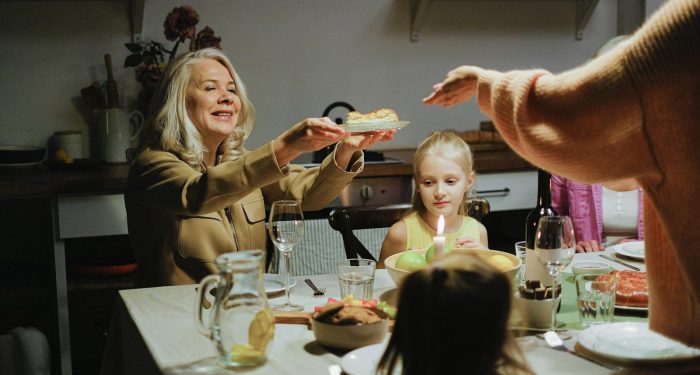
I take each grandchild on a solo adventure day once a year. It's my favorite tradition, one I started because I wanted individual relationships with each of them, not just a seat at the holiday table. But even this requires negotiation, coordination, the unspoken acknowledgment that time with my grandchildren is something my children grant rather than something I'm entitled to.
I don't say this with bitterness. I say it with the particular clarity that comes from sitting with a feeling long enough to see it honestly.
The peace, and what it actually looks like
I said I've made peace, and I have. But peace isn't a place you arrive at and stay. It's more like a tide. Some days I feel it fully — a genuine acceptance that my children's independence is the whole point, that love doesn't require relevance, that I can be proud and a little heartbroken at the same time without contradiction.
Other days I find a drawing my granddaughter left behind and text it to my son and wait for a response that, when it comes, is a small blue thumb on a screen.
My therapist helped me see that I was grieving a role, not a relationship. The relationship is fine. My children love me. They show up for holidays, they check in when storms are coming, they would be on a plane tomorrow if I needed them. But the role — the being needed, the being essential, the being the first person someone thinks to call — that's gone. And it went so gradually that by the time I noticed, there was nothing to fight for. Just something to feel.
What helped, oddly, was remembering my own mother. How I'd call her out of duty some weeks, how I'd make decisions without consulting her, how I'd bristle when she offered unsolicited advice about my marriage or my parenting. I was Grace. I was Daniel. I was a grown woman who loved her mother and found her irrelevant in roughly equal measure.
She never said a word about it. I don't know if that was grace or resignation, but I understand it now in a way that makes me wish I could call her and say I'm sorry. Not for growing up. For not noticing what it cost her.
Final thoughts
Last Sunday, Grace called at our usual time. We talked for forty minutes about nothing in particular — her garden, my watercolor class, a book we'd both read. She didn't ask for advice. She didn't need anything. She just called because it was Sunday, and I was her mother, and that was enough.
When we hung up, I sat with my tea and let myself feel the full weight of what that call was. Not a consultation. Not a crisis. Just a woman checking in on her mother because love, even when it doesn't need you, still wants to show up.
Maybe that's what relevance looks like at this stage. Not being essential, but being chosen. Not being needed, but being wanted — quietly, imperfectly, on their schedule and their terms.
Most days, that's enough. Some days it isn't. And I think the peace I've found lives in the space between those two sentences, which is a smaller space than it used to be, and getting smaller still.
I'll take it.
What’s Your Plant-Powered Archetype?
Ever wonder what your everyday habits say about your deeper purpose—and how they ripple out to impact the planet?
This 90-second quiz reveals the plant-powered role you’re here to play, and the tiny shift that makes it even more powerful.
12 fun questions. Instant results. Surprisingly accurate.