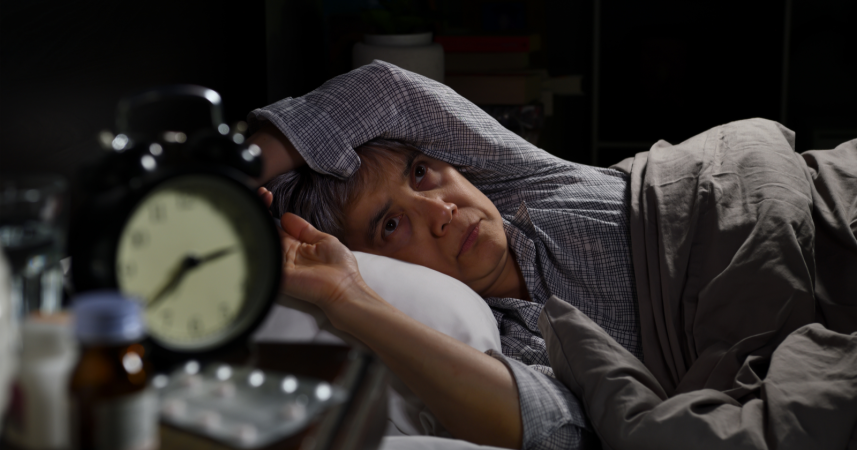
After three years of waking in the dark, I stopped trying to fix my sleeplessness and started listening to what it was really telling me — that retirement didn't just take my career, it took the identity that came with being needed

Add VegOut to your Google News feed. 
It starts the same way every night.
I fall asleep fine. That's the part people don't understand. I'm not lying there staring at the ceiling, running through anxieties or replaying old arguments. I drift off around ten, sometimes earlier, curled on the left side of a bed I've slept on both sides of now. The falling asleep part has never been the problem.
It's the waking up.
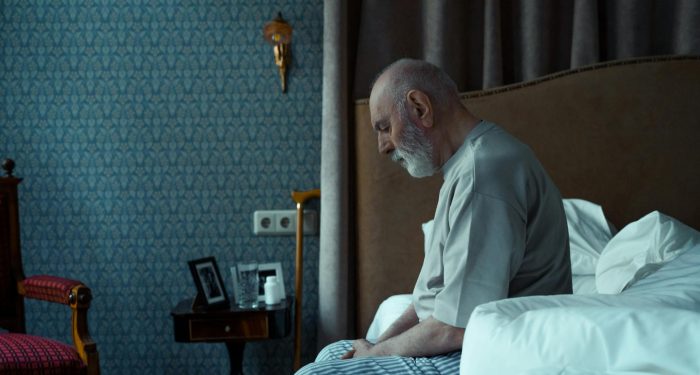
2:07. 2:14. 2:22. The numbers change but the window doesn't — somewhere between two and four in the morning, my body pulls me to the surface like it's expecting something. Like there's somewhere I need to be, something that requires my attention.
There isn't.
And that, I've come to understand after three years of this, is the actual problem.
The alarm clock I don't need anymore
For 32 years, my mornings had a shape. Alarm at 5:15. Coffee while grading whatever I hadn't finished the night before. Pack a lunch I'd eat standing up in the faculty lounge between second and third period. Drive to school early enough to unlock my classroom before the hallways filled with the particular chaos of 400 teenagers who'd rather be anywhere else.
I didn't love every morning. Some days I sat in the parking lot and needed a minute, the same way I imagine soldiers need a minute before walking back into something loud and unpredictable. But even on the worst days, the morning had a direction. My body knew it was needed. My brain had already started solving problems before my feet touched the floor.
When I took early retirement at 64 — my knees had made the decision for me, really — people said things like "You'll finally get to sleep in" and "Think of all that free time." They talked about retirement the way you'd talk about a vacation, as if rest was the thing I'd been working toward all along.
What nobody mentioned is that your body doesn't retire when you do.
Mine kept waking up ready for a job that no longer existed. And when it realized, night after night, that there was nothing on the other side of consciousness that required me, it started doing this strange thing: it woke me up anyway, as if to ask, *Are you sure? Are you sure there's nothing?*
What 2 a.m. actually sounds like
People who sleep through the night don't know about the hours between two and four. They're different from late night or early morning. They belong to no one.
The house makes sounds I never hear during the day — the refrigerator cycling, a branch brushing the gutter, the particular settling of walls that have been standing for forty years. My neighbor's porch light casts a stripe across my bedroom ceiling that I've memorized the way I once memorized the cracks in my classroom ceiling during faculty meetings.
For the first year, I did what everyone suggests. Warm milk. Chamomile tea. No screens. I tried melatonin, white noise machines, a lavender pillow spray that made me smell like a gift shop. I rearranged the bedroom. Bought new sheets. Downloaded a meditation app my granddaughter recommended, which featured a man with a voice like warm butter telling me to visualize my thoughts as clouds.
My thoughts were not clouds. My thoughts were more like a dog circling the same spot on the rug, unable to settle because something felt fundamentally wrong with the room.
I mentioned it to my doctor, who nodded sympathetically and said insomnia is common in older adults, especially women. Hormonal changes, she said. Age-related shifts in circadian rhythm. She offered a prescription. I filled it, took it for a month, and slept through the night in a way that felt less like rest and more like being switched off. I stopped taking it.
Because the sleep wasn't what I was missing.
The thing no one warns you about
Here's what retirement books don't tell you, what the financial planners and the farewell party speeches leave out entirely: when you spend three decades being needed on a schedule, needed urgently and specifically, the absence of that need doesn't feel like freedom. It feels like a phantom limb.
I still reach for it. Some mornings I wake at 5:30, the old time, and for three or four seconds I'm already planning my first period lesson. Then the room comes into focus and I remember. There's no lesson. There's no first period. There are no 30 kids waiting for me to make Shakespeare feel like it matters, which it does, but that's a fight someone else is fighting now.
I filled the days well enough. I have my garden, my books, my library Saturdays with the grandchildren. I volunteer at the women's shelter on Tuesdays and tutor at the community center on Thursdays. I write. I walk. I bake bread on Sundays. From the outside, my life looks full, and it is full. I'm not ungrateful, and I'm not bored.
But there's a difference between a full day and a necessary one.
When I was teaching, the world needed me in a specific chair at a specific time, and if I wasn't there, things fell apart in small but real ways. A substitute couldn't do what I did — not because I was irreplaceable, but because the relationships I'd built with those students were. They needed *me*, the particular version of me that knew that Marcus wouldn't speak up unless you asked him directly, that Emily's sarcasm was a shield, that the kid in the back row sleeping through third period was actually working a night shift to help his mother pay rent.
That kind of being needed doesn't transfer to a garden. It doesn't transfer to bread.
The weight of an open calendar
My therapist — I started seeing one two years ago, which is its own story — asked me to describe what 2 a.m. feels like. Not the waking up part. The lying there part.
I told her it feels like standing in a train station after the last train has left. You're not going anywhere. No one is arriving. But you can't quite bring yourself to leave the platform.
She was quiet for a moment. Then she said, "What are you waiting for?"
I didn't have an answer, and that was the answer.
I'd been waiting. For three years, in the darkest hours of the night, my body had been waking me up to wait for a sense of purpose that wasn't coming back in the form I recognized. Like a dog sitting by the door long after its owner has gone, I was keeping a vigil for a version of myself that had clocked out for the last time.
The purpose problem no one talks about
We talk about retirement finances endlessly. Whether you've saved enough, invested wisely, planned for healthcare. My financial planner had spreadsheets and projections and a very confident handshake.
No one handed me a spreadsheet for meaning.
No one sat me down and said, "You've spent 32 years mattering to young people in a very specific way, and when that stops, you'll need to grieve it like a death. Not the job — the identity."
Because that's what I was mourning at 2 a.m. Not the alarm clock or the lesson plans or even the students, though I miss them in a way that catches me off guard at grocery stores when I see someone the right age. I was mourning the woman who was needed. The one who had somewhere to be.
I think a lot of retirees feel this and don't say it because it sounds ungrateful. You're supposed to be enjoying yourself. You earned this. How dare you feel purposeless when people are still working jobs they hate?
But purposelessness doesn't care about logic. It moves in at night, when there's no schedule to distract you and no one to perform contentment for, and it sits on your chest like a second gravity.
What I'm learning, slowly
I wish I could tell you I solved it. That I found some elegant second act that fills the 2 a.m. hours with peace and my days with renewed direction. I haven't, not entirely.
But here's what has shifted.
I stopped treating the insomnia as a problem to fix and started treating it as something to listen to. When I wake now, instead of fighting it, I get up. I make tea. I sit in the kitchen in the dark with just the stove light on, and I let myself feel whatever is there.
Sometimes it's grief — for my husband, for my career, for my mother, for the decades that passed while I was too busy to notice them passing. Sometimes it's fear, plain and honest, about what the remaining years look like when the structure falls away. And sometimes, more often lately, it's something quieter. A kind of openness. The same feeling I'd get in my empty classroom on the first morning of a new school year, before the students arrived and anything was possible.
I've started writing during those hours. Not the personal essays I write for others to read, but a different kind of writing. Letters to myself. Messy, unedited, sometimes embarrassing explorations of who I am when no one needs me to be anything. My therapist calls it excavation. I call it insomnia with a pen.
And I've started to reconsider what "being needed" actually means. Maybe it doesn't require a classroom or a schedule or 30 kids who won't read the assigned chapter. Maybe my granddaughter needs me when she calls at odd hours to talk about a boy. Maybe the women at the shelter need me in ways I've been too focused on my own loss to fully see. Maybe the bread I bake on Sundays and leave on my neighbor's porch is a small, quiet way of being necessary.
It's not the same. I won't pretend it is. But it's something.
Final thoughts
Last Tuesday, I woke at 2:11 a.m. and instead of lying there, I got up, made my tea, and sat at the kitchen table. I opened my journal and wrote the date, the way I used to write it on the chalkboard every morning.
Then I wrote: *You are 70 years old. You have nowhere you need to be. Figure out where you want to be instead.*
It's a different question, and I'm still learning to sit with it. The insomnia hasn't gone away. I don't think it will — not completely, not as long as some part of me is still standing on that platform waiting.
But I'm beginning to understand that maybe the train I've been waiting for isn't coming. Maybe I need to leave the station. Maybe the fact that I have nowhere I *need* to be is not a loss to grieve but a question I haven't been brave enough to answer yet.
Where do you want to be, Marlene?
I'm working on it.
Most mornings now, I fall back asleep by four. Not because I've solved anything, but because I've stopped pretending there's nothing to solve.
And some nights, when the house is quiet and the stove light makes the kitchen feel like the only room in the world, I think those dark hours might be the most honest ones I've ever spent with myself.
It only took me 70 years to start keeping that appointment.