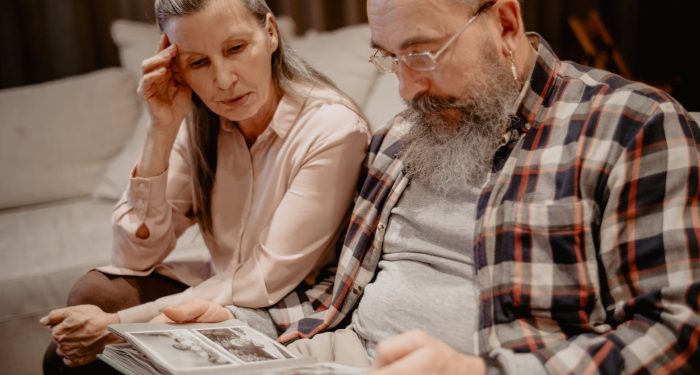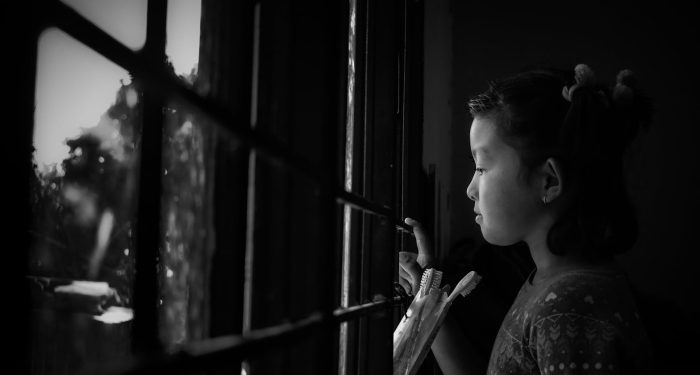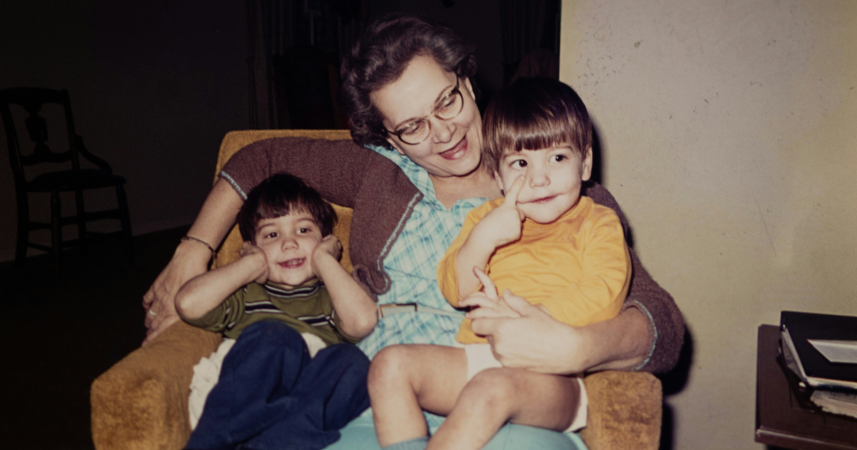
When my grandson cried over twenty minutes without Wi-Fi, I didn't see a weak child — I saw a boy who'd never been given the chance to discover that discomfort has a bottom and he could stand on it, because everyone in his life keeps catching him before he ever hits the floor

Add VegOut to your Google News feed. 
He's twelve. Old enough to know better, I thought, and young enough that maybe he doesn't. The Wi-Fi dropped during a Saturday visit — something to do with the router, which I'd have called a box with blinking lights if my granddaughter hadn't corrected me last year — and within minutes he was pacing my living room with the specific anguish of a person experiencing an actual emergency.
His eyes were wet. His hands were doing that thing children's hands do when the body has energy and nowhere to send it. He looked at me like I might be able to fix it, and when I said it would probably come back on its own, he sat on the couch and cried. Not the quiet kind. The real kind, with shaking shoulders and the broken breathing that means the nervous system has decided this is a crisis.
Over Wi-Fi. For twenty minutes.
I didn't say what I was thinking. I made him a cup of cocoa, sat next to him, and waited it out. The Wi-Fi came back. He wiped his face, picked up his device, and within seconds was laughing at something on the screen as if the previous twenty minutes hadn't happened. The storm passed as fast as it arrived.
But I stayed in my chair long after he'd moved on, holding my tea, trying to understand what I'd just watched. Not judging it — I want to be careful about that. Trying to understand it. Because what I saw in my grandson's face wasn't entitlement or weakness. It was genuine distress. And the thing that disturbed me wasn't that he was upset. It was that twenty minutes of disconnection could produce a reaction I wouldn't have had if someone had told me my house was on fire.
What discomfort used to look like
I grew up sharing a bedroom with two sisters in a house where the hot water ran out before the third person got a shower and the television received four channels, three of which were fuzzy. Discomfort wasn't an event. It was the weather. You were too cold in winter because the heat cost money, too hot in summer because air conditioning was for other families, and perpetually waiting for something — the bathroom, the phone, your turn to pick what the family watched after dinner, which was never because you were the youngest and the youngest picked last or not at all.
None of this felt like hardship at the time. It was just life. The baseline. You sat with discomfort because there was nothing else to sit with, and in the sitting, something developed — not consciously, not by design, but the way a callus develops on a hand that grips the same tool every day. A tolerance. A capacity to feel the unpleasant thing and keep functioning inside it.
When my first husband left me at 28, that tolerance kept me upright. When I couldn't afford the plane ticket to my son's college graduation, it kept me from shattering. When my second husband's Parkinson's progressed and the daily indignities of caregiving accumulated into something that felt like drowning in slow motion, the tolerance didn't make it bearable — nothing made it bearable — but it gave me a floor. A place below which I would not fall, because I'd spent a lifetime learning that discomfort has a bottom and you can stand on it.
My grandson has never been to that floor. And I wouldn't wish it on him. But watching him cry over a Wi-Fi outage, I found myself wondering whether he's ever been to any floor at all — any moment where the world refused to give him what he wanted and he had to sit in the refusal long enough to learn it wouldn't kill him.
The comfort architecture we built for them
I can't blame him. That's the part that complicates the easy narrative, the one where my generation shakes its head and says children today are soft. He's not soft. He's shaped. Shaped by a world that his parents built, that I helped build, that we all built together in the well-intentioned pursuit of making sure our children and grandchildren never had to feel the things we felt.
Every cold shower I took, every Christmas that was thinner than it should have been, every evening spent bored in a house with nothing to do — I carried those experiences into parenthood and said, silently and fiercely: not my kids. My children would have hot water. They would have options. They would have enough stimulation that boredom never stood a chance, because I knew what boredom felt like when it lived next door to poverty, and I wasn't going to let them visit that neighborhood.
And then my children did the same for their children, with more money and more technology and more cultural permission to cushion every sharp edge. The result is a twelve-year-old boy sitting on my couch with instant access to the entire world's entertainment, education, and social connection — so much access that the absence of it for twenty minutes feels like the ground has disappeared.
We didn't make them fragile. We made them unacquainted with the ground.
The word that changed meaning
I hear the word resilience everywhere now. Schools teach it. Parenting books prescribe it. There are curricula and workshops and TED talks about building resilient children. And every time I hear it, something feels off — like hearing a song you love played in the wrong key.
The resilience I know wasn't built. It was forged. Not by a program or a curriculum but by actual exposure to things that hurt, confused, disappointed, and frightened. By being bored with no solution. By being hungry with no alternative. By failing a test and having no one call the teacher. By getting into a fight with another kid and having your father say "Handle it" without looking up from his newspaper.
You can't teach resilience in a classroom the same way you can't teach swimming on dry land. The water is the point. The discomfort of not being able to breathe, of flailing, of swallowing what you didn't want to swallow — that's where the learning lives. Take away the water and you can talk about swimming forever, but the first time the kid falls in, he'll panic, because his body has never practiced the thing his mind was told about.
My grandson has been told about resilience. I'm not sure he's ever been in the water.
What I'm not saying
I'm not saying we should take away their Wi-Fi and hand them a stick. I'm not arguing for a return to cold showers and four channels and parents who responded to childhood distress with silence and a closed door. My generation's version of resilience came packaged with loneliness, emotional neglect, and a habit of suppressing pain that sent half of us to therapy decades later — those of us who went at all.
The toughness I'm describing wasn't pure. It was contaminated with things I've spent years trying to unlearn. The inability to ask for help. The belief that needing someone is weakness. The way I flinch, even now, when someone asks how I'm really doing, because the honest answer feels like a breach of protocol. That's not resilience. That's scar tissue pretending to be strength.
So I hold the concern about my grandson gently, knowing that the woman holding it is herself a complicated case study in what toughness gives you and what it takes away.
But still. Twenty minutes. And tears.
The space between too much and not enough
I've been thinking about where the middle is. The place between the house I grew up in — where discomfort was constant and unacknowledged — and the house my grandson is growing up in, where discomfort is treated as a malfunction to be immediately repaired.
Somewhere in that space is a childhood where a child learns that unpleasant things happen and they survive them. Not because an adult engineered a lesson, but because the adult stepped back long enough for the experience to complete itself. The boredom that eventually becomes invention. The argument that eventually becomes resolution. The wanting that eventually becomes patience, or creativity, or the foundational understanding that you can want something, not get it, and be okay.
My granddaughter — the eight-year-old — found a stick in the backyard a few weeks ago after I told her that her boredom was her problem to solve. She named it, built it a house out of rocks, and played alone for an hour with more focus and imagination than any screen has ever produced. She didn't need the Wi-Fi. She needed the absence of it — and an adult willing to tolerate her discomfort long enough for her own resources to surface.
Twenty minutes. That's all it would have taken with my grandson too. Twenty minutes of sitting with the discomfort, of learning that the world doesn't end when the signal drops, of discovering that he has an interior life that functions without external input. But someone would have had to let those twenty minutes happen. Someone would have had to resist the urge to fix, soothe, distract, or hand him another device.
Instead, the Wi-Fi came back. And the lesson dissolved before it could form.
Final thoughts
I love my grandson. He's funny and bright and kind in ways that my generation often wasn't — emotionally articulate, empathetic, genuinely interested in how other people feel. These are not small things. His generation is building capacities we never had, and I respect that more than my concern might suggest.
But I keep coming back to those twenty minutes. The tears, the pacing, the full-body distress of a boy who temporarily lost access to the thing that organizes his world. And I think about the version of that boy who might have sat with it — not happily, not without complaint, but sat with it — and found, on the other side of the discomfort, that he was still there. Still whole. Still capable of existing inside a moment that didn't give him what he wanted.
That discovery — I'm still here, and I'm okay — is the seed that every form of resilience grows from. Not the word. Not the curriculum. The lived, bodily experience of surviving something small and uncomfortable and coming out the other side.
My generation got too much of that experience. His generation may be getting too little. And somewhere between the cold showers and the Wi-Fi tears is a twelve-year-old who deserves the chance to learn what I learned the hard way — that discomfort is not damage, that boredom is not an emergency, and that the person you become on the other side of twenty difficult minutes is stronger than the person who never had to sit through them.
The Wi-Fi will go out again. I hope, next time, someone lets it stay out a little longer.
What’s Your Plant-Powered Archetype?
Ever wonder what your everyday habits say about your deeper purpose—and how they ripple out to impact the planet?
This 90-second quiz reveals the plant-powered role you’re here to play, and the tiny shift that makes it even more powerful.
12 fun questions. Instant results. Surprisingly accurate.