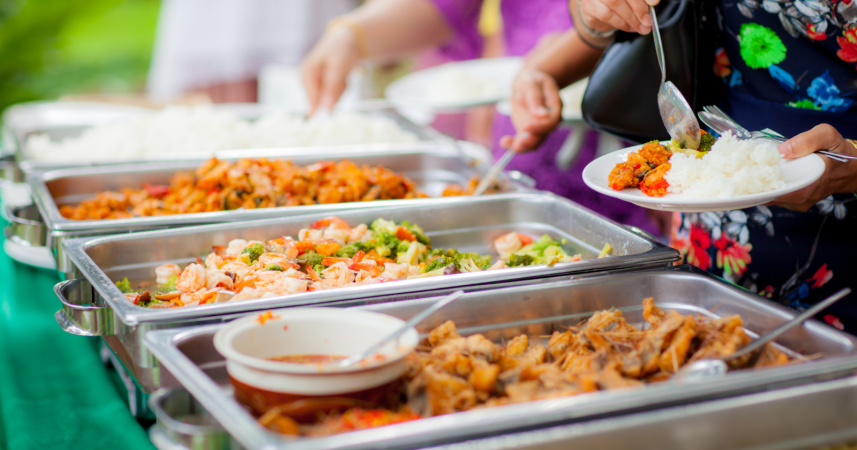
The way you navigate a buffet line reveals invisible class markers you probably don't even realize you're displaying

Add VegOut to your Google News feed. 
My partner dragged me to a buffet last month. I hadn't been to one in probably a decade, and as we walked through those sneeze-guarded rows of warming trays, something weird happened. Muscle memory kicked in. I caught myself doing things I haven't done in years, things I learned growing up in suburban Sacramento when all-you-can-eat meant maximum value extraction.
Class isn't just about money. It's about learned behaviors, unspoken rules, and the psychological imprints left by growing up without much margin for error. Buffets are fascinating laboratories for this stuff because they strip away the performance of restaurants with menus and reveal our raw relationship with abundance and scarcity.
If you recognize yourself in these behaviors, you're not alone. You're revealing something about where you came from and what you learned along the way.
1) You scope out the entire buffet before taking any food
The strategic reconnaissance mission. Walking the perimeter with an empty plate, mentally cataloging what's worth the stomach real estate.
This isn't about being picky. It's about optimization born from necessity.
When you grow up in a household where the fixed price of a buffet represents genuine financial consideration, you develop intel-gathering instincts. You don't want to fill up on bread or cheap pasta only to discover prime rib three stations down.
I still do this without thinking. My partner goes straight for whatever looks good. I need the full picture first, mentally ranking dishes by value and appeal. It's efficiency masquerading as indecision.
2) You calculate the break-even point in your head
How much would I need to eat to make this worth what we paid?
If the buffet costs eighteen dollars and shrimp normally runs twelve dollars a pound, you're doing napkin math about portion sizes and protein content. You might not realize you're doing it, but the calculation is running in the background.
This is scarcity economics at the dinner table. When money was tight growing up, every purchase required justification. The buffet wasn't just a meal, it was an investment that needed to deliver returns.
People from wealthier backgrounds don't think this way. They just eat until satisfied and leave. The idea that you need to extract specific monetary value from a dining experience doesn't compute.
3) You fill your plate to maximum capacity on the first trip
Stacking food like you're playing Tetris. Creating architectural structures that defy physics and good sense.
There's a visceral discomfort with the idea of multiple trips when unlimited trips are available. It feels wasteful somehow, even though it makes no logical sense. So you pile everything on one plate, mixing dessert with entrees, creating flavor combinations that would horrify anyone from a culinary background.
I watched my grandmother do this at every buffet we went to. Her plate was a geographical map of excess, foods touching that had no business being neighbors. She grew up during harder times, and even decades of relative stability couldn't shake the instinct to take everything while it's available.
4) You avoid wasting money on drinks
Water. Always water. Maybe tap water if they'll bring it.
Paying four dollars for soda when you're already paying for unlimited food feels like getting scammed twice. The drink is pure margin for the restaurant, and on some level, you know it.
This is one I've broken myself of, mostly. But growing up, my parents never ordered drinks at buffets. The logic was crystal clear. Why pay extra for something that doesn't fill you up? It's not about being cheap, it's about being rational within a framework where every dollar has defined utility.
5) You take food "for later" when you can get away with it
The strategic napkin wrap. Extra rolls shoved into a purse. Fruit pocketed for tomorrow's lunch.
This one's controversial because it crosses into territory that's technically not allowed. But the psychology behind it is revealing. When you grow up with food insecurity lurking in the background, even mild, even just the awareness that resources are finite, you develop hoarding instincts.
The buffet represents temporary abundance in a world that usually requires careful rationing. Some part of your brain sees the opportunity and thinks, "Store this while you can."
I'm not saying it's right. I'm saying I understand where it comes from.
6) You stay until you're uncomfortably full
Eating past satisfaction. Past comfortable. Into that zone where breathing requires concentration.
This is about getting your money's worth, but it's also about something deeper. It's making sure you won't be hungry again soon. It's maximizing the buffer before you return to normal life where food costs regular prices.
I've mentioned this before but understanding behavioral economics has helped me recognize how these patterns form. When resources are unpredictable, you consume when possible. It's an adaptation that makes perfect sense in context but looks dysfunctional in abundance.
People who grew up with consistent plenty stop eating when satisfied. People who grew up watching their parents calculate grocery bills eat until the opportunity is exhausted.
7) You feel genuine stress about what to choose
The paradox of choice hitting you between the mac and cheese and the carved turkey.
With limited resources, every choice carries weight. Even at a buffet where technically you can have everything, the psychological pattern persists. What if you choose wrong? What if you fill up on something mediocre and miss something better?
This stress response doesn't match the actual stakes, and that's the point. It's a carryover from contexts where choices about food had real consequences.
I still feel it sometimes. That low-level anxiety about optimizing the experience, about not wasting the opportunity. My partner finds it bemusing. For them, it's just food. For me, it's a puzzle with right and wrong answers, even though rationally I know that's not true.
Conclusion
Class markers show up in unexpected places. The way we navigate buffets reveals learned behaviors from childhood, psychological adaptations to the economic realities we grew up with.
There's no shame in any of this. These patterns represent intelligence and adaptation. They're evidence that you learned to operate efficiently within constraints.
But recognizing them is valuable. It helps explain why certain situations trigger specific responses. Why abundance sometimes feels uncomfortable. Why optimization feels necessary even when it's not.
Understanding the psychology behind our choices, as I've learned from years of reading behavioral science research, is the first step toward making conscious decisions about which patterns to keep and which to update.
Some of these behaviors serve you well. Others might be worth examining. Either way, they're part of your story.
If You Were a Healing Herb, Which Would You Be?
Each herb holds a unique kind of magic — soothing, awakening, grounding, or clarifying.
This 9-question quiz reveals the healing plant that mirrors your energy right now and what it says about your natural rhythm.
✨ Instant results. Deeply insightful.

Jordan Cooper
Jordan Cooper is a pop-culture writer and vegan-snack reviewer with roots in music blogging. Known for approachable, insightful prose, Jordan connects modern trends—from K-pop choreography to kombucha fermentation—with thoughtful food commentary. In his downtime, he enjoys photography, experimenting with fermentation recipes, and discovering new indie music playlists.
More Articles by Jordan