After four decades of broken sleep beside the man I loved, I finally learned that walking down the hall to the guest room wasn't giving up on my marriage — it was waking up for it.

Add VegOut to your Google News feed. 
I didn't move out in the middle of the night. There was no argument, no dramatic exit with a pillow tucked under my arm. It happened on a Tuesday, in the most ordinary way possible.
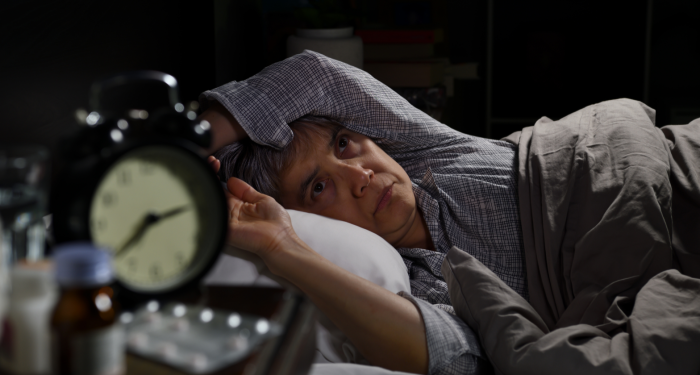
I'd been awake since 2 a.m. — my husband's CPAP machine had shifted, making that particular whistling sound that lives somewhere between a tea kettle and a slow leak. He was sleeping beautifully. Deep, even breathing, the kind of rest his body needed as Parkinson's demanded more and more from him during the day. I lay there watching the ceiling fan spin and thought, very calmly: I haven't slept through the night in years.
The next evening, I made up the guest bed with the good sheets, the ones I usually saved for company. I set a glass of water on the nightstand and my book beside it. Then I walked down the hall and told my husband I'd be sleeping in the other room.
His face did something complicated. And that expression is the reason most women never do what I did.
The mythology of the shared bed
We treat the marital bed like sacred ground. It's the symbol of intimacy, of unity, of a partnership that's working. From the moment we say "I do," the assumption is that we'll sleep side by side until one of us isn't there anymore. And if you stop — if you choose a different room, a different mattress, a different set of sounds in the dark — something must be wrong.
I believed this completely. For forty-three years, I believed that sleeping next to my husband was part of the deal. Even during the seasons when sleep was terrible, when his snoring rattled the windows or his restless legs kicked me awake three times a night, I stayed. Because that's what wives did. You endured the elbows and the covers being stolen and the alarm that went off an hour before yours. You endured it because leaving the bed felt like leaving the marriage.
My mother shared a bed with my father for fifty-one years. I once asked her if he snored, and she looked at me like I'd asked whether the sky was blue. "Of course he snores," she said. "You just learn to sleep through it." She said this the way she said most things about marriage — as if tolerance were the highest form of love.
I never learned to sleep through it. I just learned to function on less.
What exhaustion actually costs a marriage
Here's what I didn't understand for four decades: the version of me that crawled out of bed every morning after fragmented, insufficient sleep was not the best version of me. She was not patient. She was not generous. She snapped at small things — a cabinet left open, a question asked at the wrong moment, the particular way my husband chewed when the house was quiet.
I attributed this to personality. To stress. To getting older. I never once connected it to the simple, obvious fact that I was exhausted.
The resentment was the part that surprised me most. I didn't realize I'd been building a case against my husband every night, unconsciously tallying each disruption, each stolen hour of rest. He wasn't doing anything wrong. He had a sleep disorder and a degenerative disease. But when you're lying awake at 3 a.m. listening to someone else sleep soundly, your tired brain doesn't deal in fairness. It deals in blame.
By the time morning came, I'd already spent hours quietly resenting the person I loved most. And then I'd pour his coffee and smile and wonder why I felt so distant from him over breakfast.
The night everything changed
That first night in the guest room, I read for twenty minutes, turned off the lamp, and slept for seven uninterrupted hours. I hadn't done that in so long that I'd forgotten what it felt like.
I woke up and the house looked different. Not literally, but the way you see things differently after rest — with more room, more patience, more air. I made breakfast and actually enjoyed the conversation instead of enduring it. I noticed my husband's laugh, really heard it, for the first time in months. I touched his shoulder as I passed his chair and meant it, instead of performing closeness out of habit.
One night of sleep did that. One night of choosing rest over ritual.
I cried in the shower that morning, not because I was sad but because I was furious with myself for waiting so long. For all those years of believing that lying next to someone in misery was more loving than sleeping apart and showing up whole.
What no one wants to say out loud
When I told my daughter, she was quiet for a moment and then said, "Mom, are you and Dad okay?"
When I told my friend at our Thursday coffee, she lowered her voice and said, "Oh, honey. Is it the Parkinson's?"
When I mentioned it casually at my supper club, one woman looked at me with genuine pity.
Everyone assumed something was broken. No one considered that I might be fixing something.
This is the conversation we don't have. Millions of couples sleep badly together and never question it because the alternative feels like an admission of failure. We'll buy noise machines and special pillows and earplugs and melatonin, we'll try every solution except the obvious one, because the obvious one means walking down the hall, and walking down the hall means something must be wrong.
Nothing was wrong. For the first time in years, something was finally right. I was resting. And rested, I was a wife my husband actually recognized.
What my husband actually said
That complicated expression on his face the first night — I expected hurt. What I got was more nuanced than that.
He was quiet for a while. Then he said, "I've known you weren't sleeping. I just didn't know what to do about it."
It turned out he'd been carrying his own guilt. He knew his CPAP was loud. He knew his body moved in ways he couldn't control. He'd been lying awake some nights too, rigid with the effort of staying still, trying not to be the reason I looked so tired every morning.
We'd both been performing. Me pretending to sleep, him pretending he wasn't the reason I couldn't. Two people sharing a bed and a silence, each trying to protect the other from a conversation that would have freed them both.
After I moved to the guest room, something unexpected happened. Our evenings got better. We'd sit together longer after dinner, talking in the living room the way we used to when the kids were small and the couch was the only quiet place. We'd say goodnight with intention — a kiss at the hallway junction, his door and mine, a tenderness that had been buried under years of exhausted routine.
The intimacy didn't disappear. It relocated. It stopped living in the bed and started living in the choice to show up for each other during the hours we were actually awake.
The guilt that lingers
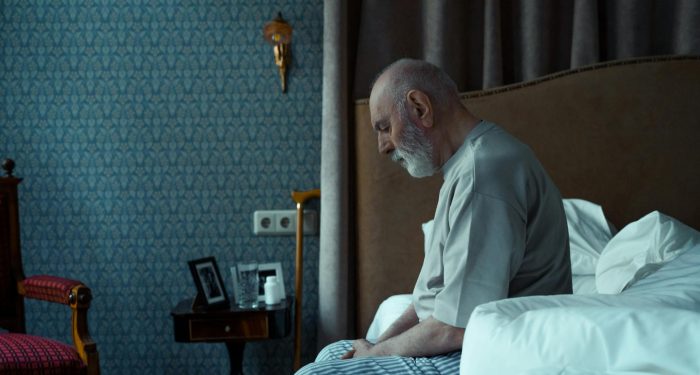
I won't pretend there wasn't guilt. Some mornings I'd walk past our bedroom door and feel a pull, like I was betraying something I couldn't name. On hard nights, when I could hear him coughing down the hall, I'd lie in my comfortable guest bed and wonder if I was being selfish.
My therapist asked me why rest felt selfish. I didn't have a good answer, which is usually how I know she's onto something.
I think women of my generation were taught that self-sacrifice is the currency of love. The more you endure, the more you care. Comfort is for people who aren't trying hard enough. And choosing your own sleep over your husband's proximity — even when proximity means lying awake counting the hours until dawn — feels like a withdrawal from an account you're supposed to keep overfilling.
But here's what I've learned: martyrdom is not a love language. Exhaustion is not devotion. And a well-rested woman who chooses to walk down the hall and kiss her husband good morning is offering something far more real than a tired woman who never left the bed.
Final thoughts
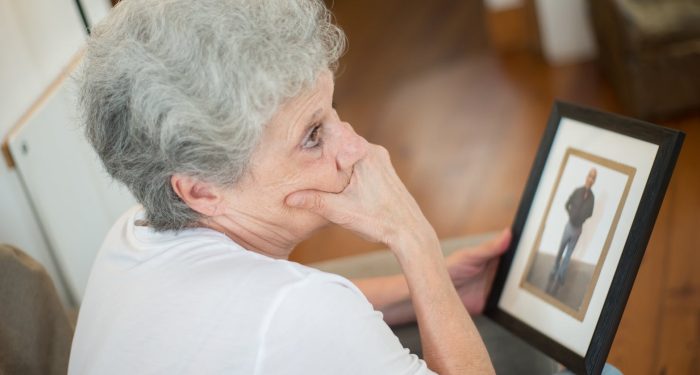
My husband passed two years after I moved to the guest room. During those final months, I moved back. Not because I'd changed my mind about sleep, but because sleep no longer mattered the way being close did. I'd lie next to him and listen to his breathing and feel grateful that I'd spent the previous two years awake enough to appreciate every waking hour we had.
That's the thing I wish I'd understood sooner. Sharing a bed isn't the measure of a marriage. Sharing a life is. And you can't share a life fully when you're too tired to be present for it.
If you're reading this at 3 a.m., lying next to someone you love while sleep refuses to come, I want you to know that the guest room isn't a defeat. It might be the most loving decision you make this year.
The good sheets are worth it. Trust me.