The truth is, learning to want less gave me a freedom that no amount of money ever could, and I wake up every morning lighter than I've been in decades

Add VegOut to your Google News feed. 
My son sent me an article last week. He does this sometimes — forwards something from a financial website with a subject line like "Just thought this was interesting" when what he actually means is "Mom, please read this and be alarmed."
This one was about how much money you need to retire comfortably. The number was so large it had the kind of zeroes that stop looking like money and start looking like a phone number. I read it, closed my laptop, and went outside to water my garden in a house I own outright with a pension that covers my bills and a little left over for the things that matter — books, bread flour, gas money to see my grandchildren, and the occasional watercolor supply that I absolutely do not need but buy anyway because I'm 70 and I've earned a tube of cadmium yellow.
By every metric in that article, I am doing it wrong. By every metric I care about, I am doing fine.
The number that doesn't exist
There's a figure the financial world loves — a magic number you're supposed to reach before you're allowed to stop working without fear. It shifts depending on who's selling what, but it's always enormous, always precise, and always presented with the quiet authority of a doctor delivering a diagnosis.
I never hit that number. Not even close. I spent 32 years teaching high school English, which is a profession that gives you many things — purpose, meaning, the occasional thank-you note that makes you weep in the faculty bathroom — but a large retirement account is not among them. I raised two children alone for fifteen years on a salary that required food stamps for two of those years and creative arithmetic for the rest. I went back to school while working two jobs. I took on debt that followed me for a decade.
When I remarried, I saved obsessively, because I'd learned the hard way that security can vanish between one Tuesday and the next. But obsessive saving on a teacher's salary still doesn't produce the number in my son's forwarded article. It produces a smaller number — a number that a financial advisor once looked at with the particular expression people make when they're trying not to say something discouraging.
What that advisor didn't ask, and what no spreadsheet has ever accounted for, is what I actually need. Not what a hypothetical retiree in a hypothetical life with hypothetical expenses needs. What I, Marlene, a 70-year-old woman in a paid-off house with a garden and a library card and a bread habit, actually requires to live the life I'm living.
The answer is less than anyone thinks.
What my children see versus what I feel
Daniel worries. He worries the way I taught him to — thoroughly, practically, with the relentless preparedness of a boy who watched his mother count grocery money at the kitchen table and learned that the world could pull the floor out from under you without warning. I built that worry into him. I made him the man of the house when he was still just a boy, and I've apologized for that, but the wiring remains. He sees my finances and feels the same fear I felt at 30 with two toddlers and a broken car.
Grace worries differently. She sends gentle suggestions about financial planning apps and asks whether I've "thought about" long-term care insurance in the tone people use when they've thought about it plenty and want you to catch up. She's not wrong to ask. These are real questions with real consequences. I don't dismiss them.
But here's what my children can't see from inside their worry: I am not scared.
They look at my bank account and see scarcity. I look at my life and see sufficiency. These are not the same experience, and the distance between them is everything.
I spent decades being afraid about money. Afraid in the bone-deep way that comes from having been poor — not theoretically poor, not momentarily short, but food-stamps-and-borrowed-rent poor, the kind that teaches your nervous system to flinch at every unexpected expense. I know what financial fear feels like. It feels like a sound in the walls that never stops. And what I'm telling you is that sound has stopped. Not because I got rich, but because I got clear about what enough actually means.
The education of enough
Enough didn't arrive as a feeling. It arrived as a series of subtractions.
After my husband passed and I sold the family home — a decision that carried its own particular grief — I moved into a smaller place. Less square footage, less yard, less of everything that had defined the physical container of my married life. People assumed I was downsizing out of necessity. And partly I was. But partly I was discovering something I hadn't expected: the less I owned, the less I worried about. Every object I let go of took a small anxiety with it.
I stopped buying things I didn't need. Not with the discipline of someone on a budget, but with the relief of someone who'd finally realized that most of what I'd been acquiring was insulation against a fear that possessions couldn't actually address. The new kitchen gadget, the extra set of towels, the jacket on sale that I didn't love but couldn't pass up — all of it was a way of saying "I have enough" without ever believing it.
When I stopped accumulating, the math changed. Not because my income grew, but because my expenses shrank to fit a life I actually wanted rather than a life I thought I was supposed to be living. My pension covers my mortgage-free home, my utilities, my groceries, my modest car. I have a small savings cushion that would handle an emergency. I don't travel extravagantly, but I take my grandchildren on adventure days and I made it to Tuscany last year, which had been a dream for decades and turned out to be worth every penny I'd set aside.
Is it tight? Some months, yes. Is it enough? Every single day.
What money can't purchase
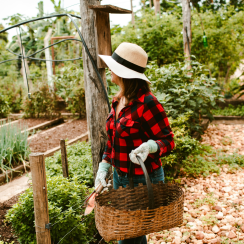
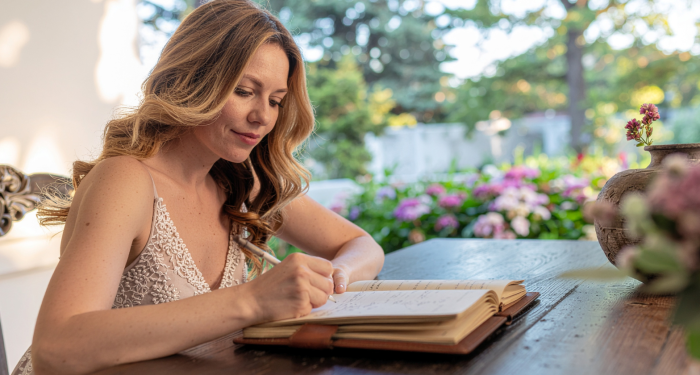
I wake up at 5:30 without an alarm. I make tea. I sit in my kitchen in the quiet and write in my journal. I walk to my garden and spend an hour with dirt under my fingernails and no one asking anything of me. I read in my sunroom every afternoon. I bake bread on Sundays and leave a loaf on my neighbor's porch. I volunteer. I write. I have a supper club, a church community, a widow's support group that became a circle of friends deeper than any I've known.
None of this costs much. The richest hours of my life are essentially free.
What I don't have is the particular anxiety that comes with wanting more. I watch people my age — people with far more money than I'll ever see — chase a comfort that keeps receding. A bigger trip. A nicer car. A renovation that will finally make the house feel right. They have the number from my son's article and they're still not at ease, because the number was never really about money. It was about the feeling that money is supposed to buy, and that feeling doesn't come with a deposit.
I found it somewhere else. In the slow realization that I have what I need, and that needing less isn't deprivation — it's freedom. The freedom to stop earning, stop accumulating, stop performing prosperity for an audience that includes my own children.
The conversation we haven't had
I haven't said any of this to Daniel or Grace directly. Not because I'm avoiding it, but because I haven't found the language that bridges the gap between their fear and my peace.
They grew up watching me struggle. They carry the memory of a mother who couldn't afford a plane ticket to her own son's college graduation, who worked two jobs and still needed help some months, who counted everything twice and smiled through the math. They love me, and their worry is a form of that love — the desire to make sure the woman who went without so they could have doesn't end up going without again.
I understand that. I'd worry too, if I were watching from the outside.
But what I wish they could feel, even for a moment, is the weight that isn't there. The absence of wanting. The particular lightness of waking up in a small house with enough food, enough warmth, enough beauty, and no hunger for more. I spent forty years wanting more — more money, more security, more proof that I'd outrun the poverty I came from. And the exhausting thing about wanting more is that it never resolves. It just asks you to keep running.
I stopped running. That's what they see as a problem, and what I experience as the most honest peace I've ever known.
What I'd tell anyone the numbers say shouldn't be okay
I'm not giving financial advice. I'm a retired English teacher, not a planner. I know there are people who retire without enough, genuinely without enough, and their struggle is real and serious and shouldn't be minimized by someone who has a pension and a paid-off house and calls it simplicity.
But I also know there are people — a lot of them — who have enough and don't know it. Who've been so conditioned by the financial industry's definition of security that they can't feel the security they've already built. Who lie awake at night next to a perfectly adequate life, convinced they're one emergency away from ruin, because a number on a website told them they should be.
To those people I'd say: sit down with what you actually spend. Not what you might spend. Not what the worst-case scenario demands. What you spend, month after month, on the life you're actually living. Then look at what you have. And if those two numbers work — if there's air between them, even a little — consider the possibility that you're not behind. You're just free of the race.
Final thoughts
Last Sunday, I baked bread, walked my neighborhood, read for two hours in the sunroom, and had my weekly phone call with Grace. I spent almost nothing. It was one of the best days I've had in months.
When I hung up the phone, she said, "Take care of yourself, Mom." She says it every week, and every week I hear the thing underneath it — the worry, the love, the quiet wish that my account balance had another zero.
But I don't need another zero. I need exactly what I have, which turns out to be the hardest thing in the world to believe and the most peaceful thing I've ever felt.
My children think I'm making do. I'm not. I'm making peace. And the difference between the two is the difference between surviving and choosing — between a life spent running from scarcity and a life spent finally, gratefully, sitting still inside enough.
What’s Your Plant-Powered Archetype?
Ever wonder what your everyday habits say about your deeper purpose—and how they ripple out to impact the planet?
This 90-second quiz reveals the plant-powered role you’re here to play, and the tiny shift that makes it even more powerful.
12 fun questions. Instant results. Surprisingly accurate.