The school replaced me in three weeks, and the speed of it taught me something I'd avoided for 32 years — that my identity had been on loan from an institution, and the woman underneath the title was someone I'd never bothered to meet until retirement forced the introduction

Add VegOut to your Google News feed. 
Her name was Jennifer. She was 34, enthusiastic, and had a master's degree in something that didn't exist when I started teaching. They hired her three weeks after I left. My classroom — room 214, the one I'd arranged and rearranged for over two decades, the one where the afternoon light hit the reading corner in a way I'd built lesson plans around — had a new nameplate on the door before the month was out.
I know this because I drove past the school in October, six weeks into retirement, on my way to a doctor's appointment. I didn't plan to look. But you can't drive past a building you entered every morning for 32 years without glancing, the way you can't pass the house of someone you used to love without checking whether the lights are on.
The lights were on. The parking lot was full. And in my space — not officially mine, I know, but mine in the way that a body belongs to the person who inhabits it — someone new was doing what I did. Teaching what I taught. Sitting in the chair I sat in. Meeting the students I would have met, if my knees hadn't made a decision my heart wasn't ready to make.
I pulled into the doctor's parking lot and sat in my car for a long time. Not crying. Something flatter than crying. Something that felt like watching your house still standing perfectly after you've moved out and realizing the house was never yours. You just lived in it.
The three weeks that rewrote everything
Three weeks. That's how long it took the system to replace 32 years. I don't say this with bitterness — or maybe I do, a little, under the layers of rational understanding that schools must function and positions must be filled and the children who showed up in September needed a teacher, not a memorial to the one who'd left.
But three weeks. I'd spent three decades learning the particular ecology of that building — which custodian to ask for the key to the supply closet, which administrator actually read your emails, which students needed the hallway lights dimmed during testing because the fluorescence triggered migraines. I knew that the heat in room 214 ran twenty minutes behind the thermostat. I knew that the window closest to the door stuck in humid weather and required a specific angle of force that I'd calibrated over years. I knew that Marcus wouldn't speak unless you asked him directly, that Emily's sarcasm was a shield, that the boy sleeping in the back row was working a night shift to help his mother pay rent.
None of that knowledge transferred. It couldn't. It was housed in my body, in my memory, in the particular relationship between one woman and one room and a thousand students who'd passed through both. And the system that had depended on that knowledge for 32 years absorbed my departure the way a pond absorbs a stone — a brief disturbance, a few ripples, and then the surface closes and you'd never know anything had been there at all.
Jennifer brought her own knowledge. Her own calibrations. Her own relationships with students who would never know my name. The system didn't grieve my absence because systems don't grieve. They process. They fill. They continue.
I was the one left with the grieving, standing in a parking lot, watching a building that had moved on without me.
The identity I didn't know was borrowed
For 32 years, when someone asked what I did, I said "I teach." Not "I'm a teacher" — "I teach." Present tense. Active verb. The doing was the being. There was no separation between who I was and what I performed between 7:30 and 3:15 every weekday of the school year.
I was the woman who made Shakespeare feel urgent to teenagers who'd rather be on their phones. I was the woman who stayed late for the struggling kids. I was the one who wrote recommendation letters at midnight and attended every school play and cried at graduation not because the ceremony moved me but because each student walking across that stage carried a piece of a year I'd given them, and watching them leave was watching small portions of myself walk out the door.
That identity felt like mine. Bone-deep, permanent, woven into the cellular level of who I was. But it wasn't mine. It was on loan. It belonged to the position, the room, the institution, and when I left, it stayed behind — hanging in the closet of room 214 like a coat I forgot to pack, and Jennifer put it on three weeks later and it fit her fine.
What I took home was what was underneath the coat. And underneath, for the first six months, was a woman I barely recognized. A woman without a title, without a daily performance, without the reliable external proof that she mattered to a system larger than herself. A woman who woke at 5:30 out of habit and lay in bed realizing that the habit no longer had a destination, and the lying there — the formless, purposeless lying there — was what her life was now.
The invisibility that followed
People didn't ignore me. I want to be precise about this, because invisibility as I experienced it wasn't social neglect. My family called. My friends were present. My neighbor still knocked with Thursday coffee. The world hadn't deleted me.
But something had shifted in how the world reflected me back to myself. When I was teaching, I walked into a building every morning and was met with evidence of my own relevance. Students who needed me. Colleagues who consulted me. Administrators who depended on me. The building itself needed me — my presence unlocked the room, powered the lesson, kept the organism functioning. Every day produced proof that I existed in a way that mattered.
Retirement withdrew the proof. Not the mattering — I still mattered to my family, my friends, the women at the shelter where I volunteered. But the daily, structural, undeniable evidence that I was necessary to something larger than myself — that disappeared. And without it, I felt like a word that had been erased from a sentence. The sentence still worked. You couldn't even tell something was missing. That was the worst part.
I'd go to the grocery store on a Tuesday morning and see other retirees — men in khakis, women with organized coupons — and wonder if they felt it too. This ambient transparency. This sense of moving through the world without friction, which sounds peaceful and feels like vanishing.
What I built that wasn't transferable
My therapist asked me to make a list of the things I brought to my career that belonged to the position and the things that belonged to me. The exercise sounded simple. It nearly broke me.
The position provided: the classroom, the schedule, the curriculum, the students, the title, the paycheck, the institutional framework that made everything else possible. Remove the position and all of that disappears.
What belonged to me: the ability to read a room of 30 teenagers in under a minute. The patience to sit with a struggling reader until the breakthrough came. The instinct for when a student needed pushing and when they needed silence. The capacity to make a 400-year-old play feel like it was written yesterday. Thirty-two years of accumulated wisdom about how to teach, how to listen, how to hold a space where young people could think without being afraid.
All of that was mine. None of it had anywhere to go.
The skills I'd spent a career developing were designed for a context that no longer existed for me. Like a surgeon's hands after retirement — still capable, still precise, still holding the memory of ten thousand procedures in their muscle fibers, but with no operating room to enter. The hands don't forget. They just close around nothing.
How the invisibility slowly lifted
It didn't lift all at once. It lifted the way fog lifts — unevenly, in patches, with some areas staying obscured long after others have cleared.
The tutoring helped. Sitting across from an adult learner at the community center, watching someone sound out a word for the first time, I felt the old current — the specific electricity of being present for the moment when understanding arrives. It wasn't the same as teaching. The scale was smaller, the room was quieter, nobody was grading my performance. But the skill was mine and it had somewhere to land, and the landing felt like being seen again after months of transparency.
The writing helped more than anything. When I started writing personal essays at 66, I wasn't looking for a replacement identity. I was just following the pull of sentences that wanted to exist. But what the writing gave me — unexpectedly, without my permission — was a way of mattering that didn't depend on an institution. The words belonged to me. Nobody could replace them in three weeks. Nobody could hire a younger version of me to write them. They were mine in a way that room 214 never was, because they didn't come from a position. They came from a person.
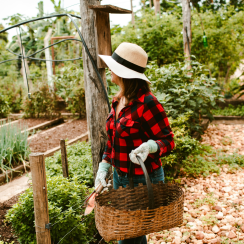
The garden helped too, in its own quiet way. Not because tending roses is comparable to shaping a young mind — the scale is absurd, and I know it. But because the garden needs me specifically. Not a gardener. Me. The woman who knows that this particular bed needs shade by July and that the peonies take years to establish and that the soil along the fence runs acidic. That knowledge is non-transferable. It lives in my hands and my memory and 30 years of learning one specific patch of earth. Jennifer can't do it. Nobody can, except me.
It's a small sovereignty. But after six months of feeling replaceable, small sovereignties are everything.
Final thoughts
I drove past the school again last month. Not on purpose — the same route, the same doctor. Jennifer's name is still on the door, though I couldn't read it from the road. The parking lot was full. The building was doing what buildings do — holding the people inside it and making them feel, for the hours they're there, that they belong to something larger than themselves.
I don't belong to it anymore. That still stings, in the specific way that true things sting when you'd rather they weren't. But I've built other belongings since then. Smaller ones. Quieter ones. The essay I'm writing that no one assigned. The reader at the literacy center who asks for me by name. The garden that responds only to my hands. The mornings at 5:30 when I sit with my journal and the silence isn't empty anymore — it's full of a woman I spent 32 years too busy to meet.
The system replaced me in three weeks. It was always going to. That's what systems do.
What I'm learning, six years later, is to build things that can't.
What’s Your Plant-Powered Archetype?
Ever wonder what your everyday habits say about your deeper purpose—and how they ripple out to impact the planet?
This 90-second quiz reveals the plant-powered role you’re here to play, and the tiny shift that makes it even more powerful.
12 fun questions. Instant results. Surprisingly accurate.