I spent forty years performing strength so convincingly that everyone believed I didn't need them — and the night I turned 65, alone in my kitchen with a cake I'd bought myself, I finally understood that the admiration I'd earned was a poor substitute for the connection I'd been too proud to ask for

Add VegOut to your Google News feed. 
The cake was from a bakery I like, a small place near the community center that does a lemon layer cake with buttercream that's worth every penny. I bought it myself, which is not the sad detail it sounds like — I'm particular about cake and I'd rather choose my own than pretend to be surprised by something from the grocery store. The sad detail is what happened after I brought it home.
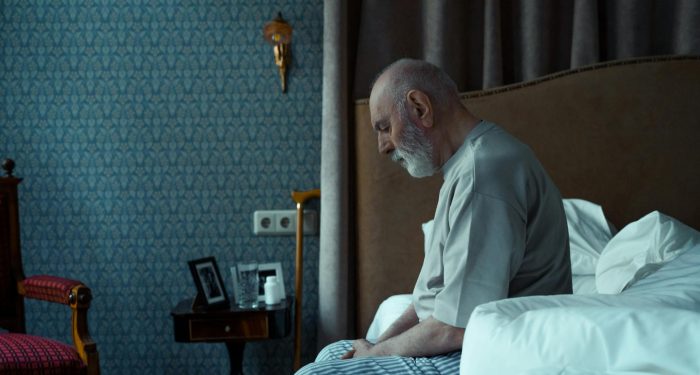
I set it on the kitchen counter. I put a single candle in it, which felt both ceremonial and absurd. I stood in my kitchen at 7 p.m. on December 3rd, the evening of my 65th birthday, and looked at the cake and the candle and the empty room and understood, with a clarity that felt like a door being opened onto a hallway I'd been avoiding for decades, that I had no one to call.
Not no one who loved me. My children had called earlier — Daniel in the morning, Grace in the afternoon. My neighbor had left a card in my mailbox. A few friends from church had texted. I was not unloved. I was not forgotten. But at 7 p.m., when the formal acknowledgments were finished and the evening stretched ahead, there was no person in my life I could call and say, "Come over. I have cake. I don't want to eat it alone."
Not because those people didn't exist in the world. Because I had never built the kind of relationship where that call was possible.
The woman everyone admired and no one knew
I had spent 32 years teaching high school English while raising two children, fifteen of those years alone. I'd worked fifty-hour weeks if you counted the grading and the lesson planning and the parent conferences and the hours spent thinking about students whose home lives were falling apart. I'd gone back to school as a single mother. I'd accepted food stamps and swallowed the shame. I'd survived a divorce at 28, put two kids through childhood on a budget held together with stubbornness, remarried a kind man, and retired at 64 debt-free with a pension and a house that was mine.
People used this story to describe me at retirement dinners and church events. "Marlene is the strongest woman I know," they'd say. "She's been through so much and she never complains." They meant it as a compliment. It was a compliment. And every time I heard it, something inside me contracted a little further, because the woman they were admiring was a performance, and the performance was the reason I was standing alone in my kitchen with a cake I'd bought for myself.
Strong Marlene didn't need help. Strong Marlene didn't burden people with her struggles. Strong Marlene handled the divorce, the single motherhood, the financial terror, the grief of losing her husband to Parkinson's — all of it — with a composure that made people comfortable. She never leaked. She never asked. She never showed up at someone's door at 10 p.m. and said, "I can't do this tonight. Can I just sit with you?"
She never did that because doing that would have broken the character. And the character was all that stood between her and the terrifying possibility that if people saw the real version — the exhausted, frightened, lonely version — they might not admire her anymore. And if they didn't admire her, what was she?
How strength becomes a wall
There's a difference between being strong and performing strength, and I spent forty years not knowing which one I was doing.
Being strong means you endure hard things and allow people to see the cost. You ask for help. You let someone carry a piece of what you're hauling. You show up imperfect and trust that the relationship can hold it.
Performing strength means you endure hard things and make it look effortless. You don't ask for help because asking would reveal the struggle, and the struggle would disrupt the narrative. You present a version of yourself that is capable, composed, and complete, and you do it so convincingly that people stop looking for the cracks — not because the cracks aren't there, but because you've trained them to believe the surface is all there is.
I performed. For decades. Through the divorce, through single motherhood, through my husband's illness, through the grief that followed his death. I performed so well that people stopped asking if I was okay. Not because they didn't care. Because I'd made it clear, through years of consistent messaging, that I was always okay. That I didn't need the question. That asking it would be met with a smile and a "I'm fine" so polished it could've been lacquered.
And the thing about performing strength is that it works. People do admire you. They do respect you. They do step back and give you the space you seem to be asking for. What they don't do is come closer. They don't knock on your door with banana bread on a Tuesday. They don't call without a reason. They don't think of you as someone who needs them, because you've spent your whole life proving that you don't.
The performance kept me safe. It also kept me alone. And by the time I understood the trade I'd been making, I was 65 years old with a lemon cake and a candle and nobody to blow it out with.
Where I learned the role
My mother. It always starts there, doesn't it.
She was a seamstress who raised four daughters on a mailman's salary in a small Pennsylvania town where people didn't talk about their feelings. They talked about the weather and the church bake sale and whether the garden needed tending. When something hard happened — and hard things happened regularly, as they do in every family — my mother's response was three syllables: "We don't dwell."
She didn't dwell. She sewed through migraines. She managed the household with a competence so total it left no room for anyone to offer assistance, because there was nothing visibly left undone. She was the strongest woman in our neighborhood, and I don't remember a single person ever sitting with her while she cried. I don't know if she cried. She'd trained us all so well that the question itself felt impertinent.
I inherited that training the way you inherit eye color — without choosing it and without knowing it's shaping everything you see. When my husband left me at 28, I didn't call my mother and weep. I called her and said, "I'm going back to school." When my second husband was diagnosed with Parkinson's, I didn't fall into a friend's arms. I made a spreadsheet of his medications and drove to the pharmacy. When he died, I held it together at the funeral with a grace that people still mention, as if grace at a funeral were the ultimate achievement rather than the ultimate concealment.
Every crisis deepened the performance. Every crisis proved I could handle it alone. And every crisis pushed the real me — the one who was drowning, who wanted someone to sit with her in the dark, who needed to not be strong for just one evening — further underground, until she was buried so deep I forgot she was there.
What connection actually requires
My therapist — I started seeing one in my fifties, which felt like the first honest thing I'd done in decades — said something that I've been turning over ever since. She said, "Vulnerability is the price of admission for real connection. You've been trying to get in without paying."
She was right. I wanted deep friendships, wanted to be the person someone thought of on a Tuesday, wanted to have a kitchen full of people on my birthday who came because they knew me, actually knew me — the tired version, the scared version, the version who sometimes eats cereal for dinner and goes to bed at 8:30 because the evening has nothing in it. But I wanted all of that without ever showing anyone that version. I wanted intimacy without exposure. Connection without risk. A full life behind a locked door.
That's not how it works. You can't be known if you won't be seen. And I had spent forty years making myself invisible behind a performance so flawless that people mistook the mask for my face.
The women who became my closest friends — my widow's support group, the circle I found after my husband passed — became close precisely because the performance collapsed. Grief took the mask off. Not by choice. By force. I was too broken to pretend, and in the pretending's absence, real people found the real me and decided she was worth staying for.
That shouldn't have been a surprise. But after forty years of hiding, being chosen for who I actually was felt like a miracle I didn't deserve.
The birthday I'm planning now
I turned 70 last December. This time, I didn't buy my own cake.
I did something that five years ago would have been unthinkable: I asked for what I wanted. I called three women from my supper club, my neighbor, and my friend Carol — the one I've known for 45 years, who lives in another state but would have been furious if I hadn't told her — and I said, "I'm turning 70. I'd like to have people in my kitchen. Will you come?"
The asking was harder than anything I did during thirty-two years of teaching. Harder than standing in front of 30 teenagers first period. Harder than calling my first husband's lawyer. Harder than walking into a therapist's office for the first time. Because asking meant admitting that I wanted something I couldn't provide for myself, and that admission — for a woman who'd built her entire identity on self-sufficiency — felt like handing someone a piece of my skeleton and hoping they didn't drop it.
They came. All of them. Carol flew in from out of state and didn't tell me until she was standing on my porch with a bottle of wine and the particular grin of a woman who's been waiting forty-five years for her friend to finally ask for something.
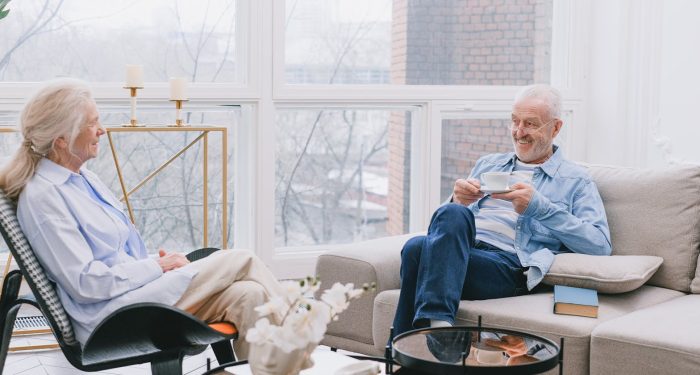
There were six of us in my kitchen. The cake was from the same bakery — lemon, buttercream, one candle because I still find multiple candles absurd. Someone put on music. Someone opened wine. Someone told a story about me that I didn't remember but that made everyone laugh, including me.
It was a small gathering. Nothing remarkable from the outside. But for a woman who'd spent forty years performing strength in an empty kitchen, it was everything.
Final thoughts
I blew out the candle. Someone asked what I wished for. I said, "More of this," and meant it with my whole body.
Not more cake. Not more birthdays. More of the thing I'd spent my adult life refusing to build because building it required showing people the parts of me I'd been trained to hide. More unearned, unscheduled, unreasonable connection. More women in my kitchen on a Tuesday for no reason. More phone calls that don't start with "Is everything okay?" More of the thing that only comes when you stop performing and start asking.
I raised two great kids. I worked for thirty-two years at a job I loved. I retired debt-free. I survived everything the world threw at me with a composure that people still admire.
And none of it — not one bit of it — kept me company on the night I turned 65.
Strength did that. Strength and the silence I mistook for self-sufficiency and the decades I spent proving I didn't need anyone until the proof was so convincing that everyone believed it. Including me.
I'm done proving it. The cake is better with company. It always was.