I grew up in a house where boredom was your problem, dinner wasn't a discussion, and nobody mediated your fights — and while I wouldn't trade everything about modern parenting, I'm convinced that the productive discomfort of figuring things out alone built something in us that no amount of supervised enrichment can replace

Add VegOut to your Google News feed. 
My mother's answer to "I'm bored" was "Go outside." That was the entire parenting intervention. No suggestions, no activities, no curated list of enrichment opportunities. Just a woman with her hands in fabric, her sewing machine humming, gesturing vaguely toward the back door as if the outdoors were a department she'd delegated to and didn't intend to manage.
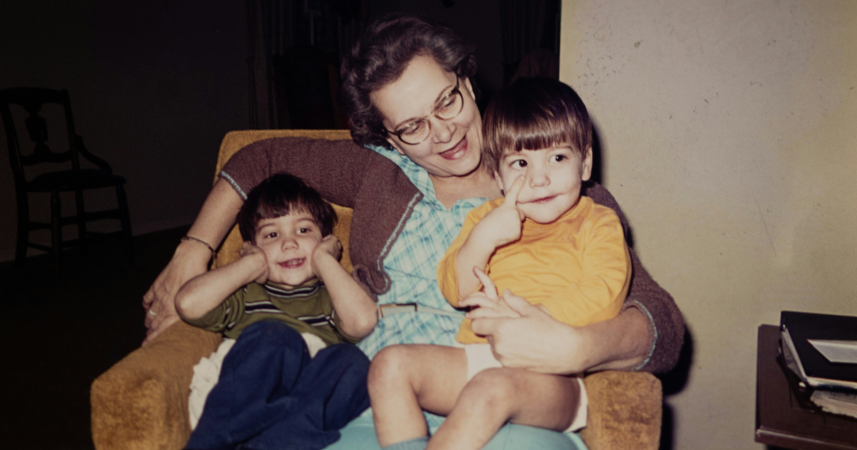
We went outside. All four of us — me, the youngest, trailing my three older sisters into a backyard that bordered a creek and a stretch of woods that nobody owned and everybody used. We built things that collapsed. We argued over rules to games we invented. We fell out of trees at heights that would get a modern parent arrested and limped home with scrapes we treated ourselves because bothering our mother with a non-bleeding wound was understood to be a waste of everyone's time.
Nobody asked if we were okay. Nobody checked in. Nobody mediated our disputes or validated our feelings or made sure the afternoon was optimally structured for our developmental needs. We were fed at six, bathed by eight, and read to if our mother wasn't too tired. The rest was ours to figure out.
I've been thinking about this lately because I watched my daughter spend forty-five minutes last Saturday helping her eight-year-old resolve a disagreement with a friend over a board game. Forty-five minutes. With the patience of a hostage negotiator and the vocabulary of a family therapist. And when it was over, both children seemed more confused than when they started.
What dinner looked like in 1962
My father came home at 5:30. He was a mailman who spent his days walking a route that covered half our town, and by evening his feet hurt and his patience was a finite resource he intended to spend on the newspaper and a glass of something he kept in the cabinet above the refrigerator.
My mother put dinner on the table. Whatever it was, that's what we ate. There was no menu, no discussion, no alternative offered for the child who didn't like green beans. You ate the green beans or you sat at the table until everyone else was finished, and then you ate the green beans. The idea that a child might have a preference that superseded what had been cooked was not a concept that existed in our house. It wasn't cruelty. It was simply that the household ran on adult priorities, and children were expected to adapt to the current rather than redirect it.
I shared a bedroom with two of my sisters. We negotiated the space the way small countries negotiate borders — through a combination of diplomacy, intimidation, and the occasional act of territorial aggression involving a stuffed animal placed provocatively on someone else's pillow. Our parents did not intervene. If we couldn't sort it out, we lived with the discomfort until we could.
This sounds harsh by today's standards, and maybe it was. But it taught me something that no amount of supervised problem-solving could have: the world does not rearrange itself for your comfort, and the sooner you learn to navigate that, the better equipped you are for everything that follows.
What benign neglect actually built
I want to be careful with this phrase — benign neglect — because it sits dangerously close to a word that means something much darker. What I'm describing isn't parents who didn't care. My mother taught me to sew, to cook, to find beauty in practical things. My father knew every person on his mail route by name and taught me that community is built one conversation at a time. They were present in the ways that mattered. They just didn't confuse presence with management.
What they gave us, through all that glorious unsupervision, was the experience of solving problems without an adult in the room. And that experience, repeated hundreds of times across a childhood — the collapsed fort, the argument with a sister, the afternoon with nothing to do and no one to fix it — built something that I've relied on every day of my adult life.
When my first husband left me at 28 with two toddlers, I didn't wait for someone to tell me what to do. I enrolled in school, picked up extra shifts, and figured it out. Not because I was brave, but because figuring it out was the only mode I knew. When money was so tight I had to swallow my pride and accept food stamps, I swallowed it. When my car broke down and I had to ask for help from people I barely knew, I asked. Not gracefully, not without shame, but I did it — because a childhood spent solving my own problems had wired me to believe, even in the worst moments, that a solution existed and it was my job to find it.
I'm not crediting my parents' inattention for my resilience. That would be too simple, and too generous. But I am saying that being left alone — truly alone, without a safety net of adult intervention — taught me to trust my own capacity in a way that being managed never could have.
What I see now that worries me
I spent 32 years in a classroom watching the shift happen in real time. When I started teaching in the early 1980s, my students solved their own social problems. They argued, made up, formed alliances, got betrayed, recovered. It was messy and sometimes painful and occasionally required a teacher to step in, but the default was that kids handled their own lives and adults stayed on the periphery unless something was genuinely wrong.
By the time I retired, parents were emailing me about seating arrangements. About who their child's lab partner was. About a comment another student made at lunch that hurt their child's feelings. I once received a phone call from a father who wanted to discuss his daughter's grade on a creative writing assignment — not the grade itself, but the emotional impact of receiving a B-plus when she'd expected an A.
I don't say this to mock those parents. I say it because I understand them. They love their children the way I loved mine — ferociously, protectively, with every resource they have. The difference is that their resources include time, information, and a cultural expectation that good parenting means active involvement in every dimension of a child's experience. They're not neglecting their children. They're doing exactly what the world has told them to do.
But I watched what it produced. Students who couldn't resolve a disagreement without an adult moderating. Teenagers who interpreted discomfort as crisis. Young people who had been so thoroughly cushioned that the first unmediated hardship — a college roommate conflict, a boss who didn't care about their feelings, a setback that no one was going to fix for them — hit like a wall they'd never been taught to climb.
Where I implicate myself
I'd be a hypocrite if I didn't say this: I started the shift. My generation did. The ones who grew up with benign neglect and decided our children deserved better.
When my first husband left, I was so terrified of my children suffering that I overcompensated in every direction I could afford to. I made their lunches with more care than my mother ever spent on mine. I attended every school event, even the ones that required me to leave work early and absorb the financial hit. I asked them about their days, their feelings, their friendships. I did this because I loved them and because I was haunted by the fear that my divorce had already damaged them in ways I couldn't see.
I was also doing it because I was alone and exhausted, and being a good mother was the one identity I could control when everything else was falling apart. But the result was the same — I gave my children more attention, more involvement, more management than I'd ever received. And then they gave their children even more. And somewhere in that escalation, the thing I'd grown up with — the productive discomfort of figuring things out alone — got optimized away.
My granddaughter is eight and has never walked to a friend's house by herself. She's never been bored without someone offering a solution. She's never fallen out of a tree, partly because she's never climbed one without supervision. She is loved beyond measure and monitored beyond reason, and I worry about what happens when the monitoring stops and the world doesn't come with a moderator.
What I'm not saying
I'm not saying the 1960s were better. They weren't. Children were hit, ignored, shamed. Girls were told to be quiet and boys were told to be tough and nobody was told it was okay to feel what they felt. The benign neglect I'm describing existed alongside a less benign version that left real damage — the kind my generation carried into therapy decades later, if we went at all.
And I'm not saying today's parents are wrong. The world is different. The dangers are different. The knowledge about child development, about emotional needs, about the long-term effects of childhood experience — all of it has grown in ways that make my mother's "go outside" approach look not just outdated but reckless.
What I am saying is that something was lost in the correction. The pendulum swung from too little involvement to too much, and in the swing, we lost the thing that unstructured, unsupervised, uncomfortable childhood gave us: the bone-deep knowledge that you can handle things. That discomfort is survivable. That boredom is not a crisis but an invitation. That you are, even at seven or eight or twelve, more capable than anyone has bothered to tell you.
My mother never told me I was capable. She just left me alone long enough to find out for myself.
Final thoughts
Last week my granddaughter called me bored. Not called me because she was bored — called me, specifically, to report the boredom, as if I were the department responsible for resolving it.
I told her to go outside.
She said there was nothing to do outside. I said that sounded like her problem to solve. There was a long pause — the particular silence of a child encountering a wall where a door usually is — and then she hung up. Her mother called twenty minutes later to tell me she'd found a stick, named it, and was building it a house out of rocks in the backyard.
I smiled for the rest of the afternoon. Not because I'd proven a point, but because a child with a stick and no instructions is the most resourceful creature on earth, and she just needed someone to stop solving things long enough for her to remember that.
We knew that once. I think it's worth remembering again.