I used to think patience meant waiting in line without sighing.
Then I had kids.
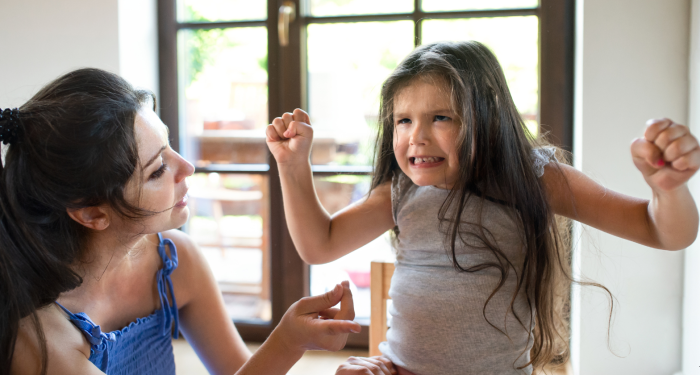
Suddenly patience was a full-body sport: a voice you have to modulate when milk is on the ceiling, a breath you have to remember before you answer the same question for the eighth time, a choice you make at 3 a.m. when everyone’s exhausted and the universe smells vaguely like bananas.
Somewhere in that chaos I realized my parents weren’t just “good with kids.” They were monks in regular clothes.
Here are ten lessons I finally understand now that I’m the one lacing little shoes and looking for the stuffed animal that is absolutely, unmistakably, uniquely different from every other identical stuffed animal in the house.
1. Patience is logistics with a soft voice
As a kid, it looked like magic: lunches made, permission slips signed, rides aligned, and somehow a non-panicked “How was your day?” at the end.
Now I see the scaffolding. My parents ran a small operation with calendars, routines, and a thousand micro-decisions that removed friction so kindness had room to breathe.
When my household gets sharp, it’s rarely because anyone is mean. It’s because the logistics are noisy.
My folks taught me—without saying it—that a calm evening usually starts at 10 a.m. with three quiet moves: prep the bag, decide dinner, stack the shoes by the door. Patience isn’t just waiting well; it’s planning so the waiting shrinks.
2. Repeat yourself like it’s the first time
My parents answered the same question like it hadn’t been asked five minutes ago. Back then I thought they forgot that I’d already asked. Now I know they remembered—and chose the tone anyway.
Kids learn by looping. Adults do too, but we pretend we don’t. When my son asks “Why does the moon follow us?” for the third drive in a row, I try to echo my parents’ energy: a playful, short answer the first time, a slightly longer one the second, a “want to look it up together tonight?” the third.
Patience isn’t just not snapping; it’s respecting repetition as the path to mastery.
I once asked my dad how seatbelts worked every single morning for a week. He’d pull the belt, click it, and say, “It’s a hug for your body.”
I thought he was a genius. Only now do I realize he was also tired—and chose magic over, “We’ve been over this.”
3. “Not now” is kinder than a fake yes
I used to hear “Not now” and interpret it as “Never.” My parents were actually doing the most patient thing: keeping promises small enough to keep.
They didn’t say yes just to stop the noise; they said a precise “after dinner” or “Saturday morning,” then followed through.
With kids of my own, I’ve learned that vague yesses are little landmines.
They explode later as disappointment and mistrust. Patience is the courage to say “No” or “After I finish this call” and then really finish the call and turn your body toward the kid. The body orientation might matter more than the sentence.
4. Timing beats content
I remember big “talks” happening in small moments: folding laundry, driving, stirring a pot. My parents rarely sat me down under a spotlight. They waited for a time my nervous system could hear them and aimed for short, honest, and done.
Now I get it. If a kid is dysregulated, the best content in the world bounces off. Adults aren’t different.
The patient move is to pick your window. When my daughter melts down at 7 p.m., I table the life lesson and move her toward water, food, and sleep.
The next day, while we draw, I’ll circle back with, “Yesterday was big. Want to talk about what happened?” The conversation lands because the moment is right-sized.
5. Repair beats perfect
We didn’t do flawless in my house; we did fixes. Voices would spike, someone would cool off, and later there’d be a knock and a soft, “Can we try again?”
I didn’t realize how rare that is. As a parent, I mess up daily—impatient rushes, edgy answers, a face that says “deadline” when it should say “tell me.” The muscle my parents handed me is repair.
Here’s the script I stole from them: “I got sharp. I’m sorry. You didn’t deserve that tone. Next time I’ll ask for a minute before I answer.”
It’s short, accountable, and it resets the room. Patience isn’t never cracking. It’s returning quickly and specifically when you do.
In middle school I snapped at my mom over a math worksheet. That night she slid a note under my door: “I’m on your team. I accept apologies in hug form.” Decades later, that line is still how I parent—and how I partner.
6. Rituals are patience preloaded
As a kid I rolled my eyes at routines: same shoes by the door, same snack at 3 p.m., same chorus of “homework first, then play.”
Now I see the generosity. Rituals keep kids’ nervous systems from having to renegotiate reality every day. They also save adult patience for real problems.
Our small rituals are borrowed straight from my parents: “re-entry” snack and chat after school, a two-song clean-up timer, Friday night picnic dinner on the living room floor with the rule that crumbs are allowed and phones aren’t.
Rituals aren’t cages; they’re sled tracks. You move forward without fighting the snow every time.
7. Humor disarms more than volume
My parents were funny. Not stand-up funny—gentle, self-deprecating, observational. They knew the exact joke that could defuse a spiraling room without embarrassing anyone.
As a kid I thought it was a personality quirk. As a parent I understand: humor is applied patience.
The other day my son refused to put on socks because “socks make my thoughts hot.” Old me would have argued with his logic. My parents’ version lives in me now: I grabbed the sock and used it as a puppet.
Sock-me said, “I promise to keep your thoughts room temperature.” He laughed, and the sock went on. Humor gave him dignity and gave me back my morning.
8. Notice the effort, not just the outcome
I remember my folks praising the trying. “You kept at that puzzle.” “You were gentle with your cousin even when she grabbed your toy.” They weren’t performative about it; they were specific.
It trained me to see myself as someone who can practice, not someone who has to be perfect.
With my own kids, it’s a daily, patient lens: “I saw you breathe before you answered.” “You carried your plate without being asked.”
You can feel their shoulders drop when effort gets noticed. That drop is the sound of a kid befriending their future self.
9. Let them help—even when it slows you down
As a kid I “helped” in ways that created messes: stirring too fast, spilling flour, folding shirts into neon geometry.
My parents let me do it anyway, then quietly fixed what needed fixing. It wasn’t because they had extra time. It was because they were building competence and belonging.
The patient move now is letting my daughter crack the eggs (plant eggs now, but the principle holds), sweep the floor, and hand the barista the cash. It takes twice as long. It pays off for years. Kids who participate take care. Kids who are always on the sidelines heckle.
My dad used to “let” me read the grocery list while we shopped.
Years later I found out he already had the list memorized. The exercise wasn’t about efficiency; it was about giving me a job that mattered.
In adult life, that’s still the fix: when someone is spiraling, assign a meaningful task. People calm down when they’re useful.
10. Your presence is the present
I used to think “quality time” meant elaborate plans: theme parks, perfect picnics, matching outfits (kidding, mostly). My parents’ greatest gift wasn’t curation; it was presence.
They put down the newspaper when I wandered in. They walked at my speed on purpose. They noticed the bug I noticed.
Now, on my most impatient days, I try to copy that simple magic: put the phone in a drawer for 20 minutes, narrate what we’re doing (“we’re slicing apples so they don’t brown”), sit on the floor and let them hand me blocks in whatever order their brain finds interesting.
Presence is the opposite of multitasking. It’s the raw material kids convert into security.
What I misread as a kid
-
I thought routines were control; they were scaffolds for freedom.
-
I thought “not now” was rejection; it was promise-keeping.
-
I thought repair was weakness; it was strength wearing honesty.
-
I thought humor was random; it was a tool.
-
I thought “helping” slowed everything; it built competence and pride.
-
I thought praise was about outcomes; it was about identity-building through effort.
How I’m (imperfectly) practicing their patience now
-
Front-load the day. Pack the bag the night before, put snacks where small hands can reach, choose the outfit with the kid in on the decision. Future me is calmer; present me is kinder.
-
Time the talks. Handle big topics while moving (driving, walking, chopping)—never at bedtime when everyone’s a raccoon.
-
Repair fast. If I raise my voice, I apologize within the hour. Kids are generous; the window is mercifully wide if you use it.
-
Praise the process. “You tried three ways.” “You came back after being frustrated.” I’m training their inner narrator to be patient, not punitive.
-
Humor over heat. Sock puppets, silly voices, terrible puns. Dignity first and always—no jokes at the child’s expense.
-
Ritualize relief. Two songs for clean-up, Friday picnic, Sunday morning pancakes (plant-based, yes). Rituals aren’t just cute; they’re nervous system anchors.
-
Let them carry real weight. Concrete jobs: push the elevator button, hold the grocery list, pour water for guests. Belonging is a chore chart with soul.
-
Guard the first and last five minutes. Mornings and bedtimes set the tone. I try to keep them gentle, predictable, and tech-light—even if the middle of the day gets wild.
-
Pick one thing to be late to rather than be cruel. Sometimes patience costs punctuality. I’d rather send a “running five behind” text than send a memory of a sharp parent out the door with a kid.
-
Give myself a time-out. If I feel the snap coming, I step into the hallway, breathe, put cold water on my wrists. My parents modeled this without the branding; I’m just naming it out loud.
A quiet thank-you
I didn’t see any of this when I was little because good patience is invisible when you’re inside it.
You only notice the warmth when you step into a colder room. It took my own kids to show me the shape of what my parents were building: a house where care could move freely because the rails were strong; a family where repair was expected; a childhood where the adults handled their size on purpose.
If your parents were patient, call them and tell them one specific thing you finally understand. “You answered my moon questions like they mattered.” “You let me crack the eggs.” “You made routines feel like love.” They’ll say, “Oh, it was nothing.” It wasn’t.
And if your parents weren’t patient—or weren’t there—you get to grow it now. You can be the soft voice you needed. You can build the rails you wish you had. You can practice repair even if no one taught you the script. Patience is learned, and growth is allowed.
Here’s the last thing I’m finally starting to get: patience isn’t a mood. It’s a thousand tiny decisions in favor of connection.
My parents made those decisions for years. Some days I do too. On the days I don’t, I repair, and we try again. That, I’m pretty sure, is the point.
What’s Your Plant-Powered Archetype?
Ever wonder what your everyday habits say about your deeper purpose—and how they ripple out to impact the planet?
This 90-second quiz reveals the plant-powered role you’re here to play, and the tiny shift that makes it even more powerful.
12 fun questions. Instant results. Surprisingly accurate.