I spent forty years building a life in response to every crisis, obligation, and survival demand that came my way — and the life I built was good, but it wasn't until I knelt in my garden at 64 that I realized the woman who built it had never once asked the woman living in it what she actually wanted

Add VegOut to your Google News feed. 
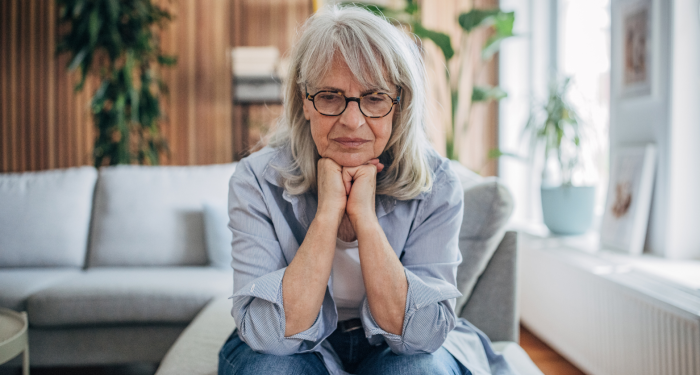
The garden was blooming the morning it hit me. That feels important — that the revelation came not during a crisis but during a moment of beauty. The peonies were open, the kind of full, obscene bloom that lasts three days before the petals drop. I was kneeling in the dirt with my gloves on and a cup of tea cooling on the bench, and I was thinking about nothing, which is maybe why the thought had room to arrive.
I was 64. I had just retired, my knees having made the decision my heart wasn't ready to make. The house was quiet. My husband was inside, reading, his Parkinson's still in the early stages where the tremor was occasional and the future was something we hadn't fully mapped. My children were grown, launched, living lives I'd built the runway for. The garden was exactly as I'd designed it — thirty years of planting and patience made visible in color and structure.
And the thought that arrived, uninvited, kneeling in all that beauty, was this: Whose life is this?
Not in the existential, philosophical sense. In the practical sense. The specific sense. Every major decision that had shaped the last forty years — going back to school, becoming a teacher, remarrying, staying in this town, tending this garden, building this particular life — had been made in response to something. A crisis. An obligation. A script I didn't write but followed with the diligence of a woman who couldn't afford to improvise.
I had never once sat down and asked: If nothing were required of you, if survival weren't the engine, what would you choose?
The script nobody hands you but everyone enforces
When my first husband left me at 28 with two toddlers, the script wrote itself. Go back to school — you need a career that can support a family. Teaching — it's stable, it has summers, it's what women with English degrees and children do. Move close to your mother — you'll need help. Be strong — your children are watching. Don't fall apart — you can't afford to, literally.
Every decision was rational. Every decision was correct. And every decision was made by a woman whose primary relationship was with necessity, not desire. I didn't choose teaching. Teaching chose me, the way a current chooses the path of least resistance. I loved it — genuinely, deeply, for 32 years. But love and choice are different things. You can love a life you fell into. That doesn't mean you'd have built it from scratch.
The remarriage was the same. I met my second husband at a school fundraiser auction — a beautiful accident, a man who was kind in ways my first husband never learned to be. I waited three years before introducing him to my children. I was careful, deliberate, protective. But when I ask myself honestly why I remarried, the answer isn't just love. It's that I was exhausted. Fifteen years of doing everything alone had worn me into a shape that needed partnership the way a crumbling wall needs a buttress. He was wonderful. He was also a solution to a problem I'd been drowning in, and I sometimes wonder what I would have chosen if I hadn't been drowning.
This is not regret. I need to say that clearly, because it sounds like regret and it isn't. I loved my career. I loved my husband. I love my children with a ferocity that has never dimmed. But there's a difference between loving your life and choosing it, and I spent forty years doing the first without ever getting the chance to do the second.
What survival does to desire
When you're in survival mode — and I was in it from 28 to at least my mid-forties, arguably longer — desire shuts down. Not dramatically. Quietly. The way a house shuts off non-essential systems during a power outage. The heat stays on, the refrigerator keeps running, but the lights in the rooms you don't use go dark.
My desires went dark sometime around 30 and didn't come back on until I was kneeling in a garden at 64, wondering why the life I'd built so competently felt like it belonged to someone else.
I couldn't remember what I wanted before survival took over. Not in a vague, existential way — in a concrete way. Did I want to live in this town? I moved here because my mother was here and I needed help with the children. Did I want to teach high school? I got the degree because it was practical and the job because it was available. Did I want this specific house, this garden, this particular configuration of days? Or did I just build what survival demanded and then spent thirty years decorating it until it looked like a choice?
My therapist, years later, would call this "post-survival identity confusion." I call it waking up in a life you built with someone else's blueprints and realizing the architect was necessity, not you.
The woman underneath the competence
Before my first husband left, before the survival script started running, there was a girl in Pennsylvania who wanted to write. Not teach writing — do it. She filled notebooks. She had a professor in college who told her she had a voice worth developing. She carried that sentence like a jewel for years, polishing it in private, believing that someday the circumstances would align and she'd have the time and the space and the courage to take it seriously.
The circumstances never aligned. Or rather, they aligned in a different direction — toward food stamps and substitute teaching and the particular exhaustion of a woman who couldn't afford an impractical dream. The writing went into a drawer. Not permanently — I kept journals, I wrote for my own sanity during the worst years. But the serious pursuit of it, the version where I sat down and said "this is what I do, this is who I am" — that version got filed under "someday" and someday never came. Not while I was teaching. Not while I was raising children. Not while I was caregiving through my husband's seven years of Parkinson's.
It came at 66, two years after I knelt in that garden and asked whose life I was living. A friend suggested I share my stories. I started writing personal essays, tentatively, the way you re-enter a house you haven't visited in decades — checking whether the floors still hold.
They held. The voice my professor noticed forty years earlier was still there, buried under four decades of lesson plans and grocery lists and survival, but alive. I sat at my kitchen table and wrote something honest and it felt like finding a room in my own house that I'd forgotten existed.
That room had been there the entire time. I just never had permission to enter it because the hallway was always full of something more urgent.
What I'd tell the woman at 28
I wouldn't tell her to make different choices. She couldn't have. The children needed feeding, the degree needed finishing, the world needed navigating with whatever tools were available. She did exactly what the situation required, and the life she built kept her family alive and eventually gave them more than alive — it gave them stable and loved and launched.
But I'd tell her to keep one room. One small, impractical, non-survival-related room in her life where the question isn't "What do I need to do?" but "What do I want?" Even if the room is tiny. Even if she only visits it for twenty minutes on a Sunday morning while the children sleep. Even if nothing practical comes of it for years.
Because the alternative — the one I lived — is arriving at 64 with a beautiful garden and a loving family and a career you're proud of, and realizing that the woman who built all of it did so without ever consulting the woman who had to live in it.
Those are the same woman. But they needed different things, and only one of them ever got to speak.
Final thoughts
I'm 70 now. The writing I started at 66 has become the thing I should have been doing all along, though I resist saying that because all along included years when doing this wasn't possible and I refuse to punish myself for surviving in the only way I knew how.
But I notice something when I write. A feeling I didn't have during 32 years of teaching, or while raising children, or while tending the garden that prompted the question in the first place. A feeling that the thing I'm doing is mine. Not required by anyone. Not solving anyone's crisis. Not checking a box on a script someone else wrote. Just mine, chosen freely, by a woman who finally had the luxury of choosing.
It took forty years and a pair of bad knees and a morning in the garden to get here. That's too long. I know it's too long. But the peonies were blooming the day I woke up, and there's something fitting about that — a flower that takes years to establish, blooms for three days, and in those three days is the most honest, extravagant, unapologetic thing in the garden.
I'm working on my three days. Late, impractical, and finally, entirely mine.
If You Were a Healing Herb, Which Would You Be?
Each herb holds a unique kind of magic — soothing, awakening, grounding, or clarifying.
This 9-question quiz reveals the healing plant that mirrors your energy right now and what it says about your natural rhythm.
✨ Instant results. Deeply insightful.

Marlene Martin
Marlene is a retired high school English teacher and longtime writer who draws on decades of lived experience to explore personal development, relationships, resilience, and finding purpose in life’s second act. When she’s not at her laptop, she’s usually in the garden at dawn, baking Sunday bread, taking watercolor classes, playing piano, or volunteering at a local women’s shelter teaching life skills.
More Articles by Marlene