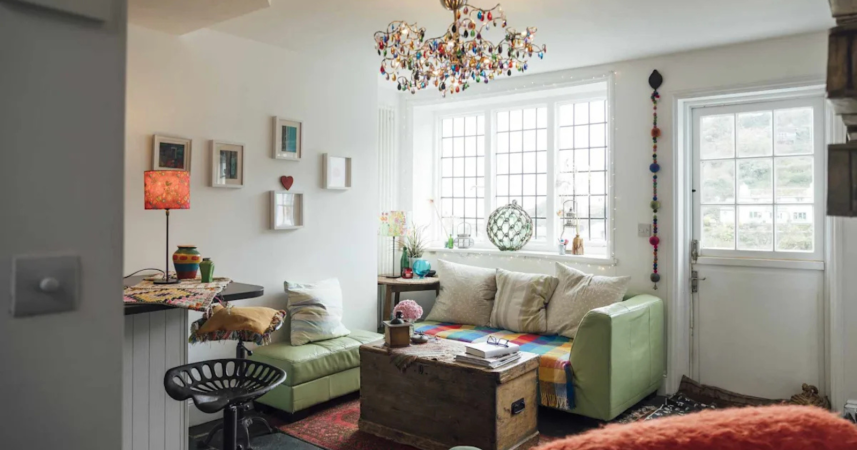
Step into any living room with these telltale items, and you'll discover a fascinating story of resilience, creativity, and the surprising ways economic reality shapes the spaces we call home.

Add VegOut to your Google News feed. 
Growing up in suburban Sacramento, I spent countless afternoons at friends' houses, and something always struck me about certain living rooms. They had this particular feel - not bad, not good, just distinctly familiar in a way that took me years to understand.
It wasn't until I moved to Los Angeles and started noticing the stark contrasts between neighborhoods that I realized what I'd been picking up on. These weren't just decorative choices; they were economic markers hiding in plain sight.
Look, talking about class indicators might feel uncomfortable. But understanding these patterns isn't about judgment - it's about recognizing how our economic circumstances shape our choices and environments. The psychology behind what we display in our homes reveals more than we might think.
1. The oversized flat-screen TV that dominates the room
You walk in, and there it is - a 65-inch TV that seems almost too big for the space. Often mounted slightly too high on the wall, it's clearly the room's centerpiece, with all furniture arranged to face it.
I've noticed this pattern repeatedly. While wealthier homes might hide their TVs behind art panels or keep them proportional to the room, lower-middle-class homes often prioritize having the biggest screen possible. It's an accessible luxury, a one-time purchase that provides endless entertainment value.
Think about it - when your entertainment budget is limited, that TV becomes your movie theater, concert venue, and sports stadium all rolled into one. The size matters because it needs to compete with experiences that might be financially out of reach.
2. Cable or satellite box prominently displayed
Next to that TV, you'll almost always spot the cable or satellite box sitting out in the open, often with its tangle of visible wires. In an age where many have cut the cord, this equipment remains a fixture in lower-middle-class living rooms.
Why? Because bundled cable packages still feel like a deal to many households, especially when internet options are limited in their area. Plus, there's something about having "all the channels" that feels like abundance, even if streaming services might actually be cheaper.
The visible placement isn't just practical - it's almost a statement. Having cable means you're connected, you're not missing out on live sports or local news. It's a small but persistent monthly expense that many prioritize over other subscriptions.
3. Artificial plants or dried flower arrangements
Real plants require time, attention, and ongoing investment. But that dusty artificial ficus in the corner or the dried flower arrangement that's been there since 2015? They're trying to bring nature indoors without the maintenance cost.
I get it. My grandmother, who raised four kids on a teacher's salary, had fake plants throughout her house. She wanted the warmth that greenery brings but couldn't justify spending money on something that might die. Those silk roses on the coffee table were a one-time purchase that lasted years.
There's actually something poignant about this choice. It represents the desire for beauty and life in the home, constrained by practical considerations. The artificial might gather dust, but it never needs replacing.
4. Family photos in mismatched frames covering most surfaces
Every available surface - the TV stand, side tables, walls - covered in family photos. School pictures, weddings, graduations, all in different frame styles picked up over the years from discount stores or received as gifts.
Wealthy homes might display a few carefully curated photos in matching frames. But in lower-middle-class homes, family photos aren't decor choices - they're declarations of what matters most. Each frame tells a story, often of achievement despite obstacles.
When I visit my parents' place, I see this pattern. That cluttered mantle isn't about aesthetics; it's about pride. Every graduation photo, every snapshot from a rare vacation, represents hard-won moments worth displaying.
5. Visible storage furniture from discount retailers
Those cube organizers from Target, the particle board entertainment center from Walmart - furniture that's clearly from big box stores, often with visible wear or slight damage from assembly.
Here's what I've learned: when you're watching every dollar, you buy furniture that serves multiple purposes. That ottoman isn't just for feet; it's also storage. The entertainment center holds not just the TV but also bills, remotes, chargers, and anything else that needs a home.
The visibility of these items isn't about lacking taste. It's about maximizing limited space and budget. Every piece needs to work hard, and aesthetics take a back seat to functionality.
6. Inspirational quotes or religious wall art
"Live, Laugh, Love" might be a meme now, but these kinds of wall decorations serve a real purpose. Whether it's vinyl lettering from a craft store or framed prints with Bible verses, these messages aren't just filling blank walls.
They're daily affirmations, reminders to stay positive when things get tough. In homes where financial stress is common, these visual reminders provide psychological comfort. They're relatively inexpensive ways to personalize a space and inject some hope into daily life.
I've noticed that wealthier homes tend toward abstract art or original pieces. But when you're stretching every dollar, that $15 canvas print with "Bless This Home" offers both decoration and emotional support.
7. Throws and pillows that don't quite match
The couch has a throw blanket that doesn't match the pillows, which don't match the curtains. Each piece was probably bought separately, on sale, or received as a gift. The color scheme is more "accumulated over time" than "designed."
But here's what many don't understand - those mismatched soft goods often represent attempts to refresh the space without replacing expensive furniture. That new throw blanket from Ross might be covering a stained couch that still has years of life left in it.
My partner and I live in a Venice Beach apartment now, and we've consciously chosen our decor. But I remember visiting friends where every textile told a story of making do, of adding comfort where possible, of creating home with what's available.
Wrapping up
These items aren't just random choices - they're responses to specific economic realities. They represent prioritizing function over form, family over aesthetics, and finding joy in what's accessible.
Understanding these patterns isn't about judgment. It's about recognizing how economic constraints shape our environments and choices. That oversized TV might seem excessive to some, but it's providing entertainment for a whole family. Those artificial plants might gather dust, but they represent a desire for beauty that persists despite limitations.
What's in your living room? What stories do your possessions tell?
The truth is, every economic class has its markers, its own set of compromises and priorities made visible. The key is seeing them not as limitations but as creative responses to life's challenges.