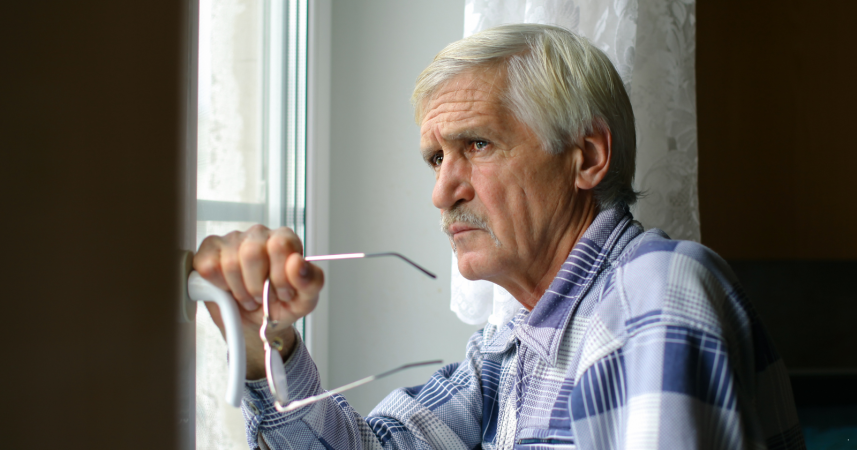
After decades of being indispensable, she discovered that the hardest part of retirement wasn't learning to fill the empty hours — it was remembering how to matter when no one was keeping score anymore.
Three days after cleaning out my classroom for the last time, I called my own voicemail just to hear something that still recognized me as necessary.
I stood in the kitchen, phone pressed to my ear, listening to the recorded version of myself announce a name and a number, and I realized that voice — brisk, professional, expecting to be reached — belonged to someone who no longer existed. After thirty-two years of teaching high school English, of being the person students counted on for recommendation letters and last-minute essay help, I'd become a ghost haunting my own life. The transition from essential to invisible happened so fast I got whiplash from the silence.
What nobody tells you about retirement is how much of your identity gets tangled up in being needed. For decades, my days had edges, boundaries drawn by bell schedules and parent conferences, faculty meetings and grading deadlines. Then suddenly, there was just Tuesday, stretching endlessly into Wednesday, which looked exactly like Thursday, which felt indistinguishable from Sunday.
When your purpose walks out the door with you
The first few weeks, I attacked retirement like it was a project to be conquered. I color-coded my closets, reorganized the garage, finally read all those books I'd been promising myself I'd get to "someday." But have you ever noticed how someday, when it finally arrives, feels suspiciously like emptiness wearing a disguise?
My phone, which used to buzz with the urgency of teenage crises and curriculum deadlines, fell so quiet I started checking if I'd accidentally turned it off. Former colleagues gradually stopped including me in group texts. The school newsletter arrived each month like a letter from a country I used to live in, full of names I recognized but events I no longer belonged to. Even my email inbox, once a tyrant that demanded hourly attention, dwindled to promotional offers and requests to update my password.
I remember standing in the grocery store one morning, watching all the people in work clothes rushing through their lunch breaks, and realizing I had become invisible in the most peculiar way. Not unseen exactly, but uncounted. Like I'd stepped out of the stream of necessary people and onto the bank, where I could watch the current but no longer affect its flow.
The art of measuring worth without a scorecard
For thirty-two years, I'd measured my value in tangible metrics: students taught, essays graded, minds changed. Every June brought a new crop of graduates whose success I could partially claim. Every September offered a fresh start, new faces to inspire, new challenges to tackle. Without these markers, how was I supposed to know if I mattered?
I tried volunteering at the library, thinking it would feel familiar, being around books and learners. But shelving returns and managing late fees felt like playing teacher, like I was wearing a costume that didn't quite fit anymore. The hiking group for seniors was pleasant enough, but the honesty is this: we were filling time. Not all companionship is connection, and pretending otherwise felt like another kind of disappearing.
Then one afternoon, while sorting through old teaching materials I couldn't bring myself to throw away, I found a card from a former student. She'd written it ten years after graduating, letting me know she'd become a social worker because of a conversation we'd had about Atticus Finch and moral courage. "You probably don't remember," she wrote, "but you once told me that one person standing up for what's right can change everything. I remember."
Learning to be essential in new ways
That card cracked something open in me. Maybe the problem wasn't that I'd become unnecessary, but that I was defining necessary too narrowly. What if, instead of trying to recreate my old purpose, I could discover an entirely new one?
I started writing that week. Not lesson plans or curriculum guides, but the stories I'd been collecting for decades. Stories about resilience learned in unexpected places, about finding love again after loss, about the particular courage it takes to keep growing when the world tells you you're done. Writing became my new classroom, except this time I was both teacher and student, discovering what I knew by putting it into words.
The volunteer work took on new dimensions too. At the women's shelter, I stopped trying to be the teacher and started being the woman who'd once stood in those same food bank lines, who knew what it felt like to rebuild from nothing. My experience wasn't just professional anymore; it was personal, and that made it infinitely more valuable.
The unexpected gifts of being unscheduled
With my calendar no longer dictated by school bells, I discovered the luxury of presence. My grandchildren, who'd always competed for attention with stacks of papers to grade, suddenly had all of me. I became the grandmother who could spend entire afternoons making cookies, who had time for elaborate tea parties, who could listen to the same story seventeen times and still act surprised at the ending.
I reconnected with friends I'd been promising to call "when things slow down." I took that Italian class I'd been postponing since my sixties. I learned that my brain, despite what the world might think about aging, was still perfectly capable of forming new neural pathways, of conjugating unfamiliar verbs, of surprising itself with its own capacity.
Most unexpectedly, I found space to properly grieve my husband, something I'd been too busy to do in the year since his death. Retirement gave me permission to sit with loss, to feel it fully without having to compartmentalize it between classes or push it aside for parent conferences.
Final thoughts
Last month, a young teacher from my old school reached out. She'd heard I sometimes mentored new educators and wondered if I might have time for coffee. Time for coffee? I almost laughed. Time is the one thing retirement provides in abundance, though learning how to spend it wisely is its own education.
As we talked, I felt something familiar but different kindle inside me. Not the old identity of being needed in the same way, but something I couldn't quite name yet. She asked me what I wished someone had told me on my last day, and I opened my mouth to answer, and nothing came. Not because I didn't have thoughts, but because the honest answer was still forming, still taking shape somewhere between the person I used to be and whoever I'm becoming now.
I'm not sure I've figured out what retirement is yet. Some mornings it still feels like disappearing. Other mornings, it feels like something else entirely — something I don't have the right word for, which might be the point.