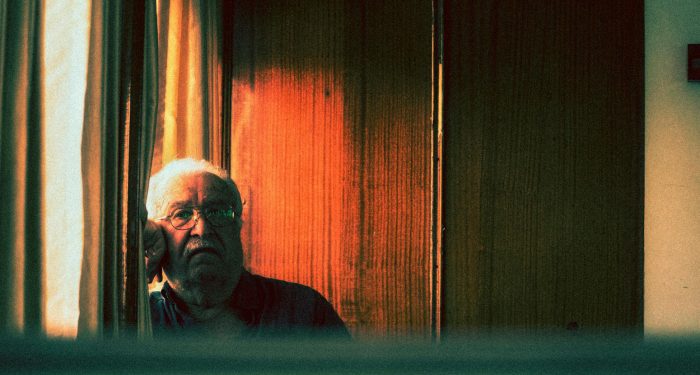
Behind every perfectly-timed sarcastic quip lies a heart that once showed up too vulnerable, too open, and learned that wit could be wielded like a shield against a world that felt too sharp.
Ever notice how the most sarcastic person in your friend group is often the one who tears up during Pixar movies? Or how your colleague who delivers the sharpest zingers is the same person who remembers everyone's birthday and checks in when you're having a rough week?
There's something deeply paradoxical about sarcasm that most of us miss. We think of it as wit, as humor, as intelligence. But what if I told you it's actually the sound of a sensitive heart that's learned to speak in armor?
The protective shell we build
I used to think sarcasm was just clever humor. Then I started paying attention to when I reached for it most - usually right after someone stepped on an emotional landmine I didn't even know was there.
Jessica Schrader puts it perfectly: "Sarcasm is a cover. It's used to cover anger, envy, or inadequacy that, without the anti-sugarcoating of sarcasm, feels too forthright."
Think about it. When do you get most sarcastic? Is it when you're feeling confident and secure? Or is it when someone's touched a nerve, gotten too close to something tender?
For sensitive people, the world can feel like walking through a minefield of other people's emotions, judgments, and energy. Every interaction carries weight. Every slight stings a little deeper. Every criticism echoes a little longer.
So what do we do? We develop a defense mechanism that lets us engage while keeping people at arm's length. We learn to deflect with humor before anyone can land a real blow.
Why sensitivity leads to sarcasm
Here's what I've noticed: The people who feel everything deeply often become masters at pretending they feel nothing at all.
It starts young. Maybe you were the kid who cried when other kids were mean, and someone told you to toughen up. Maybe you showed enthusiasm about something you loved, and someone made fun of you for caring too much. Each time, you learned that showing your real feelings was dangerous.
Carl Alasko Ph.D. argues that "Sarcasm is psychologically rooted in anger, distrust, and cowardice."
That word "cowardice" might sting, but sit with it for a moment. It's not cowardice in the traditional sense - it's the learned fear of being vulnerable again. It's the memory of every time sincerity was met with ridicule.
I remember being at my grandmother's Thanksgiving after I went vegan. She'd made all these dishes with love, and when I couldn't eat most of them, she actually cried. My first instinct? Make a joke about it. Deflect with sarcasm. Anything but sit with the raw discomfort of having hurt someone I loved.
That's what sensitive people do. We feel the pain so acutely - both ours and others' - that we need a buffer. Sarcasm becomes that buffer.
The intelligence factor
But here's where it gets interesting. Sarcasm isn't just emotional armor - it's also a sign of cognitive sophistication.
Recent research from a study on creative thinking found that observing sarcasm in others can enhance creative thinking, suggesting that sarcasm serves as a cognitive tool for processing complex social information.
You need multiple layers of understanding to use sarcasm effectively. You have to know what you really mean, what you're saying instead, how it will land, and what the social context allows. That's a lot of mental gymnastics.
Sensitive people often develop this skill because they're already hyperaware of all these layers. They're tracking everyone's emotions, reading the room constantly, noticing every micro-expression. Sarcasm becomes a natural extension of this heightened awareness.
When the armor becomes a prison
The problem with armor is that it works both ways. Sure, it keeps the hurt out, but it also keeps the love from getting in.
I had a friend Sarah whose birthday dinner I once ruined with my sarcastic comments about everyone's food choices (this was during my early, preachy vegan phase). What I thought was witty banter was actually me pushing people away before they could reject my choices.
Years later, I still apologize for that night. Not because the memory haunts me, but because I finally understood what I was doing. I was so afraid of being judged for being different that I struck first with sarcasm.
Ekua Hagan nails it: "Sarcasm is a thinly veiled attempt to disguise feelings of anger, fear, or hurt."
Every sarcastic comment I made that night was really saying: "I'm scared you'll think I'm weird. I'm hurt that my choices make me an outsider. I'm angry that I have to explain myself."
But nobody heard that. They just heard the sarcasm.
Finding the balance
So what do we do if we recognize ourselves in this pattern?
First, notice when you reach for sarcasm. What just happened? What feeling are you trying to avoid? Sometimes just that awareness is enough to shift things.
Second, try vulnerability in small doses. You don't have to bare your soul to everyone, but maybe try saying "that hurt my feelings" instead of making a cutting joke. Start with safe people and work your way up.
I've learned that when I feel the sarcastic comment rising, I can pause and ask myself: What am I really trying to say here? Sometimes it's "I'm overwhelmed." Sometimes it's "I need space." Sometimes it's "I care about this more than I'm comfortable admitting."
The goal isn't to eliminate sarcasm entirely. Humor, even the sharp kind, can be a gift. It's about recognizing when we're using it as a shield versus when we're using it to connect.
Wrapping up
If you're the sarcastic one in your group, chances are you're also the one who notices when someone's having a bad day before they've said a word. You're probably the one who feels deeply moved by music, who gets overwhelmed in crowds, who needs alone time to recharge.
Your sarcasm isn't a character flaw. It's not something to be ashamed of. It's the scar tissue that formed over wounds that haven't fully healed. It's sensitivity that learned to protect itself.
The beautiful thing? Once you understand this about yourself, you can start choosing when to wear the armor and when to set it down. You can let people see that the person making the sharpest observations is also the one feeling everything most deeply.
And maybe, just maybe, you can start arriving without armor sometimes. Not because the world has become less likely to hurt sensitive people, but because you've decided that feeling deeply - even when it hurts - is part of what makes you who you are.
The most sarcastic people in the room often have the biggest hearts. They've just learned to keep them under lock and key. But locks can be opened, and hearts can learn to trust again.
Even if it takes time. Even if it's scary. Even if the first instinct is still to deflect with a joke.