Science confirms what your intuition already knows: that friend who looks decades younger isn't hiding a miracle serum — they've mastered the art of not letting life's inevitable stresses take up permanent residence in their body, literally rewriting their cellular aging process with every boundary they set and every toxic pattern they release.

Add VegOut to your Google News feed. 
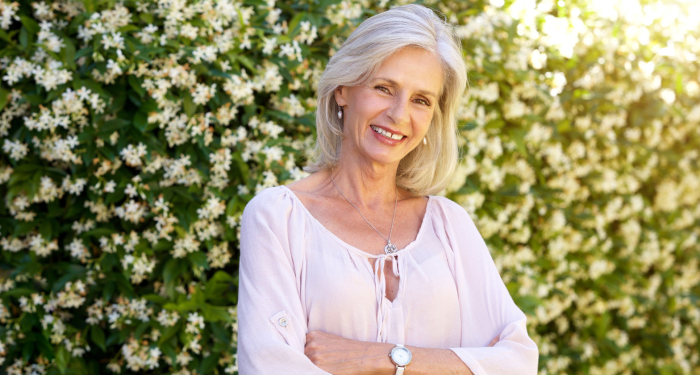
Last week at the grocery store, I ran into two former colleagues from my teaching days. Both retired around the same time I did, both in their late sixties now. One looked vibrant, her eyes bright with that unmistakable spark of someone truly living. The other seemed to have aged a decade in just three years, her face etched with lines that spoke of battles still being fought internally. The difference wasn't in their skincare routines or gym memberships. It was in how they'd chosen to handle the stress that life inevitably throws our way.
We live in a world obsessed with anti-aging serums and SPF ratings, yet the most powerful age accelerator might be something we can't bottle or sell. It's the unresolved stress that accumulates like compound interest, eating away at us from the inside out.
The science behind stress and aging
When I first started researching this connection, I was stunned by how clear the evidence is. Bruna Romana-Souza puts it plainly: "Psychological stress may be an important extrinsic factor which influences aging process." It's not just about feeling frazzled or tired. The stress we carry literally changes us at a cellular level.
Think about the last time you were under intense pressure. Remember how your skin looked? Maybe you broke out, or noticed new lines appearing seemingly overnight. That's not your imagination. Research has shown that chronic stress is associated with accelerated epigenetic aging, with poor emotion regulation and self-control exacerbating this effect, according to a study on psychological and biological resilience. In other words, how we handle our emotions directly impacts how quickly we age.
The mechanism is fascinating and frightening. When we're stressed, our bodies activate what scientists call the hypothalamic-pituitary-adrenal axis. An author explains: "Stress results in the activation of the hypothalamic–pituitary–adrenal axis, leading to the production of cortisol." And cortisol, that infamous stress hormone, is like acid rain on our cellular landscape.
Your skin tells your story
Have you ever noticed how some people seem to wear their worries on their face? There's a biological reason for this. Dr. Neera Nathan notes that "Studies show that both acute and chronic stress can exert negative effects on overall skin wellness, as well as exacerbate a number of skin conditions, including psoriasis, eczema, acne, and hair loss."
I learned this lesson the hard way. During a particularly stressful period in my fifties, I developed a skin condition that no amount of expensive creams could fix. It wasn't until I addressed the underlying anxiety through therapy and learned to set boundaries that my skin began to heal. The connection was so obvious once I saw it, yet I'd spent months treating the symptom rather than the cause.
Our skin is our largest organ, and it's remarkably sensitive to our emotional state. Research conducted on psychological stress in mice found that chronic psychological stress leads to skin aging through increased oxidative damage and inflammatory responses. While we're not mice, the biological mechanisms are strikingly similar in humans.
The weight of unresolved emotions
What makes chronic stress so insidious is that we often don't recognize we're carrying it. It becomes our normal, like wearing a heavy coat we've forgotten to take off. I spent decades as a people-pleaser, saying yes when I meant no, swallowing my frustration with a smile. It wasn't until therapy in my fifties that I realized how much this pattern was costing me, not just emotionally but physically.
The research backs this up powerfully. A study examining stressful life events in postmenopausal women found that higher stress burden correlates with accelerated epigenetic aging, with lower social support potentially modifying this association. This tells us two crucial things: stress ages us faster, and connection can buffer its effects.
I think about all the women I know who pride themselves on handling everything, never asking for help, never showing vulnerability. They're slowly poisoning themselves with their own strength. The irony is that true strength often lies in acknowledging our limits and seeking support.
Breaking free from the stress trap
So how do we refuse to let life poison us from the inside? It starts with recognition. An author observes that "Stress has been associated with the onset and aggravation of many skin disorders, such as psoriasis, alopecia, atopic dermatitis, and vitiligo." When our body starts showing these signs, it's trying to tell us something.
For me, the turning point came with a breast cancer scare at 52. Waiting for those test results, I realized how much joy I'd been postponing, how much stress I'd been normalizing. That wake-up call led me to yoga at 58, something I'd always thought was for "other people." Now, every morning begins with meditation, discovered through a library audiobook of all things. These aren't luxuries; they're survival tools.
The most powerful anti-aging regimen I've found doesn't come in a jar. It's the daily practice of releasing what doesn't serve me. Journaling helps me identify stress patterns before they take root. Deep breathing interrupts the stress response before it can cascade through my system. These simple practices have done more for my appearance than any product ever could.
Final thoughts
Looking back at those two former colleagues in the grocery store, I see two different choices about how to age. One continues to carry every slight, every worry, every unresolved conflict like stones in a backpack. The other has learned to set them down. The difference shows not just in their faces but in their entire presence.
We can't avoid stress entirely, but we can choose whether to let it take up permanent residence in our bodies. The real fountain of youth isn't about what we put on our skin but what we release from our hearts. Every day, we have the choice to poison ourselves with unresolved emotions or to practice the radical act of letting go. That choice, more than any cream or procedure, determines how we age.
What’s Your Plant-Powered Archetype?
Ever wonder what your everyday habits say about your deeper purpose—and how they ripple out to impact the planet?
This 90-second quiz reveals the plant-powered role you’re here to play, and the tiny shift that makes it even more powerful.
12 fun questions. Instant results. Surprisingly accurate.