While society mocks the guy wearing his team's jersey through decades of losing seasons, research reveals he's mastering the exact skill that predicts success in marriage, friendships, and every relationship that matters—the ability to stay committed when walking away would be easier.

Add VegOut to your Google News feed. 
You know that guy who's worn the same faded team jersey every Sunday for twenty years? The one who still talks about the 1994 season like it happened yesterday?
Turns out he might understand something about relationships that the rest of us are missing.
I've been thinking about this lately, especially after watching my neighbor defend his loyalty to a team that hasn't made the playoffs since I moved here. His friends mock him relentlessly. They call him delusional. But here's what's fascinating: this same "delusional" guy has been married for 22 years, maintains friendships from high school, and is the first person everyone calls when they need help moving.
The psychology of staying when leaving seems logical
Dr. Sarah Chen, Professor of Sociology at the University of Chicago, puts it perfectly: "Sports fandom provides a structured, low-risk environment for expressing tribal affiliation."
But I think it goes deeper than that. When you choose to stay loyal to a losing team, you're practicing something most of us have forgotten how to do: unconditional commitment.
Think about it. In an era where we swipe left at the slightest imperfection, where we job-hop every two years, where we ghost people rather than have difficult conversations, these sports fans are doing something radical. They're staying.
Not because it's easy. Not because they're getting rewarded. They're staying because they made a choice, and they're honoring it.
What hope has to do with commitment
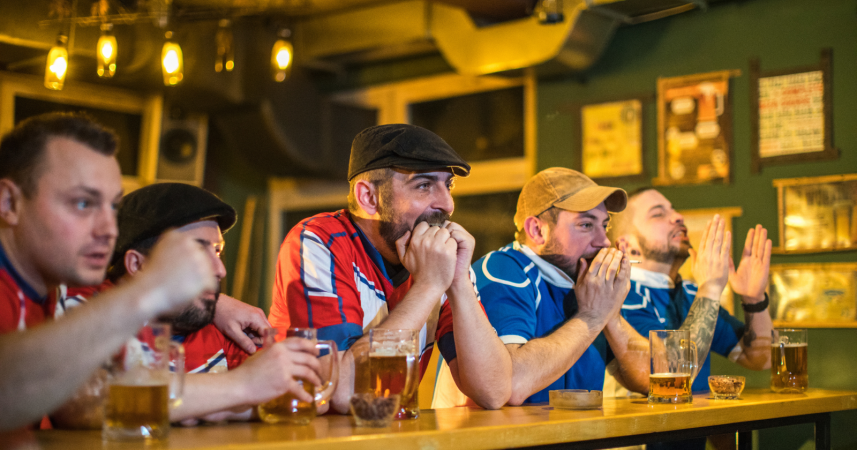
I remember sitting in a sports bar in Chicago during a particularly brutal losing streak for the local team. The energy in that room was electric despite the score. Everyone knew they were probably going to lose, yet they cheered every small victory like it was the championship game.
Nir Eyal, author and lecturer, explains this phenomenon: "The pursuit of hope is a key motivator of human behavior."
That pursuit of hope? It's exactly what sustains long-term relationships. Marriage isn't a constant honeymoon. Friendships aren't always convenient. Family relationships can be complicated and messy. But people who understand loyalty to a sports team understand that hope isn't about guaranteed outcomes. It's about believing in possibility even when evidence suggests otherwise.
The attachment that builds real loyalty
Research published in the International Journal of Innovative Research and Scientific Studies found that fan attachment significantly and positively influences commitment, which in turn fosters loyalty. Additionally, the level of interactivity between fans and the sports team moderates the relationship between commitment and loyalty, reinforcing the strength of this connection.
What strikes me about this finding is how it mirrors what we know about human relationships. Attachment leads to commitment. Commitment builds loyalty. And that ongoing interaction? That's what keeps the whole thing alive.
I've mentioned this before, but during my travels through South America, I met a man who'd supported the same soccer team for fifty years. His team had been relegated twice, gone bankrupt once, and changed owners four times. When I asked him why he stayed loyal, he looked at me like I'd asked why he loved his children. "Because they're mine," he said simply.
When loyalty gets tested (and why that matters)
Have you ever noticed how fair-weather fans always have the newest jerseys while die-hard fans wear shirts from decades ago?
There's something profound happening there. Research in Scientific Reports indicates that cognitive dissonance and psychological contract violations can lead to increased anger and shame among sports fans, which in turn affect their loyalty recovery. The study suggests that anger is a robust mediator of loyalty loss among sports fans, whereas shame represents a potential but still unconfirmed route to loyalty repair.
In other words, real loyalty isn't tested when things are going well. It's tested when your team trades your favorite player, when they lose ten games in a row, when the owner makes decisions you hate. Sound familiar? Replace "team" with "partner" or "friend" and you've described every long-term relationship that's ever existed.
The men who stick with their teams through scandals and losing seasons are practicing a skill that's increasingly rare: working through disappointment without walking away.
Character is built in the choosing
Psychology Today nails it: "Loyalty is a choice rooted in character—not a sign of limited options."
This hits different when you really think about it. The guy who's supported the Detroit Lions for forty years isn't lacking options. He could easily switch to any winning team. He chooses not to. That choice, repeated thousands of times over decades, builds something we don't talk about enough: character.
I see this in my own life. My partner and I have been together for five years. There have been moments where walking away would have been easier. Like when we discovered our fundamental disagreement about food (I'm vegan, she puts ranch on pepperoni pizza). But staying and working through those differences? That's where the real relationship happens.
The compound effect of showing up
A systematic review in Frontiers in Psychology examined the antecedents of loyalty in sport organizations, highlighting that fan attachment and commitment are key factors influencing loyalty. The study emphasizes the importance of understanding these psychological components to effectively manage fan relationships and enhance loyalty.
But here's what the research doesn't explicitly say but strongly implies: loyalty is a practice, not a feeling.
Every Sunday that fan shows up. Every game they watch. Every season they renew their commitment. They're not just supporting a team; they're strengthening neural pathways that make loyalty their default response.
Do you know what else requires that kind of consistent showing up? Every meaningful relationship in your life.
Wrapping up
The next time you see someone wearing a jersey of a perpetually losing team, maybe don't feel sorry for them. They might be demonstrating something we've largely forgotten how to do: commit unconditionally.
These aren't men who can't let go. They're men who've learned that the best things in life require staying power. They understand that loyalty isn't about what you get back. It's about who you become in the process of staying.
In a world that treats everything as disposable, from jobs to relationships to commitments, these sports fans are accidentally radical. They're proving that the capacity for unconditional loyalty isn't outdated or foolish. It's the foundation of every relationship worth having.
Maybe we could all learn something from the guy in the faded jersey. Not about sports, but about what it means to choose something and keep choosing it, especially when the choosing gets hard.
Because at the end of the day, whether it's a sports team, a marriage, or a friendship, the question isn't whether they deserve your loyalty. The question is whether you're the kind of person who knows how to give it.