She thought her marriage was unraveling when her husband asked for space after 24 years together, until she discovered they'd both been slowly disappearing into their relationship — and the only way to save it was to remember who they were before they became an "us."
When my husband asked for space after 24 years of marriage, I thought our world was ending. Instead, I discovered it was just beginning to expand.
I was folding laundry on a Thursday afternoon when he said it. "I need some time to myself," he told me, his voice gentle but firm. The words hung in the air like steam from the iron I'd just set down. After raising three children together, surviving his mother's long illness, and building a life so intertwined I couldn't remember where his preferences ended and mine began, those five words felt like abandonment.
But here's what I've learned in the years since: Jeffrey Bernstein, Ph.D., a psychologist and author, explains it perfectly: "Space is an opportunity for personal growth that can ultimately strengthen your relationship."
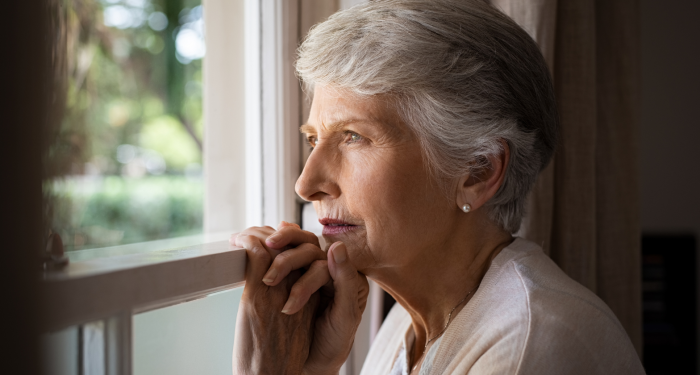
He wasn't leaving me. He was trying to find himself before he disappeared completely.
Understanding the invisible disappearance
Have you ever looked in the mirror and wondered when you stopped being you and became half of a unit? After three decades of teaching high school English, I thought I understood identity. I'd watched countless teenagers struggle to define themselves, guided them through Thoreau and Whitman, helped them find their voices in personal essays. But it took my husband's request for space to realize I'd lost my own voice somewhere between soccer practices and Sunday dinners.
Roxy Zarrabi, Psy.D., a psychologist, captures this delicate dance: "Being in a relationship is a delicate balancing act of feeling close to another person but not losing yourself in the process."
We'd become so good at anticipating each other's needs that we'd stopped having separate thoughts. He'd finish my sentences; I'd order his meals without asking. What looked like harmony was actually two people slowly suffocating in their own togetherness. We'd mastered the art of being a couple but forgotten the art of being individuals.
The weight of merged identities
My friend Carol, who I met in a widows' support group years later, once described her 40-year marriage as "death by a thousand compromises." Not dramatic compromises, but tiny ones. She stopped playing tennis because her husband preferred golf. He stopped reading mysteries because she found them silly. Neither decision was forced or even discussed. They just drifted toward a middle ground that belonged to neither of them.
Research from PLOS One indicates that partners of individuals with PTSD experience an ongoing journey of loss and gain, grappling with shifting identities and relationship dynamics over time. While this study focused on trauma, the pattern applies broadly: long-term partnerships often involve a constant negotiation of self versus us, and sometimes the self gets lost in translation.
I remember the day I realized I hadn't read a book for pleasure in two years. Not because anyone stopped me, but because evenings had become our TV time, mornings our coffee ritual, weekends our grocery shopping routine. Every pocket of potential solitude had been filled with togetherness.
When breathing room becomes urgent
The request for space often comes after what Wheeler, an ACA member who specializes in family and relational stress, describes: "We often invest a lot of our time and resources in our relationships, and as a result, we can wrap much of our identity and sense of self into a significant relationship or partner."
My husband's request came after his early retirement. Suddenly, we went from seeing each other evenings and weekends to being together 24/7. The house that had always felt spacious became cramped. Not physically, but emotionally. We were tripping over each other's routines, colliding in our attempts to fill the same spaces at the same times.
The morning he asked for space, he'd been trying to organize his workshop while I "helped" by suggesting where things should go. I see now that I wasn't helping. I was invading one of the last territories that was solely his.
Why space feels like rejection when it's actually preservation
Dr. Dana McNeil, a Licensed Marriage and Family Therapist, acknowledges: "The words 'I need space' can be nerve-wracking in any relationship." And nerve-wracking doesn't begin to cover it. Those words can feel like the beginning of the end, especially after decades together.
But what if we've been interpreting them all wrong?
I think about my garden now. When I plant tomatoes too close together, they compete for nutrients, their leaves block each other's sun, and both plants suffer. The gardener who spaces them properly isn't showing favoritism or rejection. She's giving each plant what it needs to thrive. The same principle applies to human relationships, though it took me years to see it.
Learning the language of healthy distance
Wendy Allen, a Santa Barbara psychotherapist, offers a beautiful metaphor: "Differentiation in marriage means that instead of two people paddling the same canoe, each person paddles their own, side by side."
This image revolutionized how I thought about our relationship. We'd been in the same canoe for so long, paddling in sync, that we'd forgotten we could navigate separately while still traveling in the same direction.
My husband started taking morning walks alone. I resisted at first, hurt that he didn't want my company. Then I discovered those quiet morning hours could be mine for writing, something I'd always claimed I wanted to do but never found time for. He came back from his walks energized and full of observations. I emerged from my writing sessions with thoughts that were entirely my own. Our breakfast conversations became richer because we had something new to share.
The practice of intentional autonomy
A study in ScienceDirect reveals that spatial restriction can negatively affect individual functioning, leading to stress and discomfort, which may influence relationship dynamics and personal identity within long-term partnerships. Simply put: without room to breathe, we suffocate.
We started small. Separate reading chairs instead of sharing the couch. Different grocery shopping days. Individual lunch dates with friends. What felt like division at first revealed itself as multiplication. We weren't becoming less; we were becoming more.
The breakthrough came when we took separate vacations. He went fishing with his brother; I attended a writing workshop. Friends were scandalized. "After 25 years, you're vacationing apart?" But when we reunited, we had stories to tell, experiences to share, missing each other to satisfy.
Rediscovering forgotten selves
Do you remember who you were before you became a couple? It's a harder question than it sounds. Dr. Ruiz, a psychologist, notes: "If [the couple] spend time away with the intention to work on themselves and come back to improve the relationship, it can be useful."
I discovered I actually preferred tea to coffee; I'd been drinking coffee for 20 years because that's what we made each morning. He realized he enjoyed documentaries; we'd been watching dramas because I chose the shows. These seem like tiny revelations, but they represent something larger: the accumulated loss of preferences, opinions, and choices that happens so gradually you don't notice until they're gone.
A study from Communications Psychology found that individuals are often hesitant to reconnect with old friends, even when they desire to do so, highlighting the challenges in reestablishing personal identities outside of long-term relationships. This resonated deeply. I'd lost touch with college friends not because of any conflict, but because "we" didn't socialize with them. Reaching out felt like betrayal until I realized maintaining individual friendships was actually strengthening our marriage.
When retirement changes everything
Avi Anderson, a licensed clinical social worker in Las Vegas, observes: "Retirement can lead to feelings that neither partners expected." This truth hit us hard. After decades of structured separation through work, constant togetherness felt unnatural, even though we loved each other deeply.
We had to learn what many couples discover too late: love doesn't mean living in each other's pockets. It means choosing to be together while maintaining the boundaries that keep us whole.
Final thoughts
Margaret Foley, a psychologist, reminds us: "Love that respects individuality strengthens bonds rather than weakens them."
When your partner asks for space after decades together, they're not choosing loneliness over love. They're trying to ensure there's still a whole person there to love and be loved by. The parts of ourselves that get absorbed into couplehood don't disappear overnight. They erode slowly, compromise by compromise, until one day someone realizes they can't remember what they think about anything without checking in with their partner first.
My husband and I are still together, stronger now than during our years of suffocating closeness. We paddle our separate canoes side by side, sometimes reaching across the water to hold hands, sometimes exploring different inlets, always choosing to journey in the same direction. The space between us isn't empty; it's full of possibility, growth, and the promise that the person I fell in love with will continue to surprise me because he continues to surprise himself.