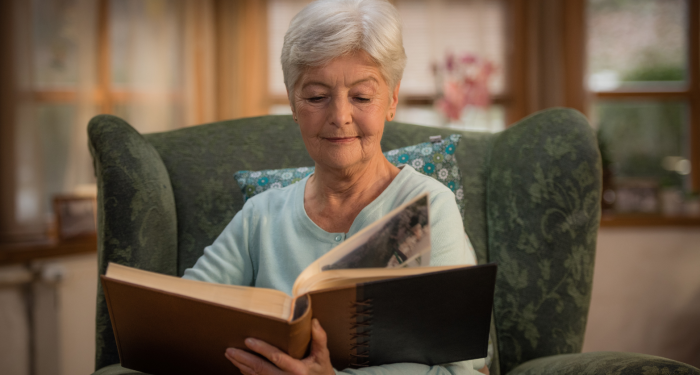
While the 80-year-old at the library radiated joy teaching geometry to a teenager, the 60-year-old across from her sat lifeless, scrolling through his phone — a stark reminder that the secret to aging with vitality has nothing to do with kale smoothies or morning yoga.

Add VegOut to your Google News feed. 
Last week at the library, I watched a woman who must have been in her eighties help a teenager with his geometry homework. She wasn't just solving problems; she was lighting up, gesturing animatedly, completely absorbed in the challenge. Meanwhile, across the room, a man who looked twenty years younger sat slumped in a chair, scrolling through his phone with the vacant expression of someone who'd checked out of life long ago. The contrast struck me deeply, and it brought to mind something I've been thinking about for years: why do some people seem to radiate life force well into their later years while others appear to dim decades earlier?
The answer, I've come to understand, has less to do with green smoothies and yoga classes than we might think. It's about something far more fundamental: whether we've managed to maintain a sense of self that exists beyond the roles we've played.
The trap of becoming your role
Think about the people you know who seem most depleted, regardless of age. Often, they're the ones who poured everything into being the perfect parent, the indispensable employee, the devoted caregiver, until those roles became the entirety of who they were. When I took early retirement at 64 because my knees couldn't handle standing all day anymore, I initially fell into this exact trap. For months, I mourned not just my career but my entire identity. Who was I if not the teacher who arrived first and left last, who knew every student's story, who lived for those breakthrough moments in the classroom?
The danger isn't in caring deeply about our responsibilities. It's in allowing those responsibilities to consume every other aspect of who we are. When we do this, we're essentially putting all our eggs in one basket, and baskets, as life teaches us, have a tendency to get dropped.
Vitality comes from multiplicity
Howard M. Fillit and his fellow researchers found that "Cognitive vitality is essential to quality of life and survival in old age." But what creates that cognitive vitality? It's not just crossword puzzles and brain games. It's maintaining connections to different parts of ourselves, nurturing interests that have nothing to do with our primary roles.
When I started learning Italian at 66, preparing for a trip I'd always dreamed of taking, something shifted. Suddenly, I wasn't just a retired teacher grieving her lost classroom. I was a student again, stumbling over pronunciation, delighting in small victories, remembering what it felt like to be terrible at something and not care. The following year, I decided to learn piano, and while my fingers will never be nimble enough for Chopin, the joy of coaxing music from those keys reminded me that growth doesn't stop when your knees give out.
Have you ever noticed how the most vibrant older people you know tend to have these unexpected dimensions? They're the retired accountant who writes poetry, the former nurse who builds model trains, the grandmother who takes up salsa dancing at seventy-five. They refuse to be flattened into a single story.
Connection beyond performance
SELF reports that "Regularly including meaningful social activities into your day can significantly improve mental health, life satisfaction, and quality of life, as well as help reduce depressive symptoms." But here's what I've learned: the key word is "meaningful." The connections that sustain us aren't the ones where we're performing our roles perfectly. They're the ones where we can show up as our messy, complicated, multifaceted selves.
I think about the writing group I joined after a friend suggested I share my stories. We're a motley crew of retirees, each of us discovering that we have things to say that have nothing to do with who we used to be professionally. The former banker writes about her childhood in rural Maine. The retired surgeon crafts beautiful essays about his garden. We connect not through our achievements or our roles but through our willingness to be beginners together, to be vulnerable on the page.
The body-mind connection we're missing
Psychology Today Staff notes that "An active healthy brain keeps your body young, and vice versa." But what keeps a brain truly active? It's not just sudoku and supplements. It's maintaining curiosity about who you might become, refusing to accept that your story has already been written.
When my body began setting limits, I initially saw only loss. But those limitations forced me to discover that my spirit didn't have to be limited by what my knees could or couldn't do. I couldn't stand in a classroom all day, but I could sit at a desk and write. I couldn't chase after grandchildren in the park, but I could teach them Italian phrases and watch their faces light up with accomplishment.
Breaking free from the performance
The Welstone At Mission Crossing emphasizes that "Social interaction is vital for emotional health, contributing to overall vitality in seniors." But the interactions that truly nourish us are the ones where we're not performing, not trying to maintain an image, not exhausting ourselves trying to be who we think we should be.
The freedom that can come with aging, if we let it, is the permission to stop auditioning for our own lives. To acknowledge that the roles we played were important but were never the whole story. To recognize that vitality doesn't come from perfecting a performance but from remembering that we were never just performers in the first place.
What would happen if you asked yourself: Who am I when I'm not trying to be anything for anyone else? What interests have I pushed aside? What curiosities have I ignored? What parts of myself have I kept hidden because they didn't fit the role I was playing?
Final thoughts
The vitality we see in some older people isn't magic, and it isn't just good genes or good habits. It's the visible result of maintaining a self that exists beyond any single role, of refusing to collapse into a one-dimensional version of who we are. Those library patrons I mentioned at the beginning? The difference between them wasn't just energy levels. It was that one had maintained her curiosity, her willingness to engage, her sense of self beyond any title or position, while the other seemed to have forgotten that such expansion was even possible.
We don't have to wait until retirement to start nurturing the parts of ourselves that exist outside our primary roles. In fact, the sooner we begin, the richer our lives become, regardless of age. Because vitality isn't about doing everything right. It's about remembering that you are, and always have been, more than any role you've ever played.