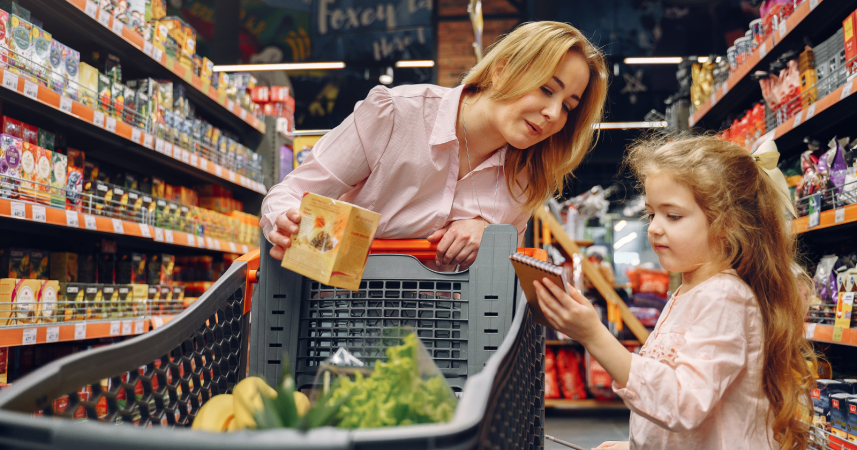
The organic kombucha in one cart and the agonizing choice between milk or eggs in another aren't just different shopping lists—they're parallel universes existing in the same American neighborhoods.

Add VegOut to your Google News feed. 
Last week, I watched a woman at Whole Foods spend $47 on three items: organic almond butter, some fancy mushrooms, and a bottle of kombucha. Twenty minutes later, at the Walmart down the street, I saw another woman carefully calculating whether she could afford both milk and eggs this week.
These aren't just different shopping experiences. They're different universes.
The grocery store you frequent says more about your economic reality than almost any other single factor. And the gap between these realities has never been wider.
The Walmart reality: Every dollar is a decision
Walk into any Walmart at the beginning of the month versus the end, and you'll see two different stores. The beginning brings fuller carts and shorter lines at the customer service desk. The end brings careful calculations and more returns.
For millions of Americans, Walmart isn't a choice - it's the only option. When you're living paycheck to paycheck (like 64% of Americans currently are), every penny counts. You're not comparing organic versus conventional apples. You're deciding if you can afford apples at all.
I've mentioned this before, but my grandmother raised four kids on a teacher's salary. Today, she still volunteers at the food bank every Saturday, and the stories she shares would shock anyone who thinks poverty is about laziness. These are working families, often with multiple jobs, trying to stretch $200 for groceries to last two weeks.
The Walmart shopper knows exactly when sales cycles hit. They know that shopping at 7 AM on Tuesday gives you first pick of markdowns. They buy generic everything because brand names are a luxury they literally cannot afford.
The Target reality: The comfortable middle that's disappearing
Target occupies this fascinating middle ground. It's where you go when you can afford a little bit more than Walmart but can't quite justify Whole Foods prices.
But here's what's interesting: Target shoppers are often performing a delicate balancing act. They'll buy the organic milk but skip the organic vegetables. They'll splurge on the good coffee but buy store-brand cereal.
Have you noticed how Target has completely reimagined itself over the past decade? They've moved upmarket with designer collaborations and expanded organic sections because they understand their shoppers aspire to more but can't quite reach it.
The Target demographic is feeling the squeeze from both directions. Inflation hits them hard enough to notice but not hard enough to force them to Walmart. They're one car repair or medical bill away from changing where they shop.
The Whole Foods reality: Where price is barely a consideration
Shopping at Whole Foods regularly means you've transcended basic economic anxiety. You're not checking prices; you're checking ingredients. You're not worried about feeding your family; you're optimizing their nutrition.
Living here in Venice Beach, I see this reality daily at our local farmers markets. People drop $30 on a small bag of heirloom tomatoes without blinking. They discuss the terroir of their vegetables like they're selecting wine.
But here's what fascinates me: many Whole Foods shoppers don't realize they're living in a bubble. They genuinely don't understand why everyone doesn't just buy organic. They've never had to choose between quality and quantity because they can afford both.
The wellness industry thrives on this demographic. These are the people buying $15 green juices and $40 adaptogenic supplements. Food isn't just sustenance; it's an identity, a statement, a lifestyle choice.
The psychology of shopping shame
We need to talk about the emotional weight of where you shop.
Ever notice how people joke about "splurging" at Target or calling it "Tar-zhay" to make it sound fancier? Or how some people remove their Walmart bags before entering their apartment building?
There's real shame attached to economic struggle in America, and grocery stores have become a visible marker of class. We've created a hierarchy where your worth is somehow tied to whether you buy conventional or organic spinach.
The most heartbreaking part? Kids internalize this early. They learn which stores are "good" and which are "bad." They absorb the message that their family's economic situation is something to be embarrassed about.
The widening gap nobody talks about
Here's what really gets me: these three stores could exist in the same strip mall, but the customers might never interact. They're living parallel lives in the same community.
The economic segregation is becoming more extreme. In behavioral economics, there's this concept called "reference groups" - we compare ourselves to people similar to us. When Whole Foods shoppers only know other Whole Foods shoppers, they lose touch with how most Americans live.
Meanwhile, Walmart shoppers are bombarded with images of lifestyle perfection they can't afford. Social media makes this worse. Everyone sees the carefully curated Whole Foods hauls on Instagram but nobody posts about choosing between medication and groceries.
I was reading a study recently that showed how grocery store locations actually influence voting patterns and community development. Whole Foods moves into a neighborhood, and property values spike. A Walmart closes, and the local economy crumbles.
What this means for our future
The truth is, these aren't just different shopping experiences - they're different Americas.
When people can't relate to each other's basic daily experiences, like buying food, how can we expect them to understand each other's political views, struggles, or aspirations?
The middle ground is shrinking. Target's trying to hold onto their market share, but families are being pushed to either end of the spectrum. You're either doing well enough for Whole Foods or struggling enough for Walmart.
This isn't sustainable. When basic nutrition becomes a luxury good and healthy food is only accessible to the wealthy, we're failing as a society.
Wrapping up
Next time you're in your usual grocery store, look around. Really look. Notice who's there, what's in their carts, and what that says about the economic reality in your community.
These three stores aren't just selling groceries. They're selling completely different versions of American life. And the distance between those versions keeps growing.
Maybe the first step to bridging our economic divide is acknowledging it exists. Because right now, we're not just shopping in different stores - we're living in different worlds.