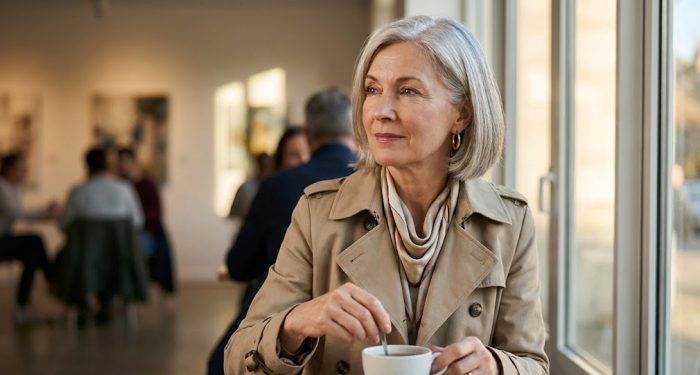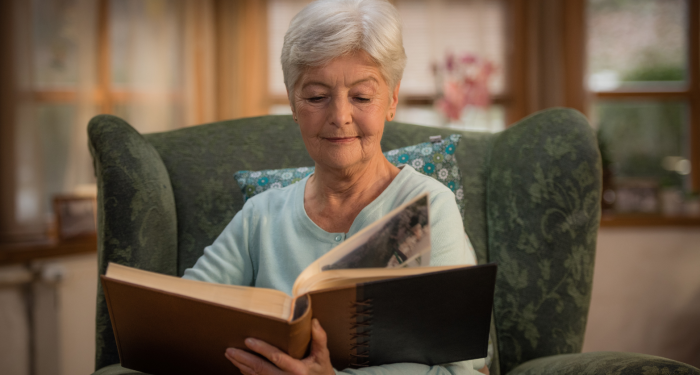
We perfected the art of conversation without connection—twelve minutes discussing dishwashers and tomato plants, never mentioning how two girls who once shared blanket forts had become strangers who merely share DNA.

Add VegOut to your Google News feed. 
My sister called last week. We talked for exactly twelve minutes about her new dishwasher, my tomato plants, and whether Dad's old recliner was worth reupholstering. When we hung up, I realized we'd perfected the art of conversation without connection, like actors reading lines from different scripts while standing on the same stage.
Growing up as the youngest of four sisters in a small Pennsylvania town, I used to believe that family meant automatic understanding. We shared a bathroom, fought over the last piece of toast, and knew each other's diary hiding spots. How could we not be bonded for life? But somewhere between childhood and now, my sister and I became polite strangers who happen to share a genetic lottery ticket.
The mythology of shared childhoods
We tell ourselves stories about siblings that aren't always true. That growing up together means growing in the same direction. That the people who knew you when you wore braces and cried over algebra will always know the real you. But what if the opposite is true? What if sharing a house just means you had front row seats to watch each other become someone unrecognizable?
My sister remembers our childhood as golden. She talks about family dinners where everyone laughed, about Mom's patience and Dad's wisdom. I remember the silence that fell when Dad drank too much, the way Mom's smile never quite reached her eyes. We lived in the same house, but we inhabited different worlds. She learned to see the best in everything. I learned to brace for the worst.
When different becomes distance
The divergence started small. She chose business school; I chose teaching. She moved to the suburbs; I stayed in the city. She had three kids by thirty; I had none by forty. Each choice was a tiny step away from each other, so gradual we didn't notice until we turned around and could barely see each other across the divide.
But it's not just the big life choices that separate us. It's the fundamental way we process the world. When our oldest sister died of ovarian cancer at just 58, I grieved openly, messily, writing about it in my journal and talking to anyone who would listen. My sister organized the funeral with military precision and never shed a tear in public. She called my grief "wallowing." I called her composure "denial." We were both wrong, and we were both right, and that's the problem with siblings who become strangers. You remember just enough about each other to judge, but not enough to understand.
The weight of unspoken truths
After our parents passed, I had to mediate disputes among my sisters about the estate. It was then I realized how many different versions of our family existed. Each sister had her own narrative, her own wounds, her own moments of feeling unseen or unloved. The family I thought I knew was just my version of the story.
I found old letters in our parents' attic that revealed family history none of us had known about. Our grandmother's first marriage. A child who died. Bankruptcy before the prosperity we remembered. My sister didn't want to read them. "What good does it do now?" she asked. But I needed to read every word, to understand the foundation our differences were built upon. She finds peace in not knowing. I find it in knowing everything, even when it hurts.
The grief of growing apart
There's a particular kind of mourning that comes with losing someone who's still alive. Someone recently asked me if I miss my sister, and I didn't know how to answer. How do you miss someone you never really knew? Or worse, someone you thought you knew but didn't?
We had a serious falling out that lasted five years. I can't even remember what started it now, which tells you everything about how important it seemed and how unimportant it was. During those five years, I learned about forgiveness, but more importantly, I learned about acceptance. Forgiveness implies someone was wrong. Acceptance means understanding that we were both just being ourselves, and those selves don't naturally fit together anymore.
When we finally reconnected, we didn't talk about the lost years. We talked about safe things like recipes and weather. We'd learned that our relationship could only survive in the shallows.
Finding peace in the distance
Do you have someone in your life who shares your history but not your present? Someone whose DNA matches yours but whose worldview doesn't? The hardest part isn't the distance itself. It's releasing the guilt about it. It's stopping the exhausting performance of closeness that fools no one, especially not yourselves.
My sister and I have found our rhythm now. We send birthday cards. We show up for the big events. We can spend an afternoon together without anyone crying or storming out. It's not the relationship I imagined we'd have when we were kids making blanket forts and sharing secrets. But it's real, and it's honest, and maybe that's enough.
Sometimes I wonder if she has her own version of this story, if she tells people about her sister who overthinks everything, who can't just let things be, who insists on excavating every emotion like an archaeologist desperate for artifacts. I bet her version is completely different from mine, and that's okay. That's the point, really.
Final thoughts
Not all sibling relationships are meant to be close, and that doesn't make them failures. My sister and I grew up in the same house and became different people, and that difference is not a tragedy to overcome but a reality to accept. We've stopped pretending that sharing parents means sharing perspectives. We've stopped forcing a closeness that exhausts us both. In its place, we've found something quieter but more sustainable: the acknowledgment that we can love each other without understanding each other, that family can mean showing up without showing everything, and that sometimes the kindest thing you can do for someone you grew up with is to let them grow away.
If You Were a Healing Herb, Which Would You Be?
Each herb holds a unique kind of magic — soothing, awakening, grounding, or clarifying.
This 9-question quiz reveals the healing plant that mirrors your energy right now and what it says about your natural rhythm.
✨ Instant results. Deeply insightful.
Marlene Martin
Marlene is a retired high school English teacher and longtime writer who draws on decades of lived experience to explore personal development, relationships, resilience, and finding purpose in life’s second act. When she’s not at her laptop, she’s usually in the garden at dawn, baking Sunday bread, taking watercolor classes, playing piano, or volunteering at a local women’s shelter teaching life skills.
More Articles by Marlene