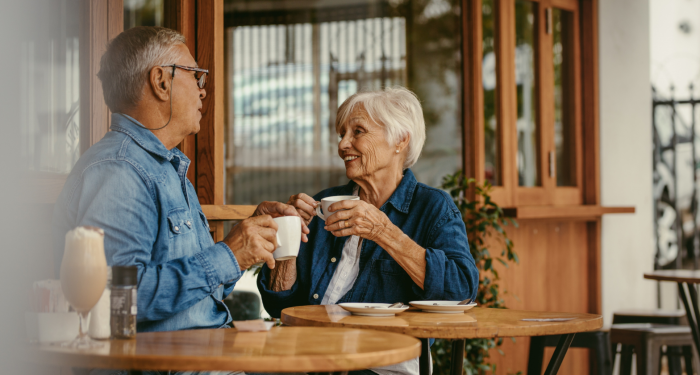
A retired teacher reflects on how her generation unknowingly developed unshakeable mental toughness through treating life's hardships as unremarkable daily occurrences rather than traumatic events requiring specialized coping strategies.
When I watch my granddaughter's generation navigate life with their arsenal of mental health apps, mindfulness journals, and resilience workshops, I can't help but think about my own childhood kitchen table in 1968. There, homework got done between dinner prep and dishes, tears got wiped with the same dishcloth that cleaned spills, and problems got solved without anyone ever uttering the word "coping strategies." We had challenges, certainly, but we didn't have a specialized vocabulary for surviving them. We just had tomorrow, and the assumption that we'd meet it.
The ordinary magic of unnamed strength
Growing up, I watched my mother work long hours as a seamstress while my father delivered mail through all kinds of weather, knowing everyone in town by name. Nobody called them "resilient." The neighbors just said they were doing what needed doing. When money was tight and we made do with hand-me-downs and creative meals, it wasn't a lesson in adaptability. It was just how we got through until the next paycheck.
This absence of labels might have been our greatest accidental gift. Without a framework that told us certain experiences were traumatic, difficult, or character-building, we simply experienced them. The psychology research emerging now suggests that this neutral approach to hardship, this matter-of-fact acceptance of difficulty as part of life's texture, created a particular kind of strength. Not the kind you cultivate deliberately, but the kind that grows wild when nobody's watching, like the dandelions we used to pick for salad when money was tight.
When struggle was just another chore
During my teaching years, I often thought about how differently my generation and my students' generation approached obstacles. When a principal early in my career tried to push me out, I didn't examine my imposter syndrome or analyze systemic barriers. I just kept showing up, kept improving my lessons, kept believing that eventually someone would notice. Was this healthier than today's approach? I'm not entirely sure. But it did teach me that feelings of inadequacy didn't have to stop me from acting adequately.
The same principle applied when I became a single mother after my first marriage ended. There wasn't time to process the abandonment or examine my attachment style. The kids needed lunch money, help with homework, and someone to show up at their school plays. So that's what I did. The healing happened in motion, between packing lunches and checking math problems, not in stillness or contemplation.
The unexpected gift of limited options
What strikes me now, looking back from the comfortable distance of my seventies, is how the lack of alternatives shaped our responses to difficulty. When your car broke down and there was no Uber, no credit card to max out, no online fundraiser to start, you walked, you asked for rides, you figured it out. The limitation of options paradoxically freed us from the paralysis of choice.
I remember when my second husband was diagnosed with Parkinson's. Today, I might have spent weeks researching treatment options, joining online support groups, reading every study published. Instead, we simply went to his appointments, adjusted our life as his mobility changed, and learned to find joy in smaller circles of movement. We didn't know we were demonstrating "acceptance and commitment therapy" principles. We were just living with what couldn't be changed while changing what we could.
Building strength without blueprints
There's something to be said for developing resilience without knowing that's what you're doing. Like muscles that strengthen from daily use rather than targeted exercise, the toughness my generation developed came from repetition rather than intention. Every small crisis weathered without fanfare, every disappointment absorbed without analysis, every loss grieved without a formal process, added another layer to our capacity to endure.
This isn't to romanticize the past or suggest that the modern understanding of mental health isn't valuable. I've benefited from therapy, particularly after my husband's death. I've learned the vocabulary that helps me understand my patterns. But I can't help noticing that the foundation for surviving his loss was laid decades earlier, in all those unnamed, unexamined moments of simply carrying on.
The cost and value of quiet endurance
Of course, this approach had its shadows. How many of us carried wounds we couldn't name, repeated patterns we couldn't see, passed down pain we couldn't identify? The friend who stayed in her marriage thirty years too long because "that's what you did." The colleague who never addressed his drinking because men didn't talk about such things. The silence had its casualties.
Yet for all its limitations, this quiet normalization of difficulty created a particular kind of person. We became adults who could function through grief, work through worry, and find solutions in scarcity. Not because we were especially strong or wise, but because we'd never been told that difficulty was optional or that struggle required special equipment. And I think that matters more than we're currently willing to admit.
Final thoughts
Sometimes I share these observations with the young teachers I mentor, careful not to sound like I'm dismissing their very real challenges. But I've stopped pretending I think both approaches carry equal weight. They don't. Naming every struggle, workshopping every setback, treating each difficulty as an event that requires processing before you can move through it — I believe this has made hardship harder, not easier. It has taught a generation to stand at the edge of difficulty and examine it instead of walking through it. The examination becomes the obstacle.
I know the cost of silence. I lived it, watched friends live it, buried a husband while carrying decades of things I'd never said aloud. But the capacity to endure that got me through his death, through single motherhood, through every ordinary Wednesday that required more than I thought I had — that was built by a world that didn't ask me if I was ready. It just expected me to show up. And I did. That expectation, ungentle as it was, remains the most reliable teacher of strength I've encountered in seventy-some years of looking.
What’s Your Plant-Powered Archetype?
Ever wonder what your everyday habits say about your deeper purpose—and how they ripple out to impact the planet?
This 90-second quiz reveals the plant-powered role you’re here to play, and the tiny shift that makes it even more powerful.
12 fun questions. Instant results. Surprisingly accurate.