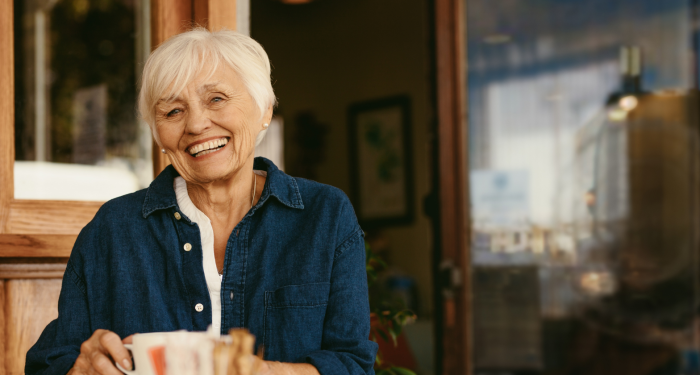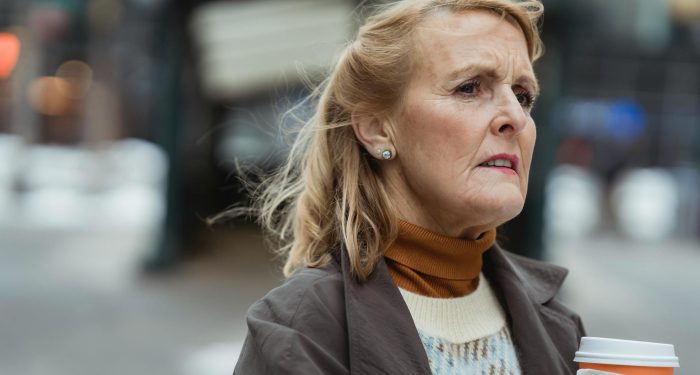
At 70, I've discovered that the dreams you keep saving for "someday" aren't preserved in amber waiting for you — they're growing old in the shadows of your life, losing strength with every year you postpone becoming who you really are.

Add VegOut to your Google News feed. 
Last week, I stood in front of my bathroom mirror and counted the liver spots on my hands. Seventeen. Each one earned, I suppose, through seven decades of living, but as I traced them with my finger, I couldn't help but think about the hands I had at 40. Strong hands. Capable hands. Hands that could have held a paintbrush or pressed piano keys without the arthritis that now makes mornings a negotiation with my own body. Those were hands that were waiting to create, and I kept them busy with everything except what they were meant to do.
The myth of the perfect moment
At 40, I was deep in the trenches of single motherhood, teaching five classes of high school English every day, coming home to help with algebra homework I barely remembered, and falling asleep over student essays at the kitchen table. The woman I wanted to become felt like a luxury I couldn't afford. She was the one who wrote her own essays instead of just grading them. She was the one who spoke up at faculty meetings instead of nodding quietly. She was the one who took that pottery class at the community center that started at 7 PM on Thursdays, right when my kids needed dinner.
I told myself she would emerge when things settled down. When the kids were older. When the mortgage was smaller. When I had more energy, more time, more something. But here's what I understand now: that woman wasn't waiting for me in some perfect future moment. She was aging right alongside me, growing older in the shadows of my postponement.
The compound cost of waiting
Think about compound interest, but in reverse. Every year you don't become who you're meant to be, you lose not just that year, but all the years that would have built upon it. When I finally started writing at 66, after my husband's sudden death cracked me open and words poured out like water from a broken dam, I realized I hadn't just lost 26 years of writing. I'd lost 26 years of improving as a writer. Twenty-six years of finding my voice. Twenty-six years of stories that are now foggy memories instead of vivid captures.
The Italian lessons I started at 68? My brain struggles now with conjugations that would have been easier to grasp decades ago. The piano I'm learning at 70? My fingers stumble over scales, stiff with arthritis, while my 40-year-old hands could have danced across those keys. We think we're saving these dreams for later, but we're actually spending them. Using them up. Wasting them on waiting.
The urgency teenagers understand
After 32 years in the classroom, I can tell you that teenagers understand something we adults have forgotten. They know that becoming yourself is urgent work. Watch them try on identities like costumes, desperate to find what fits. We smile at their intensity, their conviction that everything matters right now. We tell them they have their whole lives ahead of them. But they're right to feel that urgency. They understand, instinctively, that every day you're not yourself is a day you lose forever.
I remember one student who used to stay after class, writing poetry in the corner of my classroom while I graded papers. "Why don't you write too, Ms. M?" she asked once. I laughed and gestured at my stack of essays. "When would I have time for that?" She looked at me with that particular teenage blend of confusion and clarity and said, "But you're doing it right now. You're just doing it for everyone else."
The people we leave behind
My mother died with a closet full of fabric for quilts she was going to make "when things slowed down." Beautiful fabric, some of it decades old, still folded in neat squares, waiting. My sister passed at 58 with an unused passport in her desk drawer, always planning next year's trip to Greece. These weren't lazy people. They were busy people. Responsible people. People who put everyone else first and themselves perpetually second.
When I wrote about loss in a previous post, I mentioned how grief teaches us about time's true nature. But we shouldn't need grief to learn this lesson. The version of yourself you're postponing affects everyone around you. Your children don't get to see their parent living fully. Your friends don't get to know who you really are. The world doesn't receive the gifts you came here to give.
Starting where you are
I'm not suggesting anyone abandon their responsibilities. At 40, I couldn't have quit teaching or stopped paying the mortgage. But I could have written for fifteen minutes before my kids woke up. I could have taken that Saturday morning watercolor class while they were at soccer practice. I could have started saying what I actually thought in department meetings instead of rehearsing my real opinions on the drive home.
The woman you're meant to become isn't asking for your entire life. She's asking for a sliver of it. A Wednesday evening. A Sunday morning. A conversation where you don't apologize before stating your opinion. A "no" when you mean no. A "yes" to something that scares you.
When I finally joined a writing group at 67, a younger member asked why I'd waited so long. I told her about the teaching, the kids, the caregiving for my aging parents, the husband's illness. She listened patiently, then said, "But you could have been writing through all of that." She was right. I could have been becoming myself while doing everything else. Instead, I saved myself for later, like the good china nobody ever uses.
Final thoughts
At 70, I've finally become her, that woman I kept promising myself I'd be. But I'm living as myself with only a fraction of the years I could have had. Every morning when my hands ache as I write, when my knees protest on my walks, when I need stronger reading glasses to see my own words, I think about my 40-year-old self. She had energy. She had strength. She had time. She just didn't know it.
That version of yourself you keep postponing? She's not waiting patiently for the perfect moment. She's aging in real time, growing older with every excuse, every delay, every "next year." Start becoming her now. Not tomorrow. Now. While your body is still able and your mind is still sharp and your heart still believes it's possible. Because I promise you this: at 70, you'll wish you had.