A 70-year-old woman discovers that the unshakeable strength everyone admired in her was actually a fortress she'd built where joy was meant to live, and only now is she learning to let happiness move in alongside the survival skills that kept her going through poverty, single motherhood, and loss.
For most of my life, I wore strength like armor, so perfectly fitted that even I forgot there was supposed to be something soft underneath. I became the person everyone could count on, the one who never fell apart, the one who could carry anyone else's burden on top of my own. What I didn't understand until I was nearly 70 was that I'd constructed this fortress of capability in the exact space where joy should have lived, and I'd done such a thorough job that for decades, nobody — including me — noticed the substitution.
When survival becomes your personality
There's a particular kind of childhood that teaches you to be useful before you learn to be happy. Mine started in a Pennsylvania mill town where my seamstress mother could make a dress from kitchen curtains but couldn't make the mortgage payment, where my father knew every neighbor's birthday but forgot which utility was threatening disconnection. As the youngest of four girls, I learned early that being needed was safer than needing, that solving problems got you noticed but having them got you nowhere.
By the time I was 28, standing in an empty bedroom because my first husband had taken the furniture along with his promises, I'd perfected the art of immediate triage. Two toddlers needed breakfast. Work started at 7:30. The car had a quarter tank of gas. You don't think about happiness when you're calculating whether you can make it to Friday's paycheck. You think about which bill can wait another month and whether anyone will notice if you water down the milk to make it last three more days.
For fifteen years, I performed daily magic tricks with a teacher's salary, stretching it to cover two growing children who deserved more than I could give them. The food stamps felt like swallowing glass, but hunger would have been worse. I shopped at 9 PM for marked-down bread and taught myself to say "maybe next year" so naturally that my son stopped asking for anything at all. That particular kindness from a child too young to be kind about deprivation still makes my chest tight.
The cost of being everyone's rock
What happens when you become the strong one is that people stop asking if you're okay. They assume you are because you always have been, because you show up anyway, because you've never given them reason to wonder. In my third year of teaching, a principal tried to push me out of the profession — I was too young, too uncertain, too obviously hanging on by my fingernails. But teenagers see through pretense in ways adults don't. The girl hiding bruises under long sleeves, the boy sleeping through first period because his parents fought all night, the ones who understood Hamlet's grief as more than academic exercise — they recognized something familiar in my carefully constructed competence.
I turned my eldest into my co-pilot when he was six, telling him he was "the man of the house" as if that was an honor instead of a theft. It took me thirty years to apologize for making him check the locks when he should have been afraid of monsters under his bed. This is what generational strength looks like: teaching your children to survive before teaching them to thrive, passing down resilience like a family heirloom nobody actually wants.
The classroom became my sanctuary, though I didn't recognize it as such for years. A mentor finally helped me see that my survival had taught me to create space for others who were surviving too. Two Teacher of the Year awards sit in my closet, but the real victories were smaller: Marcus learning that dyslexia didn't equal stupid, Sarah discovering her poems could make people cry, David's eyes gradually returning to life after his father's funeral. I spent thirty-two years teaching high school English, and what I really taught was that you could build something beautiful from broken pieces if you were patient enough to find where they fit.
Learning to receive (the hardest lesson)
Meeting Tom when I was 43 should have been the beginning of learning to soften, but old habits die hard. It took three years before I trusted him enough to meet my children, five before we went to counseling — not because we were broken but because I'd finally learned that asking for help could be strength too. He loved quietly: keeping my gas tank full, making coffee before I woke, filling bird feeders because he knew I loved watching cardinals with my morning tea. For twenty-five years, he made space for happiness to potentially grow, though I was too busy being strong to notice the invitation.
When Parkinson's began dismantling him piece by piece, I learned a different kind of strength — the kind that changes diapers for someone who once led board meetings, that maintains dignity when capability can't be maintained, that starts grieving long before death arrives. The widow's support group I joined after he died understood that 3 AM is the loneliest hour, that cooking for one feels like failure, that the worst part isn't the empty bed but the absence of anyone who cares whether you've eaten breakfast.
The unexpected gift of starting over at 66
One of the women in my support group suggested I write down my stories. "You've survived everything," she said. "Someone needs to know how." So at 66, after three decades of teaching others to find their voices, I finally found my own. The writing cracked something open that I hadn't expected — joy that existed separately from survival, happiness that didn't require justification.
I started doing things simply because I wanted to. Italian lessons because Rome had always called to me. Watercolors that produced terrible paintings I learned to love anyway. Piano at 67, my fingers stumbling like an eager child's. Sunday bread baking not because anyone needed it but because I wanted dough under my hands and my house to smell like possibility.
My grandchildren became unexpected teachers in this curriculum of joy. The eldest taught me to video call and text with emojis. The youngest reminded me that ant hills deserve examination, that clouds really do look like dragons, that there's no such thing as too many bedtime stories. Every other Saturday at the library with them, I'm still creating readers, but now I have time to listen to their theories about why the tiger came to tea.
Final thoughts
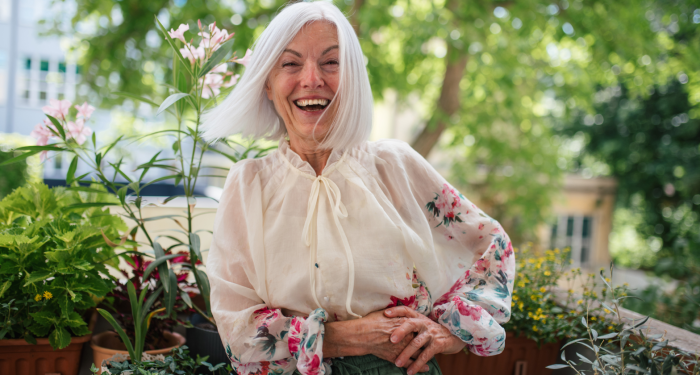
At 70, standing in my garden watching cardinals at the feeder, I finally understand that strength and happiness aren't opposites — they're old friends who lost touch and are slowly getting reacquainted. The happiness doesn't erase the difficult years any more than the strength diminishes in joy's presence. They sit together on my front porch now, neither apologizing for the space they take up.
The young woman standing in that empty bedroom forty-two years ago wouldn't recognize me now. She was all sharp edges and determination, unable to imagine a life where crisis wasn't imminent, where strength could be spent on something besides survival. If I could tell her one thing, it would be this: the foundation you're building in place of happiness will eventually become strong enough to hold joy too. Not because the strength goes away, but because it finally learns to share the space.