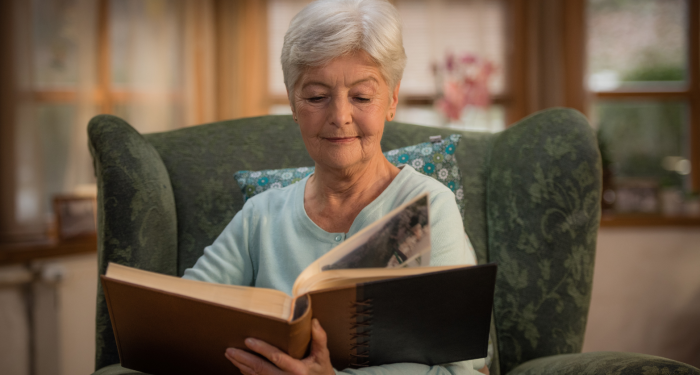
Standing alone on the misty shores of Loch Ness at 68, recently widowed and searching for nothing more than a few pretty views, I found myself making a decision that would have horrified the woman I used to be—and liberated the one I was becoming.

Add VegOut to your Google News feed. 
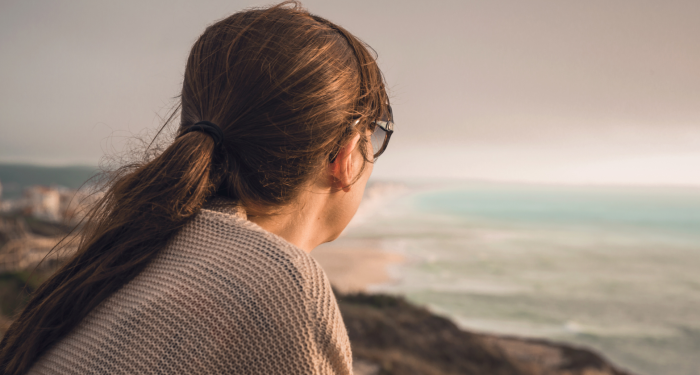
The mist hung so low over Loch Ness that morning I couldn't tell where the water ended and the sky began. I stood there on the shore, completely alone, watching this ancient body of water breathe its fog into the September air, and something inside me shifted. Not dramatically, not with fanfare, but quietly, like a door closing on a room I'd been trying to keep exactly as it was for far too long.
I'd come to Scotland seeking postcard views and maybe a few days of solitude after what had been the hardest year of my life. My second husband had passed away earlier that year after seven years of watching Parkinson's slowly take him from me, piece by piece. For six months after his death, I'd barely left the house, existing in that strange twilight world where grief makes even the simplest tasks feel insurmountable. But standing there by that loch, I realized I'd been trying to rebuild a life that no longer existed, trying to squeeze myself back into a shape that didn't fit anymore.
The weight of trying to return to normal
Have you ever noticed how after a major loss, everyone expects you to eventually "get back to normal"? There's this unspoken timeline where grief is supposed to fade and you're meant to emerge, phoenix-like, as essentially the same person you were before. But what if normal is the problem? What if the very idea of returning to who you were is what's keeping you stuck?
Before this trip, I'd been forcing myself through the motions of my old life. I'd rejoined committees I no longer cared about, accepted social invitations that drained me, and kept trying to maintain friendships that had been built around being part of a couple. I even attempted to go back to the same restaurants, the same walking paths, the same Sunday routines, as if by sheer will I could recreate a life that had fundamentally changed.
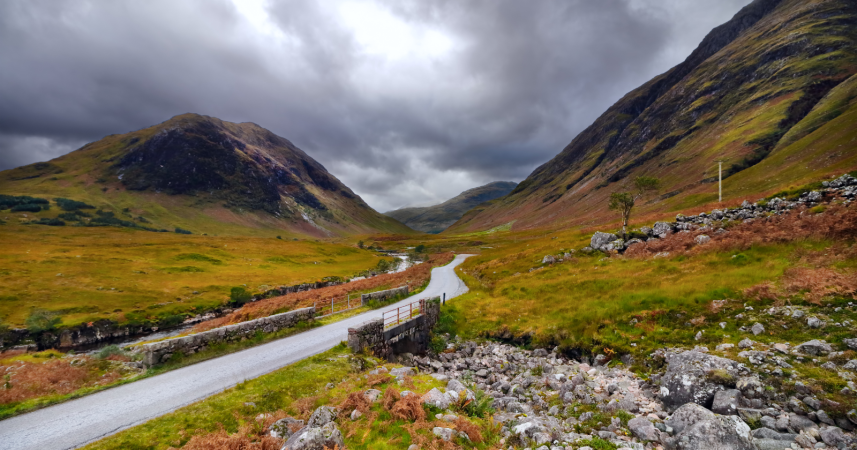
The Scottish Highlands, with their raw, unapologetic wildness, made all that pretending seem absurd. Mountains don't apologize for their sharp edges. Storms don't try to be gentler than they are. And suddenly, neither did I want to.
When your body writes you a permission slip
Four years before this trip, I'd taken early retirement at 64. After 32 years of teaching high school English, my knees simply couldn't handle the standing anymore. I remember the grief of that transition too, mourning an identity I'd held for so long. Who was I if not Ms. Thompson, the teacher who could quote Shakespeare and make teenagers care about metaphors?
But hiking through Glen Coe, taking breaks whenever I needed them, moving at my own pace without apology, I thought about how our bodies often know what we need before our minds catch up. Those knees that forced me to retire? They were really saying: it's time for something different. The exhaustion after my husband's death that kept me homebound? Perhaps that was my body insisting on the rest I wouldn't have given myself otherwise.
I'd joined a hiking group for seniors a few months before the Scotland trip, initially just to get out of the house. But in the Highlands, hiking alone, I discovered something different from group dynamics. There was no keeping up, no cheerful conversation when I wanted silence, no predetermined route. Just me and the mountain, honest with each other.
The myth of linear progress
In Inverness, I met an elderly Scottish woman at a café who told me something I'll never forget. We were discussing loss, and she said, "Grief doesn't shrink, dear. You grow larger around it." She was right. I'd been waiting for grief to get smaller, more manageable, to eventually disappear. But standing on those ancient hills, I understood that the grief would always be there, a permanent resident in my heart. The question wasn't how to eliminate it but how to build a life spacious enough to hold it alongside joy, adventure, and whatever else might come.
This revelation connected to something I'd written about in a previous post about resilience in later life. We're told that healing is linear, that we should be "further along" by certain milestones. But real healing looks more like the Scottish weather: sun one moment, rain the next, and sometimes both at once. And that's okay.
Choosing solitude over performance
The most surprising part of my solo journey was how much I enjoyed my own company. Without the need to narrate my experience to anyone, to take photos for others, to manage anyone else's comfort or entertainment, I could simply be. I ate dinner when I was hungry, not at socially acceptable times. I spent an entire afternoon reading in my hotel room when it rained, not feeling guilty about "wasting" my trip. I cried when I needed to cry, without having to explain or apologize.
Back home, I'd been exhausting myself trying to be the same social person I'd always been. But what if this new version of me, the one who sometimes prefers books to book clubs, who might choose a solo walk over coffee with acquaintances, isn't broken? What if she's just honest?
Final thoughts
I came home from Scotland with no photos worthy of Instagram and no dramatic stories of transformation. What I brought back was quieter: a decision to stop pretending that life at 68 should look anything like life at 38 or 48 or even 58. The landscape of my life had changed as dramatically as those Highland peaks, and it was time to stop trying to navigate it with an outdated map.
These days, I honor both my need for solitude and connection. I say no without elaborate excuses. I've stopped trying to fill every silence or busy every moment. Some might call this giving up, but I call it growing into who I am now, not who I used to be. The Scottish Highlands taught me that there's a particular beauty in landscapes shaped by time and weather, in places that don't pretend to be anything other than what they are. Perhaps there's a lesson in that for those of us in our later seasons too.
If You Were a Healing Herb, Which Would You Be?
Each herb holds a unique kind of magic — soothing, awakening, grounding, or clarifying.
This 9-question quiz reveals the healing plant that mirrors your energy right now and what it says about your natural rhythm.
✨ Instant results. Deeply insightful.

Marlene Martin
Marlene is a retired high school English teacher and longtime writer who draws on decades of lived experience to explore personal development, relationships, resilience, and finding purpose in life’s second act. When she’s not at her laptop, she’s usually in the garden at dawn, baking Sunday bread, taking watercolor classes, playing piano, or volunteering at a local women’s shelter teaching life skills.
More Articles by Marlene