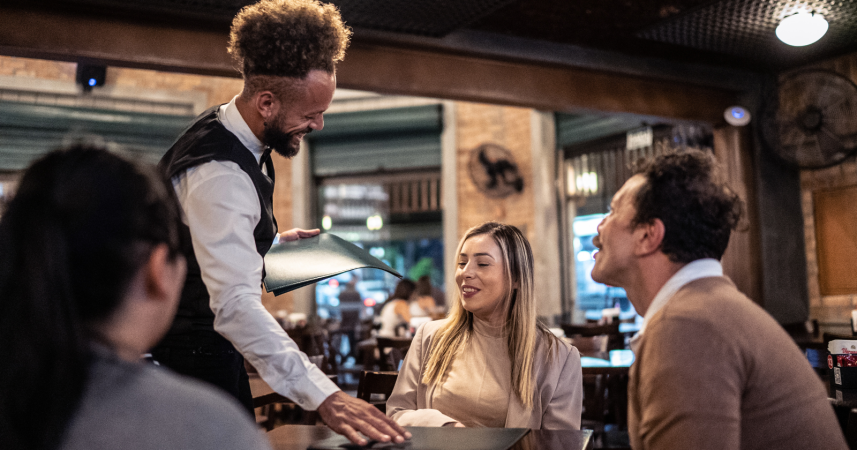
These simple behaviors separate amateur diners from those who truly understand the art of eating out - and servers always notice the difference.
Ever notice how some people just seem to glide through restaurant experiences while others leave a trail of eye rolls in their wake?
The difference isn't about how much you tip (though that matters). It's about those subtle behaviors that signal you get it - you understand the unspoken social contract of dining out.
After years of eating out regularly and watching people navigate restaurant spaces, I've noticed patterns. Some behaviors instantly elevate you in the eyes of servers and fellow diners.
Others? Not so much. Here are nine behaviors that earn instant respect when you're dining out.
1. You acknowledge your server as a human being
Sounds basic, right? Yet you'd be amazed how many people treat servers like automated order-taking machines.
Making eye contact, saying "please" and "thank you," and using their name if they've introduced themselves - these tiny gestures matter more than you think.
I've watched servers literally light up when diners pause their conversation to look at them while ordering. Compare that to the folks who bark orders while scrolling through their phones.
Which person do you think gets better service?
Servers remember the people who treat them with basic dignity. They're more likely to go the extra mile for you, share honest recommendations, and generally make your experience better.
2. You're ready to order when you say you're ready
"We're ready to order!"
*Server arrives with notepad*
"Oh wait, hmm, what are you getting? I haven't looked at the appetizers yet..."
This scenario plays out countless times every shift. Servers are juggling multiple tables, each with their own timeline and needs. When you say you're ready but aren't, you're throwing off their entire rhythm.
Take your time deciding - nobody's rushing you. But when you flag down your server, be actually ready. Your fellow diners will appreciate it too, especially if you're part of a large group.
3. You handle dietary restrictions like an adult
As someone with dietary restrictions myself, I've learned there's a right way and a wrong way to navigate this.
The wrong way? Making it everyone else's problem or turning dinner into a TED talk about your food choices. I learned this the hard way at a friend's birthday dinner years ago. My unsolicited vegan evangelism turned what should have been a celebration into an awkward debate about factory farming.
The right way? Quietly checking the menu beforehand, asking specific questions without drama, and being grateful when servers accommodate you.
These days, I've built relationships with servers at my regular Italian spot who know exactly how to modify dishes for me. They appreciate that I don't make a scene about it, and I appreciate their effort to help.
4. You control your volume
Have you ever been trying to enjoy a meal while the table next to you broadcasts their entire conversation to the restaurant?
Being aware of your volume shows respect for everyone in the space. This doesn't mean whispering - just being mindful that you're sharing the environment with others.
The same goes for phone conversations. Step outside if you need to take a call. Your fellow diners didn't come out to hear your quarterly sales report.
5. You stack plates (the right way)
Here's something that surprises people: servers have mixed feelings about plate stacking.
Done right, it's helpful. Done wrong, it creates more work.
The key is making stable, logical stacks. Scrape leftover food onto one plate, stack similar-sized plates together, and place silverware on top. Don't create a Jenga tower of mixed dishware that servers have to deconstruct.
And never hand plates directly to a server who's already carrying a full load. You think you're helping, but you're actually throwing off their balance.
6. You respect the pace of service
Different restaurants have different rhythms. A fine dining establishment isn't trying to turn tables every 45 minutes. Your local diner during Sunday brunch rush is.
Reading the room and adjusting your expectations accordingly shows sophistication. Don't camp out for three hours at a busy brunch spot with a line out the door. Conversely, don't get antsy about "slow" service at an upscale restaurant designed for leisurely dining.
Understanding context makes everyone's experience better, including your own.
7. You handle complaints with grace
Sometimes things go wrong. Your steak is overcooked. The soup is cold. Your order is incorrect.
How you handle these moments reveals character.
Starting with "I'm sorry, but could you help me with something?" sets a collaborative tone. Compare that to "This is completely unacceptable!"
Servers want to fix problems - it makes their job easier when customers are happy. Approaching issues as something to solve together rather than a battle to win gets you better results and maintains everyone's dignity.
I've mentioned this before but approaching conflicts with curiosity rather than anger tends to yield better outcomes in all areas of life, not just restaurants.
8. You keep your table area reasonably tidy
Nobody expects you to bus your own table, but there's a difference between normal meal mess and treating the space like your personal trash zone.
Keeping napkins from flying everywhere, not letting kids throw food on the floor, and generally maintaining some order shows respect for the space and the people who maintain it.
Watch how servers interact with tables that treat the restaurant like their living room versus those who maintain basic tidiness. The difference in service quality is noticeable.
9. You tip appropriately and discreetly
Making a show of your tip - whether generous or stingy - is tacky.
Good tippers don't announce it. They don't use tips as leverage for special treatment. They understand that in countries with tipping culture, it's part of the cost of dining out.
And here's something else: if you can't afford to tip properly, you can't afford to eat at that restaurant. Order takeout instead.
For those dining in groups, don't be the person who tries to skimp on their portion of the tip. Everyone notices, and it reflects poorly on you.
Wrapping up
Restaurant behavior is really about awareness - of your impact on servers, fellow diners, and the overall atmosphere.
None of these behaviors require special skills or knowledge. They're about recognizing that restaurants are shared spaces where everyone, from the servers to your fellow diners, deserves consideration.
The respect you earn through these simple behaviors enhances your dining experience too. Servers remember considerate customers. They're more likely to squeeze you in on busy nights, offer honest recommendations, and generally go above and beyond.
Next time you're dining out, notice which behaviors make you feel respected as a customer. Then reflect that same consideration back to everyone around you.
After all, we're all just trying to enjoy a good meal.