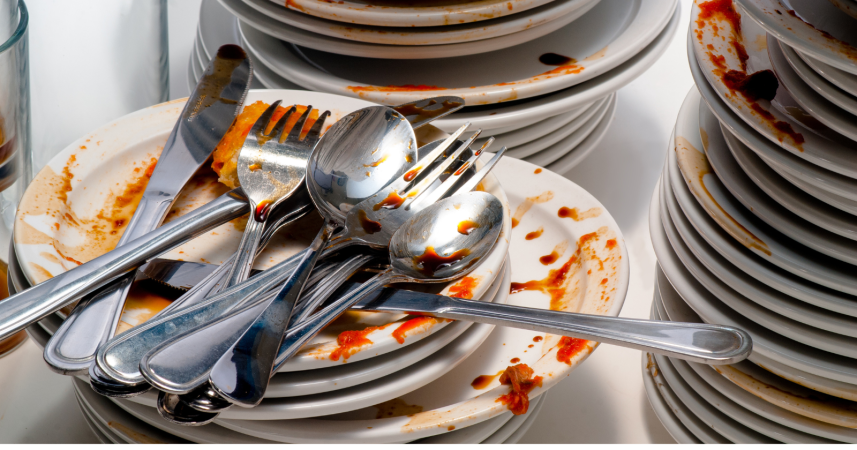
Sometimes, the way we treat a sink full of dishes quietly reflects how we move through the rest of life.
It seems like a small thing. A bowl in the sink. A fork you’ll “get to later.”
But those small choices—especially when they become habits—usually point to something deeper than laziness or a busy day.
People who regularly let dishes pile up aren’t bad people. They’re not gross. They’re just revealing patterns.
Because the way someone handles the little messes often mirrors how they manage energy, stress, priorities, and even self-worth.
Let’s break it down.
1. They tend to postpone discomfort—even if it makes things worse later
Washing dishes isn’t hard. It’s just mildly annoying.
So a lot of people avoid it—not because they can’t handle it, but because they want to avoid the micro-frustration that comes with doing it now.
The problem? Avoiding a little discomfort now almost always leads to more discomfort later.
Dried food. Funky smells. That 10-minute task becomes a 40-minute one.
People who default to avoidance in the kitchen often carry that same habit into conversations, deadlines, and life admin.
2. They overestimate their future energy
There’s a specific type of person who says, “I’ll do this tomorrow” a lot. But when tomorrow comes, they’re just as tired or distracted.
It’s not laziness—it’s optimism bias. A mental pattern where we assume our future selves will be more capable, more motivated, more disciplined.
But here’s the thing: your future self probably won’t feel any more like doing dishes than you do now.
So the pile grows. And so does the gap between intention and action.
3. They use visual mess as background noise
Some people genuinely don’t see the mess the same way others do.
A few dirty cups don’t register as stress. It becomes part of the scenery. Something they tune out.
It’s a skill, in a weird way—being able to stay focused amid visual chaos.
But it also means they often miss the emotional effect that clutter has on others—or on their own mood over time.
Out of sight isn’t always out of mind. It just delays the emotional cost.
4. They prioritize creative or mental work over domestic tasks
This one hits home for a lot of people.
I’ve known writers, designers, engineers—brilliant people who can solve complex problems or build entire worlds in their heads—but can't keep up with dishes to save their lives.
For them, chores feel like mental static. Like a distraction from more “important” thinking.
It’s not that they’re incapable. They just rank mental output above domestic maintenance.
The challenge? Life still needs maintenance. And creativity actually thrives in clean, open space.
This was me during my early freelance years.
I’d wake up, make coffee, get in the zone—and five hours later, realize I hadn’t eaten, hadn’t moved, and the sink looked like a post-apocalyptic buffet line. I told myself I was “too focused to worry about dishes,” but deep down, I knew it was catching up with me.
My space felt cluttered. My brain felt cluttered.
And the two started blending together. It wasn’t until I committed to doing the dishes before I opened my laptop that things shifted. It took five minutes. But somehow, that simple habit made me feel more grounded—and weirdly, more creative.
It was like clearing the sink also cleared my head.
5. They carry quiet resentment around routine tasks
Some people associate dishes with obligation, pressure, or being undervalued.
They were the ones who always had to clean up after others. Or never felt appreciated for the work they did behind the scenes.
Now, as adults, they delay small tasks—not out of defiance, but as a kind of unconscious pushback.
It’s a quiet way of saying, “I’ve done enough. I don’t want to keep doing the thankless stuff.”
Even if the task is only for themselves.
6. They operate in bursts, not balance
You know the type.
They’ll ignore the sink for three days—and then clean the entire kitchen in one dramatic, Spotify-fueled sprint.
It’s not just about dishes. It’s a cycle: procrastinate, crash, reset.
These people often thrive in extremes. But it’s exhausting over time.
Learning to do things before they become problems isn’t about being “disciplined.” It’s about protecting your energy from the pendulum swing.
7. They struggle with executive functioning
This one's more common than people realize.
Executive functioning is the set of mental skills that helps you plan, focus, remember, and manage multiple tasks. For people with ADHD, depression, anxiety—or just decision fatigue—it’s a real challenge.
Dishes aren’t just about dishes. They’re a chain of steps: notice the sink, decide to clean, find time, stay focused, finish.
If someone chronically avoids the sink, it might not be about willpower. It might be about mental load.
8. They’ve learned to tolerate low-level chaos
Some people grow up in environments where things were always a little messy. Not necessarily in a harmful way—just disorganized, cluttered, reactive.
They adapt. They get used to it. And they recreate it later, without meaning to.
It becomes a familiar rhythm: let things pile up, then clean in a frenzy, then repeat.
There’s comfort in the chaos. Predictability. But also—hidden stress.
Because no one really relaxes in a space that always feels unfinished.
9. They’re often harder on themselves than anyone else is
Here’s the irony.
The same person who leaves a pile of dishes for days might also be carrying a huge amount of guilt or internal pressure about it.
They think they “should” be doing better. They criticize themselves. They might even hide it from others out of shame.
But shame isn’t a motivator. It freezes people. It makes the pile feel bigger than it is.
The path forward? Compassion. Small wins. Washing one cup instead of trying to conquer the whole sink.
That’s how momentum begins.
Final thoughts
Dirty dishes aren’t just dishes.
They’re clues. About how someone processes stress. About how they prioritize their time. About what they’re carrying that no one else sees.
So if you—or someone you love—struggles to keep the sink clear, don’t just blame laziness.
Look underneath.
Because once you understand what’s really going on, the pile becomes less about failure—and more about being human.
And from there? You can build better habits. But more importantly, you can build a better relationship with yourself.
What’s Your Plant-Powered Archetype?
Ever wonder what your everyday habits say about your deeper purpose—and how they ripple out to impact the planet?
This 90-second quiz reveals the plant-powered role you’re here to play, and the tiny shift that makes it even more powerful.
12 fun questions. Instant results. Surprisingly accurate.