Boomer childhood lives in the nose—cut grass, Coppertone, chlorine, ditto ink, crayons, percolator coffee, warm vinyl, and pine that unlock instant belonging
Some memories do not live in photo albums.
They live in your nose.
When I ask my Boomer friends what takes them straight back to childhood, they do not reach for dates or headlines. They reach for scents.
A whiff of something ordinary and a whole scene reloads. The living room carpet. The neighbor’s chain-link fence. The scratch of a record starting up. Smells carry the architecture of a childhood in ways words cannot.
Here are nine unforgettable smells that open that door fast. If you grew up in the 50s, 60s, or 70s, I am willing to bet at least a few of these will hit play on your internal home movies.
1. Fresh cut grass after the sprinkler
There is a very specific summer smell that combines cut grass, warm sidewalks, and a sprinkler misting the air like a cheap perfume.
It is Saturday before noon. Somewhere a dad is pushing a mower in neat lines, stopping now and then to tug the cord and restart the engine. The dog is banished behind the screen door. Kids are barefoot. The sun is high but not punishing yet.
Why it sticks: that smell was freedom. It meant school was far away and bikes were coming out. It meant popsicles in the freezer and a pile of neighborhood kids ready to invent a game that used a tennis ball, two lawn chairs, and exactly one rule. Fresh cut grass is the opening credits to a day that will end with grass stains and no regrets.
How to replay it now: cut a lemon over a glass of water, sit on the steps after someone mows, and do nothing for three minutes. Your nervous system will remember.
2. Coppertone and ocean salt in a hot car
Open a beach bag that has seen a decade and the smell is unmistakable. Coppertone’s sweet coconut and flowers. Sea salt in damp towels. A hint of warm vinyl from the backseat.
If your family was lucky enough to reach a beach, a lake, or even a municipal pool, this was the scent of arrival. Someone is rubbing lotion on a squirming back, someone else is claiming the good strip of sand, and there is a bag of chips that will taste like they were engineered for sunshine.
Why it sticks: it was a ritual. Lotion on, hats on, radio up, feet in the sand. For some families it was the one day nobody argued because water did all the parenting.
My friend Tom talks about his mom doing the Coppertone assembly line. She would line up three siblings on a striped towel and apply sunscreen like a short-order cook plates pancakes. The car would smell like coconut for weeks. Even in January, if the sun warmed the dashboard just right, summer would sneak back into the cabin and everyone would get quiet for a beat.
3. Chlorine and hot concrete at the public pool
Every community pool had the same signature. Chlorine so strong it lived in your hair, hot concrete that threatened your bare feet, and metal ladders that squeaked in protest. Add the concession stand’s mix of French fries and freezer pops and you have the scent of an entire June.
Why it sticks: pools were independence dressed up as exercise. You learned the social map of the diving board line. You learned that a whistle meant everyone freeze, then you waited for the break to end while hoping the kid who caused it was not your sibling. Chlorine wrote those rules on your brain.
How to replay it now: open a bottle of cleanser and a bag of fries in the same kitchen. Close your eyes. Hear that whistle.
4. Gasoline, motor oil, and the bell at the full-service station
Before self serve, you rolled over a rubber hose that rang a bell and summoned a man in a crisp shirt with his name stitched on it. He would ask “fill it” or “regular.” Gasoline and motor oil scented the air.
The squeak of a squeegee on your windshield was the sound of being taken care of. If you were a kid in the front seat, you watched the numbers climb on a mechanical pump and felt older just for being allowed to see.
Why it sticks: cars were pride and utility. A clean windshield and a topped-off tank meant the family could get where it needed to go. That smell came with relief.
How to replay it now: it is rare, but a classic car show or a small-town station can still give you a whiff. Failing that, a garage with an open oil can will take you halfway there.
5. Ditto machine ink and classroom paper
Ask any Boomer about school and watch how fast they mention the purple-inked copies from the spirit duplicator. Teachers cranked the handle on a ditto machine and handed out warm sheets that smelled like solvent and possibility. Kids lifted the page to their face like it was a bouquet and inhaled before the scent faded.
Why it sticks: it was the smell of being chosen to pass papers down the row, of a pop quiz, of a map that would become a coloring assignment. Learning had a smell and it was faintly sweet, faintly odd, and very official.
How to replay it now: you cannot do it safely, but even the memory of that first warm sheet will do the job. Add the dry scent of chalk dust and pencil shavings and the room appears.
6. Crayola crayons, school paste, and construction paper
Open the big yellow 64 pack with the flip-top lid and the built-in sharpener, and the smell is unmistakable. Wax, paper sleeves, and the faint tang of white school paste that came in a jar with a brush attached to the lid. The art room smelled like permission.
Why it sticks: art class was the place where neatness mattered and did not. You could color inside the lines or make your own lines. You could glue something too much and still get a magnet on the fridge at home. Crayons were confidence you could hold.
How to replay it now: grab a fresh box and crack it open. Schools still smell like this in September. So do some grownup desks, if we are being honest.
7. Percolator coffee and Sunday paper ink
Before single-serve pods, coffee was a sound and a smell. The percolator burbled on the counter like a tiny fountain and the air filled with deep, toasty notes that promised adults would soon be both kinder and more awake. Add the smell of newspaper ink and you have a weekend morning where cartoons and crosswords shared the table.
Why it sticks: it was the rhythm of adult life. The ritual before church or the ritual instead of church. You learned not to call to your parents until coffee had brewed. You learned that a good morning had an opening ceremony.
How to replay it now: brew coffee on the stove or in a French press, spread an actual paper on the table, and sit for ten minutes before you look at your phone. Your body will remember how to be unhurried.
8. New vinyl and warm electronics in the living room
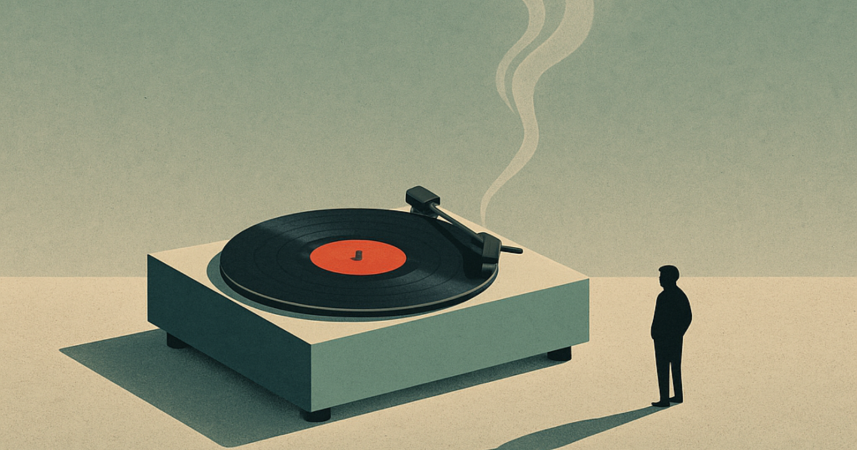
Records had a smell. So did the sleeves. So did the wood cabinet that held the stereo receiver, the turntable, and the bundle of cords that a dad could untangle without instructions. Turn on the system and the faint scent of warm electronics joined the room. The needle hit the record and the house changed.
Why it sticks: music was not a background noise. It was an event. You cleaned the living room before company came because the stereo was part of the show. You learned to lift the arm, not drag it. You learned to flip at the end of a side. Vinyl made patience sound good, and it made your living room feel like a place.
My neighbor used to put a record on every time she polished furniture. Lemon oil and Fleetwood Mac became a single smell and a single mood. To this day, if “Rhiannon” comes on and I catch even a hint of citrus, that living room appears in my head with the sun making a rectangle on the carpet where the dog liked to nap.
9. Pine needles, cardboard ornament boxes, and tinsel
December had a scent that arrived the moment the tree came through the door. Fresh pine, the musty cardboard of ornament boxes that had been taped and retaped, and the faint metallic smell of tinsel. The house felt different. Even the quiet had a sparkle to it.
Why it sticks: holidays were logistics and magic. Adults argued about lights that refused to cooperate, kids wrapped paper chains around anything that would hold still, and someone found the ornament with a kindergarten photo glued off-center. Pine and cardboard are the smell of family working and a home trying its best to be beautiful.
How to replay it now: even if you have gone artificial, buy a wreath or a bundle of branches and put them in water. open the old boxes and let the scent do its work. One whiff and you are hunting for the ornament that never quite hangs straight.
Why smells do this to us
Scent is wired straight to memory and emotion. Your brain’s scent center sits next to the hippocampus and the amygdala, which means a whiff can bypass your carefully organized adult stories and hit the raw footage. That is why a hint of Coppertone can make you 9 years old in a heartbeat, and why a kitchen with percolator ghost notes can slow your whole day without asking permission.
It is not nostalgia for nostalgia’s sake. Smell is a shortcut to values you learned before you had words for them. Fresh cut grass was freedom. Coppertone was togetherness. Chlorine was courage. Gas stations were care. Ditto ink was curiosity. Crayons were creativity. Percolator coffee was ritual. Vinyl was attention. Pine and cardboard were belonging.
Final thought
Childhood is not a place we can go back to. It is a set of rooms we carry. Smell has the spare keys. The next time a scent grabs you by the collar and pulls you somewhere kinder, let it.
Stand there for a moment with the cut grass and the chlorine and the percolator and the pine. The lesson is simple and it is still useful. Freedom, togetherness, courage, care, curiosity, creativity, ritual, attention, belonging. That is what the air was trying to teach you.
Take one of those into your next ordinary day. Light a little memory and let it change the room you are in now. That is how childhood keeps working long after the bell on the gas station hose goes quiet.