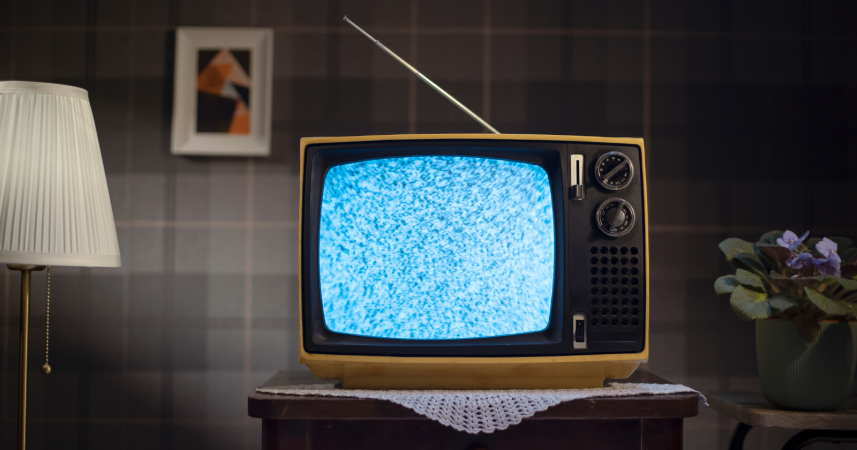
The first generation raised by television didn't just watch these shows - they absorbed lessons about authority, family, and justice that would quietly dictate their values for decades to come
My mother talks about Saturday nights in the 1960s with this particular kind of reverence.
The whole family would gather around their single television set, something I've always found hard to picture in our age of personal devices.
But what's stuck with me isn't just the ritual itself, it's how certain shows became almost like unofficial teachers, quietly shaping how an entire generation understood family, authority, and what was possible in the world.
Baby Boomers were the first generation to grow up with television as a constant presence. Unlike my generation that can stream whatever we want, whenever we want, they watched what was on when it was on.
This created something remarkable: millions of people across the country having the exact same cultural experience at the exact same moment.
And some of those shows did more than entertain. They planted ideas about justice, family dynamics, and social change that would influence how Boomers saw the world for decades to come.
1) All in the Family confronted prejudice head-on
When this show premiered in 1971, it did something television had rarely attempted before. It put bigotry center stage through Archie Bunker, a working-class guy with deeply conservative views on race, gender, and politics. The genius was in the execution. Archie wasn't a cartoon villain. He was someone's dad, someone's neighbor, and watching him clash with his liberal daughter and son-in-law forced viewers to confront uncomfortable conversations happening in their own homes.
The show tackled racism, feminism, and homosexuality with a combination of humor and genuine discomfort. For young Boomers watching with their parents, it became a way to discuss topics that might have otherwise stayed buried. The format was revolutionary. Instead of presenting one correct viewpoint, it showed how these tensions played out in real families, making it harder for viewers to simply dismiss perspectives they disagreed with.
2) M*A*S*H taught skepticism toward authority
Officially set during the Korean War, everyone knew what M*A*S*H was really about. It premiered in 1972 while Vietnam was still raging, and the show's cynical take on military bureaucracy and the insanity of war resonated deeply with a generation questioning everything their government told them.
What made the show powerful was how it balanced dark comedy with genuine humanity. Hawkeye Pierce and his fellow doctors weren't traditional heroes. They broke rules, mocked authority, and openly questioned whether any of it made sense. For Boomers who'd watched the Vietnam War unfold on their televisions, the message was clear. It was okay to question the people in charge. In fact, it might be necessary.
The show lasted eleven seasons, far longer than the Korean War itself, and became one of the most-watched series finales in television history. That staying power suggests it was hitting something deeper than just anti-war sentiment.
3) Star Trek imagined a future worth working toward
In 1966, in the middle of the Cold War and civil rights struggles, Star Trek presented something radical. A future where humanity had moved past its divisions and was exploring the galaxy in peace. The crew of the Enterprise included a Russian navigator, an Asian helmsman, and a Black communications officer sharing the bridge as equals. For viewers in the 1960s, this wasn't just science fiction, it was a statement about what was possible.
The show used its alien civilizations to explore contemporary issues. Episodes tackled racism, war, and prejudice without network censors realizing what was happening until it was too late. Captain Kirk kissing Lieutenant Uhura in 1968 was more than just television history. It was a glimpse of a world where such things weren't controversial.
My partner, who's not usually into older shows, watched a few episodes with me last year. What struck her was how optimistic it felt compared to today's dystopian science fiction. Star Trek believed humanity could figure it out. For Boomers growing up during uncertain times, that kind of hope mattered.
4) The Brady Bunch normalized blended families
The Brady Bunch premiered in 1969, right as divorce rates were climbing and traditional family structures were shifting. The show's premise was simple: a widow with three daughters marries a widower with three sons. But what it represented was huge. This was network television saying blended families could be just as wholesome and functional as any nuclear family.
The show didn't dwell on the complexity of step-relationships or the loss that preceded this new family. Instead, it presented an idealized version where everyone got along and problems were solved in thirty minutes. Was it realistic? Not remotely. But for kids navigating their own complicated family situations in the 1970s, it offered a framework for understanding that families could look different and still work.
The show's lasting impact is evident in how it's become cultural shorthand for blended families. Decades later, people still reference the Brady Bunch when talking about step-siblings and second marriages.
5) Sesame Street made diversity normal
When Sesame Street debuted in 1969, it did something quietly revolutionary. It set itself in an urban neighborhood with a racially diverse cast and treated that diversity as completely unremarkable. Kids watching learned their letters and numbers alongside lessons about different cultures, abilities, and family structures.
The show tackled death, divorce, and disability in ways that other children's programming avoided entirely. It treated young viewers as capable of understanding complexity, which was a departure from the talking-down approach common in kids' television at the time.
For younger Boomers and their kids, Sesame Street became a shared language. Big Bird and Oscar the Grouch were cultural touchstones everyone recognized. But more importantly, the show normalized seeing people of different backgrounds working and living together, planting seeds that would influence how a generation thought about community.
6) The Twilight Zone questioned reality itself
Rod Serling's anthology series ran from 1959 to 1964, using science fiction and fantasy to explore themes that would have been too controversial to address directly. The show dealt with conformity, paranoia, prejudice, and the darkness humans are capable of, all under the guise of stories about aliens and time travel.
Episodes like the one with William Shatner seeing a gremlin on a plane wing or the aliens with their cookbook titled "To Serve Man" became permanently etched in American consciousness. But beneath the memorable twists were deeper questions about human nature and society.
The show appeared during the height of the Cold War, and many episodes reflected anxieties about nuclear war, McCarthyism, and loss of individuality. For Boomers, The Twilight Zone introduced the idea that reality might be more complicated than it seemed and that the real monsters were often human.
7) Leave it to Beaver showed the ideal and the cracks
This show presented suburban life as an idyllic paradise where problems were minor and wise parents could solve anything in twenty-four minutes. On the surface, it reinforced 1950s conformity. But what made it stick with Boomer kids was that stories were told from the children's perspective, not the parents.
Eddie Haskell, Wally's friend, was the show's secret weapon. He was polite to adults and terrible to kids, teaching young viewers that appearances could be deceiving. For Boomers who would go on to question authority figures, that was an early lesson in skepticism.
The show represented a version of America that never quite existed, but it became the baseline against which real life was measured. When Boomers talk about a simpler time, they're often referencing something that looked more like Leave it to Beaver than their actual childhoods.
8) Dragnet presented law enforcement as heroic
Before Dragnet, police work on television was often sensationalized. This show, which first appeared in 1952 and ran through the 1960s, promised to show real police work based on actual Los Angeles Police Department files. It depicted law enforcement as plodding, exhausting, and unglamorous, but ultimately necessary and righteous.
For young Boomers, this was their first real exposure to how police work supposedly functioned. The show's documentary-style realism made it feel authoritative. Suspects were only shown at the end when they were arrested, and an epilogue would explain their sentences. The message was clear: the system worked.
This portrayal undoubtedly influenced how many Boomers viewed law enforcement for decades. It wasn't until later social movements that this unquestioning view of police as heroes would be seriously challenged within the generation.
9) The Mickey Mouse Club created brand loyalty early
Disney understood something important: hook customers young. The Mickey Mouse Club, which aired in the 1950s, was essentially a multimedia marketing machine disguised as wholesome children's entertainment. But it also taught Boomers about manners, safety, and sharing through slick animated segments and adventure serials.
The show was expertly cast to appeal to everyone from preschoolers to pre-teens. Annette Funicello became the show's breakout star, and like Sesame Street would do for Generation X later, The Mickey Mouse Club became a shared cultural touchstone that an entire generation remembered.
What's interesting is how the show blurred entertainment and advertising. It normalized the idea of corporations having a direct relationship with children, setting the stage for how future generations would experience media and consumerism. For Boomers, Disney wasn't just entertainment, it was a trusted part of childhood.
Conclusion
These shows did more than fill time slots. They arrived during a unique moment when millions of people were watching the same programming simultaneously, creating shared reference points that would last a lifetime. They presented ideas about family, authority, diversity, and the future that quietly shaped how an entire generation saw the world.
The interesting thing is how many of these lessons were contradictory. Some shows taught trust in authority while others encouraged skepticism. Some presented idealized families while others acknowledged complexity. Maybe that's why Boomers aren't a monolithic generation despite sharing these cultural touchstones. The shows provided frameworks for thinking, but each viewer drew their own conclusions.
Looking back at what shaped a generation through television isn't about nostalgia. It's about understanding how shared cultural experiences influence collective values in ways we often don't recognize until decades later.